I can’t believe a whole year has passed since I started this blog. Time has flown by.
 What began as a way to share recipes with a few friends has grown into a true labour of love. I started posting memories and family dishes we enjoyed at home and those I grew up with, and along the way the blog became a tribute to my mum.
My mother was an exceptional home cook. She didn’t attend a formal culinary academy, but she embraced the same principles: technique, balance and respect for ingredients. Trained in French technique while living in Switzerland, she brought that knowledge to our kitchen in Canada and applied it to the food she made for family. She knew her sauces, how to combine spices, how to preserve and pickle, and how to make the most of simple ingredients. A whole chicken in her hands became a week’s worth of meals; nothing was wasted, and she always experimented. With my father she made sausages, fermented cabbage, smoked fish, homemade wine and hung braids of garlic to dry. She taught us to taste widely and to try new things.
At its heart, German food is peasant cuisine—honest, substantial and designed to nourish people who worked outdoors. It’s not delicate, highly plated French food; it’s hearty, comforting and often centered on pork, starches and rich sauces. We eat with gusto and loud laughter. My aim with this blog is to convey that spirit: food that sticks to the ribs, served generously and with joy. If I haven’t achieved that yet, I have more writing to do.
The Blog Anniversary and My Mum
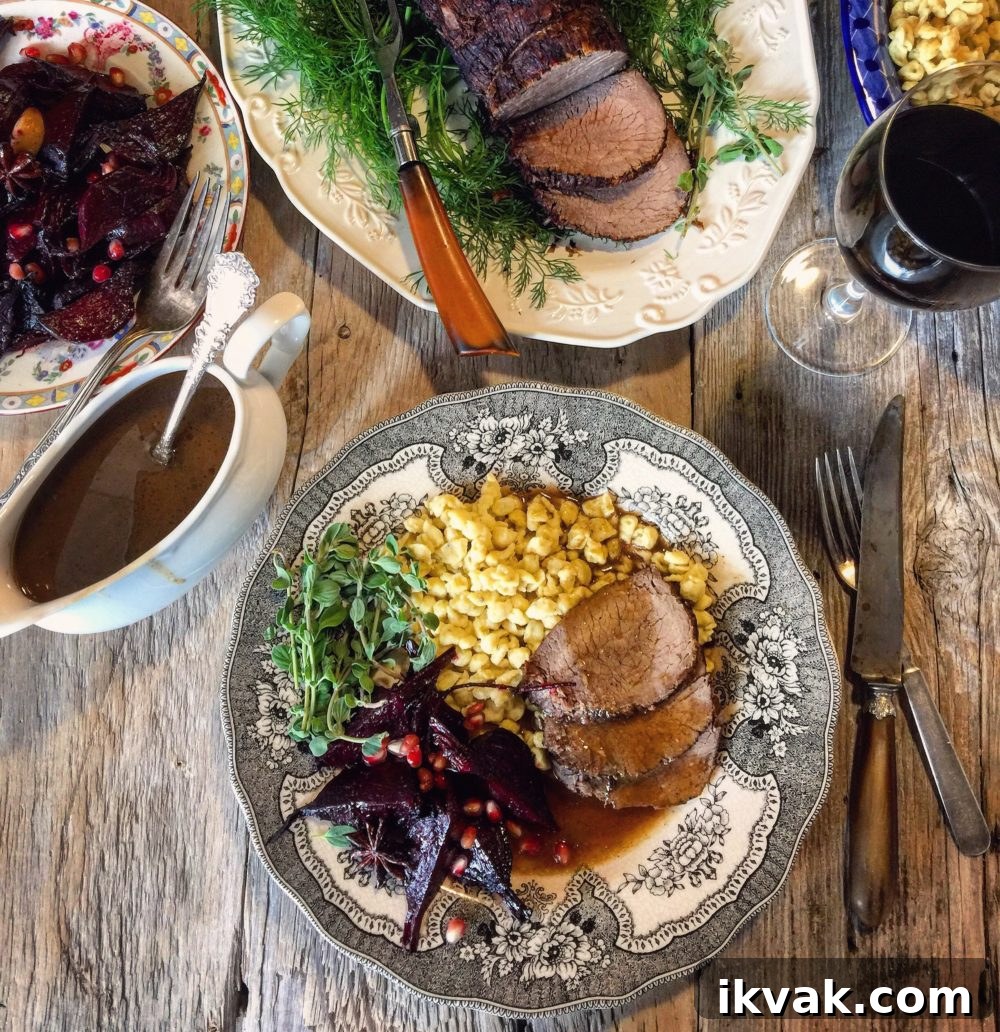
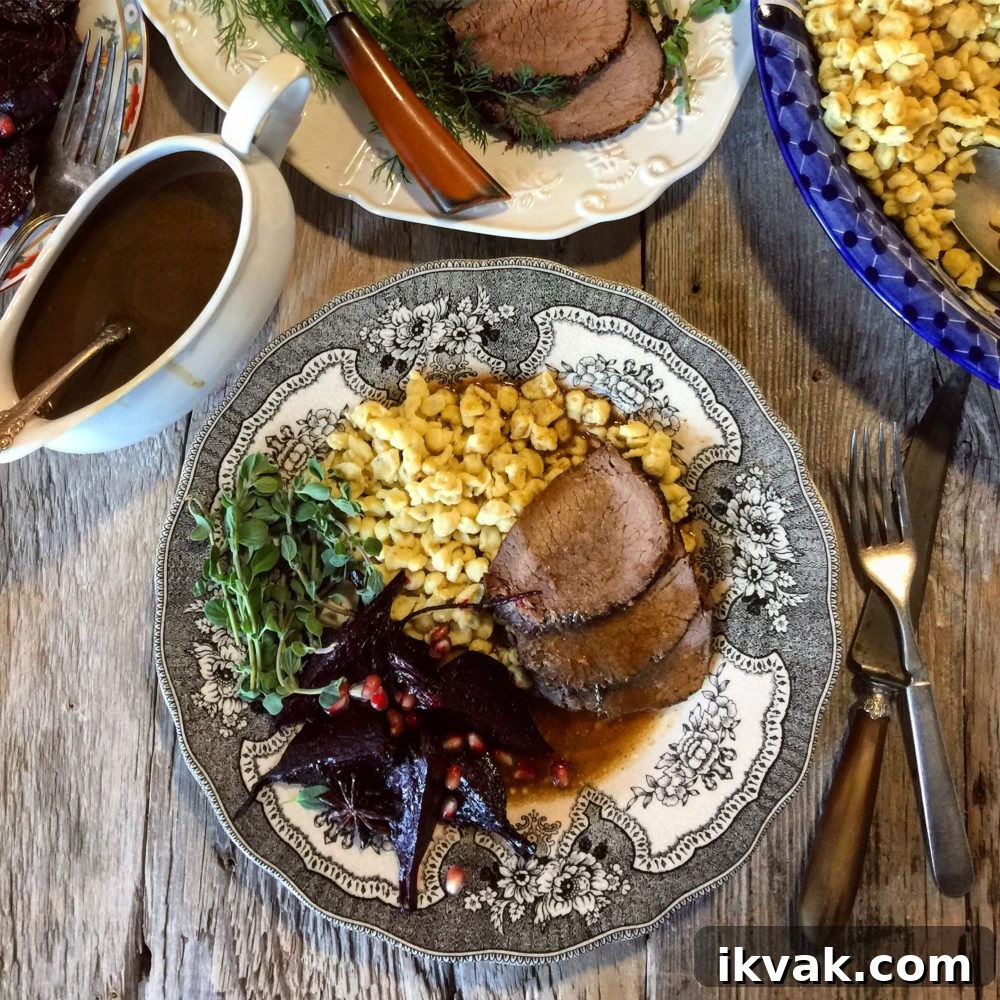
To celebrate the first anniversary of The Lemon Apron, I’m sharing one of my mum’s favourite dishes: Sauerbraten with Spätzle. This is a special-occasion meal in our house—our version of roast beef, only braised and marinated in a deeply tangy, spiced liquid. At the end of the day it’s a pot roast, but it’s a pot roast that develops complex flavours over several days.
What Makes Sauerbraten So Special
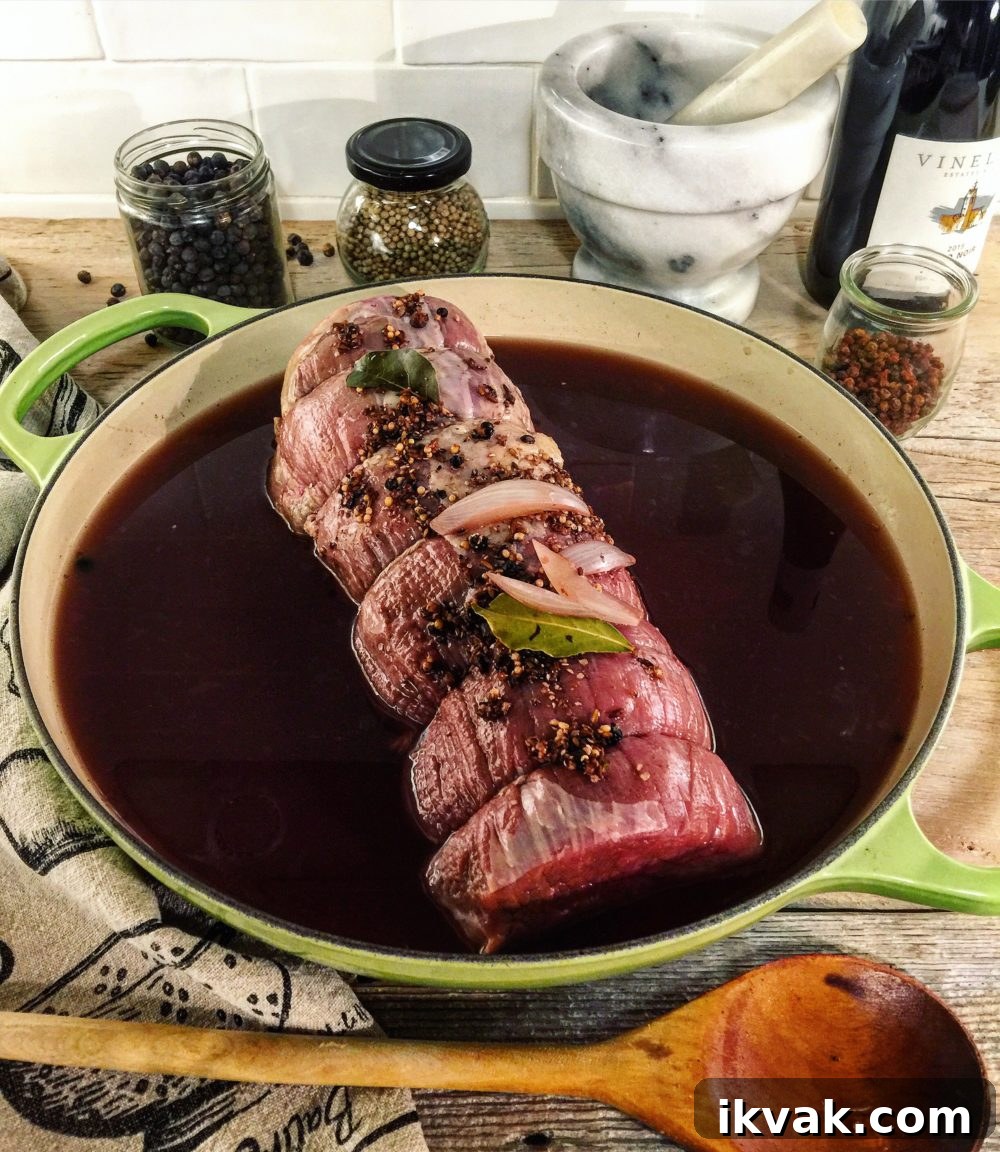
The key to sauerbraten is the marinade. For 3–5 days the tied roast soaks in a mixture of red wine, vinegars, pickling spices, juniper berries and onion. The liquid is warmed, cooled, then poured over the meat, which is turned daily so it soaks evenly. The marinade gives the roast a pleasant, refined sourness; my mum always balanced the tang with a touch of sugar so that the sauce remains rounded instead of sharp. That balance is what makes the dish sing.
The roast shown here is an eye of round cut from New Zealand. You can also use boneless chuck top blade, rump roast, or any other cut suitable for braising. After marinating, the roast is seared on all sides, then braised gently in the strained marinade plus some beef stock until it becomes meltingly tender. The cooking liquid is then reduced and turned into a glossy gravy. Some traditional recipes call for crushed gingersnaps or gingerbread to thicken and sweeten the sauce; my family did not use that method. I prefer a cornstarch or arrowroot slurry, though a roux works just as well.
Final Thoughts
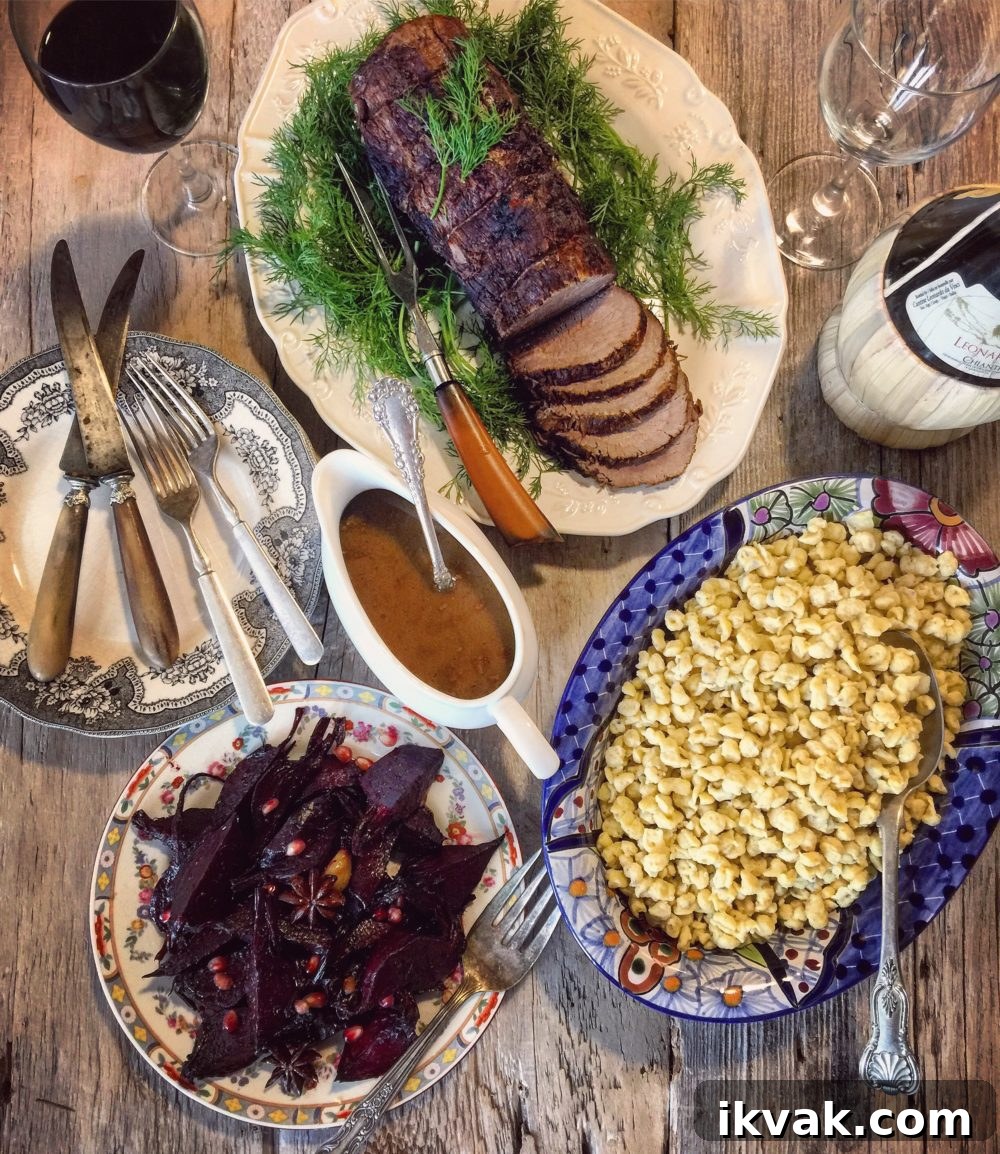
Serve the sauerbraten with classic Spätzle or Knödel (potato dumplings), red cabbage or roasted beets, and you’ll have an authentic German feast. A warm apple strudel or Bienenstich would be the perfect finish.
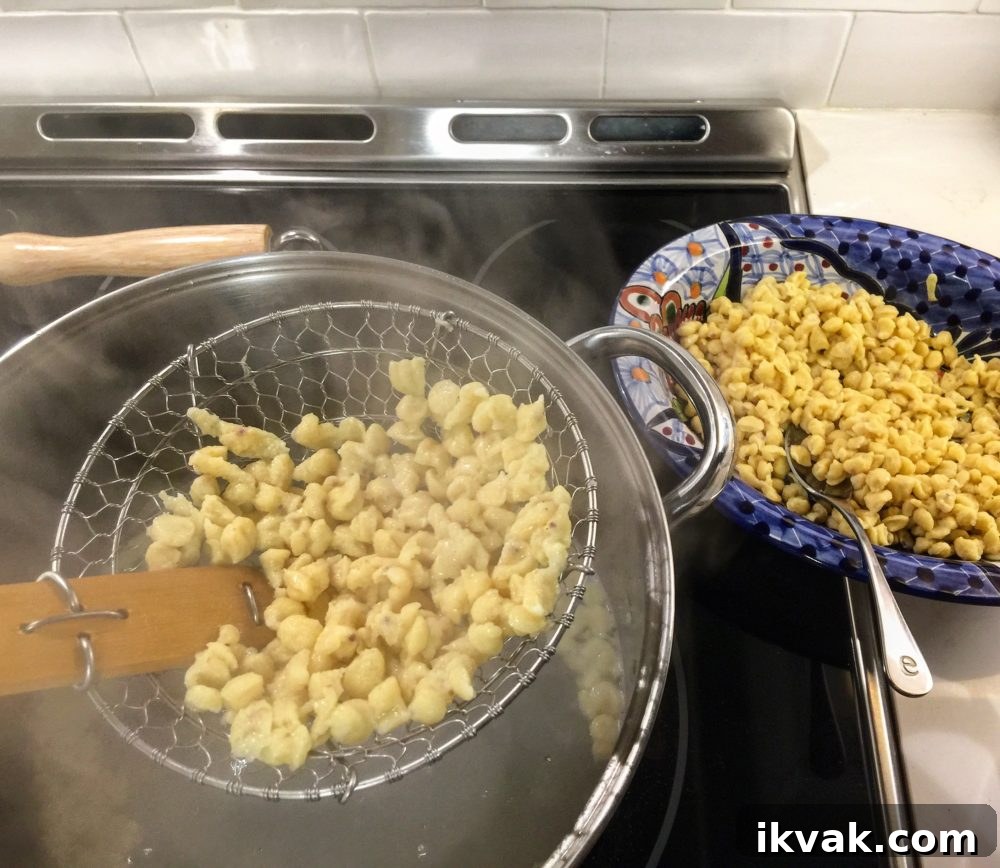
If you prefer mashed potatoes, that’s fine too—Jim loves mashed potatoes, and I love Spätzle, so I often make both. Spätzle are simple: a thick batter is pushed through a colander or a spätzle maker into boiling water, forming small dumpling-like noodles. I add Dijon and grainy mustard to my batter for extra flavor. Leftover spätzle are terrific pan-fried in butter with a bit of gravy the next day.
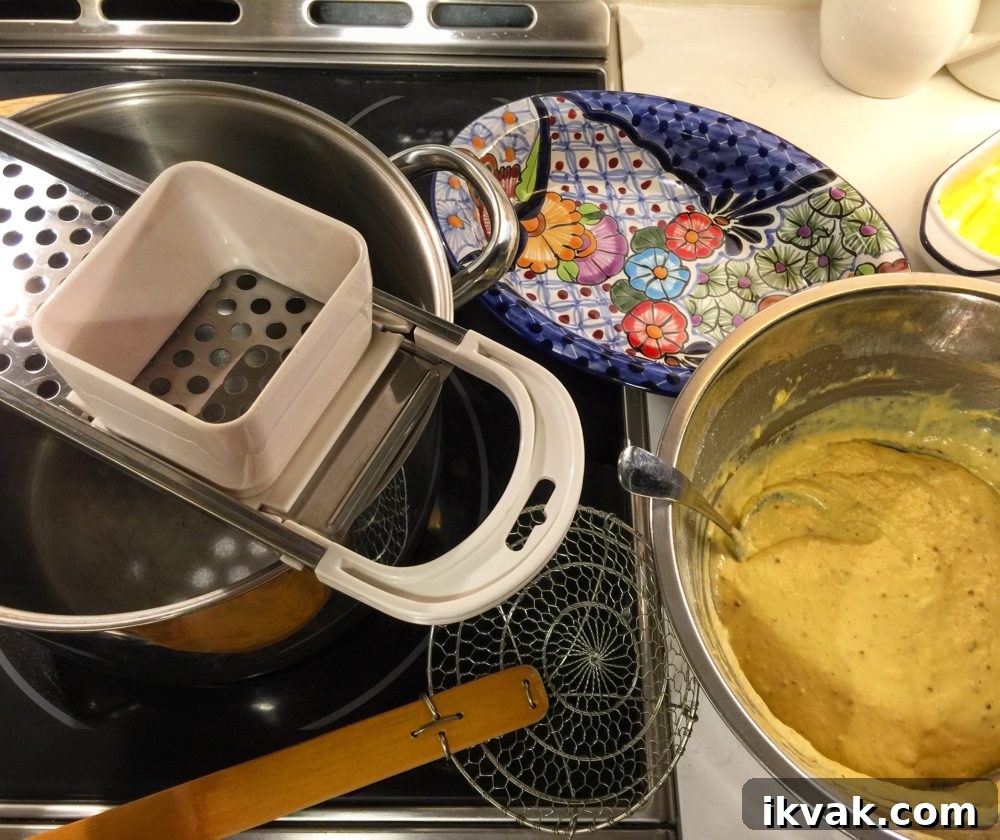
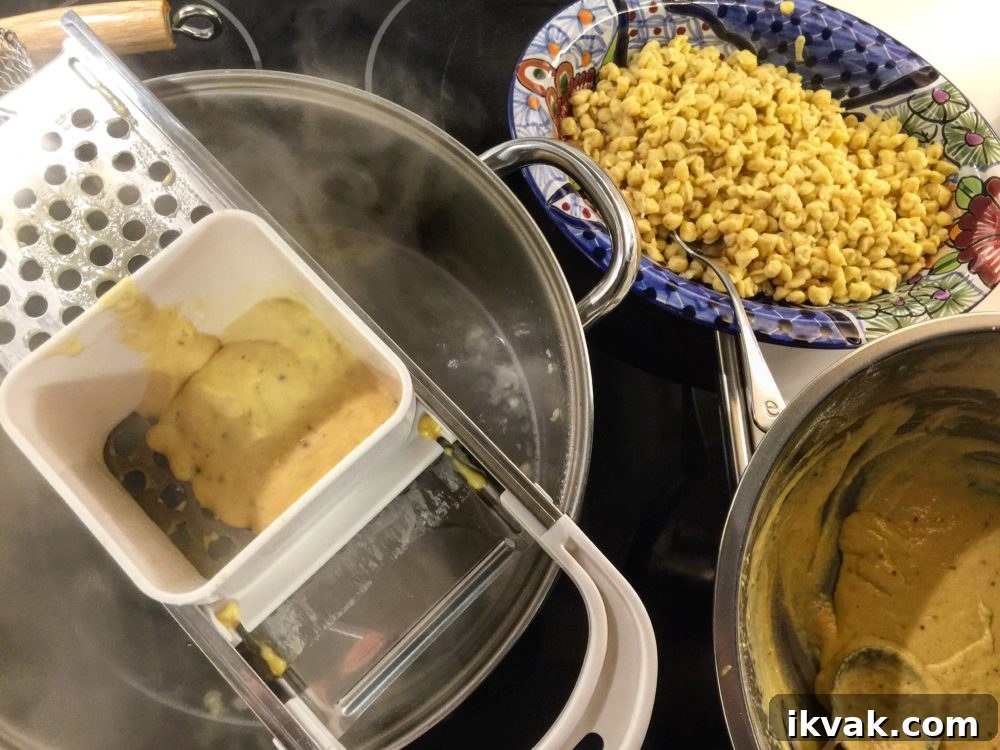
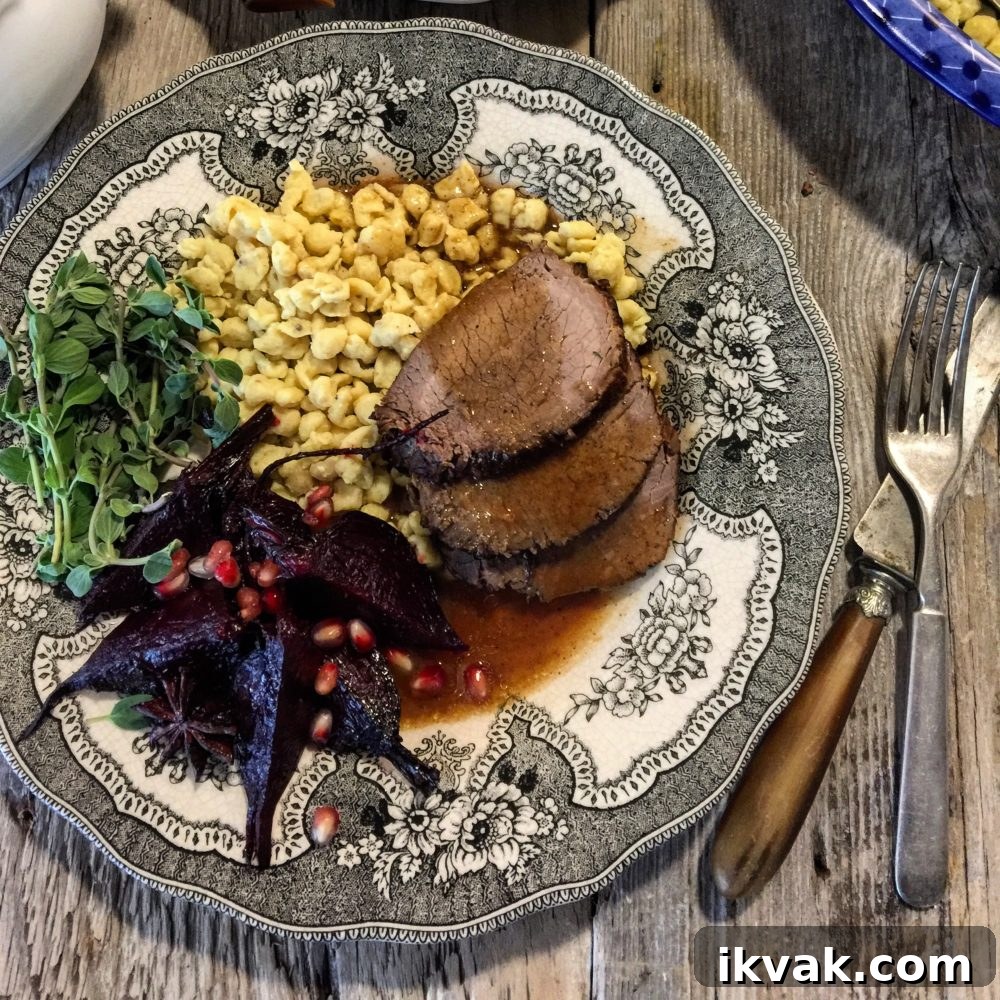
If my sister joins us, there will be Knödel as well. We truly love our carbs. For this post I served roasted beets glazed with pomegranate molasses—another recipe I’ll share soon.
The process sounds longer than it is. The first step simply needs enough fridge space and a daily reminder to turn the meat; after that the cooking is a joy and the aroma in the kitchen is irresistible.
Thank you for following the blog this past year. I love hearing from readers about what they’ve tried and how it turned out. If I’ve left something out or been unclear, give me a poke—I’ll happily clarify.
Love, Jen.
PS: All this spätzle talk reminds me of Käsespätzle—German mac and cheese. I’ll post that recipe soon.
MAMA’S SAUERBRATEN WITH SPÄTZLE
Course: Main Course
Cuisine: German
Keywords: dumpling, noodle, pot roast
Prep Time: 20 minutes
Marinating Time: up to 5 days
Servings: 6
Ingredients
- 1 (3½–4 lb) boneless rump or chuck roast (any tender pot roast cut will work)
- 1 cup dry red wine
- 2/3 cup red wine vinegar
- 1/3 cup apple cider vinegar
- 1 medium onion, sliced
- 2 bay leaves
- 1 tsp black peppercorns
- 1 tsp caraway seeds
- 6 juniper berries, lightly crushed
- 2 tbsp pickling spices, lightly crushed (see pickling spices below)
- 3 cups water
- Olive oil
- 1 cup beef stock or broth
- 3–4 tbsp cornstarch
- 3–4 tbsp cold water
- 2 tbsp coconut palm sugar (or brown sugar), or to taste
- Kosher salt and cracked pepper
- 1 tbsp prepared horseradish (optional)
SPÄTZLE
- 3 large eggs
- 2/3 cup whole milk (can use 2%); more if needed
- 2 cups all-purpose flour
- 1/2 tsp kosher salt
- 1/8 tsp white pepper
- 1/4 tsp grated nutmeg
- 3 tbsp melted butter
- 2 tsp Dijon mustard
- 1 tsp grainy mustard
- 2 tsp caraway seeds
PICKLING SPICES
- 2 tbsp whole black peppercorns
- 3 inches cinnamon sticks (total length)
- 2 tbsp dill seeds
- 1 tbsp hot red pepper flakes
- 1 tbsp mustard seeds
- 1 tbsp coriander seeds
- 1 tbsp celery seeds
- 4 bay leaves
- 1 tbsp dried thyme leaves
- 1 tbsp ground ginger
- 2 tsp whole allspice berries
- 1 tsp whole cloves
- Optional: 1 tbsp mace, 1/2 tsp cardamom seeds (or 1 tbsp pods), 1 tbsp juniper berries, 2 star anise pods
Instructions
Method for Pickling Spices
- Place cinnamon sticks and peppercorns in a plastic bag and lightly smash with a meat tenderizer or hammer. Crumble bay leaves. Combine all spices and store in a sealed jar.
Roast
- In a large pot combine red wine, both vinegars, sliced onion, 2 bay leaves, peppercorns, caraway seeds, crushed juniper berries, pickling spices and 3 cups water. Bring to a boil, then turn off the heat and let the liquid cool completely.
- Place the roast, patted dry and tied, in a large bowl or pot with a lid. Pour the cooled marinade over the meat; it may not fully cover it. Cover and refrigerate.
- Turn the roast daily to ensure even marinating for up to 5 days. For more tender cuts, limit marinating to 3 days to avoid over-tenderizing.
On the Day of Cooking
- Remove the roast from the marinade and pat dry. Strain and reserve the liquid.
- Season the meat with salt and pepper on all sides.
- Heat about 2 tbsp olive oil in a large Dutch oven over medium-high heat and brown the roast on all sides, about 20 minutes total. Reduce heat if browning too quickly.
- Pour the reserved marinade into the pot with the roast along with 1 cup beef stock and 1 bay leaf. Bring to a boil, then reduce to a gentle simmer. Cover and cook 1½–2 hours, turning the meat every 30 minutes, until very tender.
- Remove the roast and tent with foil on a baking sheet. Increase heat and reduce the cooking liquid to about 3–4 cups, then remove the bay leaf.
- Make a slurry of cornstarch and cold water (about 1 tbsp cornstarch per cup of liquid) and whisk into the reduced liquid until smooth and thickened.
- Taste the gravy and add 1–2 tbsp sugar to balance acidity, seasoning with salt and pepper. Stir in 1 tbsp prepared horseradish for extra kick if desired. Keep covered until serving.
Spätzle
- These can be made while the roast braises or the day before and reheated. In a large bowl, whisk eggs and milk together.
- Combine flour, salt, white pepper and nutmeg in a separate bowl, then add to the egg mixture and stir to combine.
- Stir in melted butter and the mustards. Let the batter rest 10 minutes. If too stiff to pass through a spätzle maker or colander, add a little more milk; it should move but not be runny.
- Bring a large pot of water to a rolling boil. Place a colander with medium holes or a spätzle maker over the pot and push batter through into the boiling water in batches.
- When the dumplings float to the surface, remove them with a slotted spoon, toss lightly with butter or oil and sprinkle with caraway seeds. For extra texture, sauté finished spätzle in butter briefly.
Serve
- Slice the roast thinly and arrange on a serving platter. Spoon gravy over the meat and garnish with parsley sprigs. Serve with spätzle, red cabbage, roasted beets or potato dumplings.
Recipe Notes
Use roughly 1 tbsp cornstarch to thicken 1 cup of liquid; add more slurry for a thicker gravy. I like to make extra gravy and spätzle—leftovers are excellent.
Traditionally sauerbraten is served with cooked red cabbage, but roasted beets or Brussels sprouts are delicious alternatives.
This is a classic special-occasion dish but is also perfect for a comforting Sunday supper.
Pickling spices recipe adapted from a trusted source.