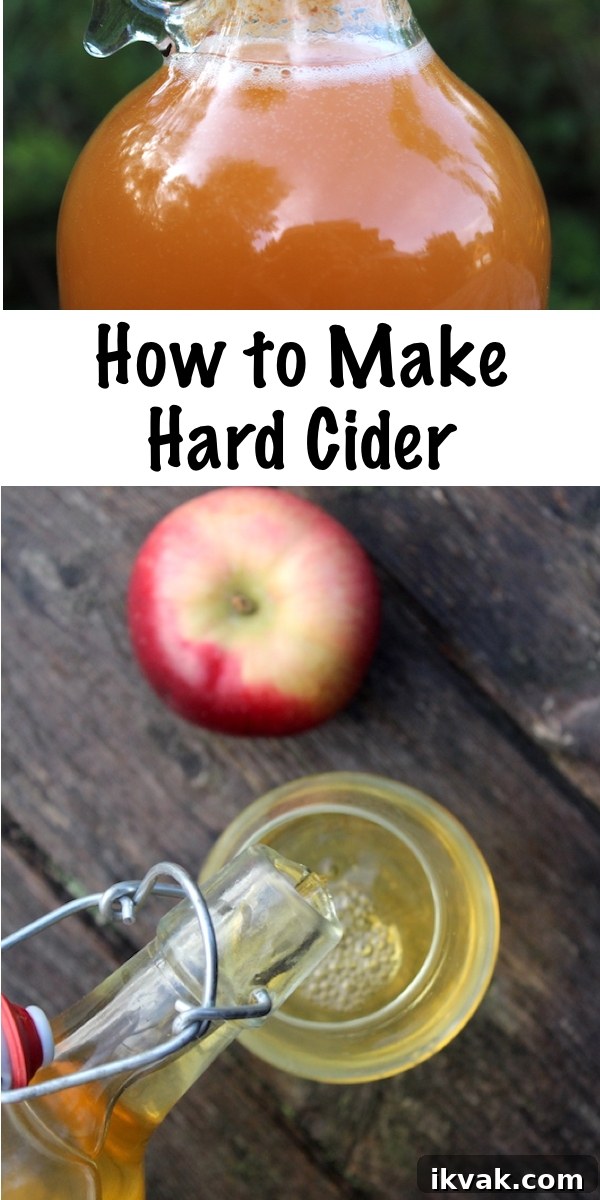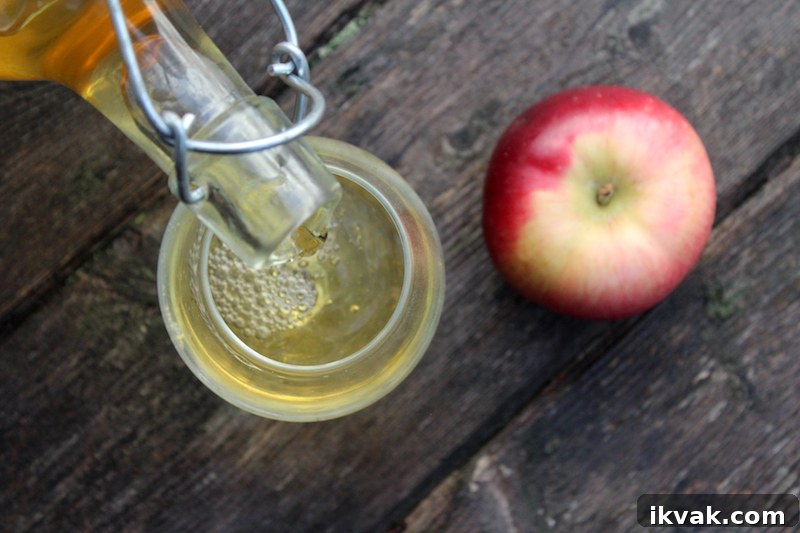
Hard cider is one of the oldest beverages tied to orchard culture. Early apple varieties often produced sour or tannic fruit that didn’t taste great fresh but fermented into rich, satisfying alcoholic cider.
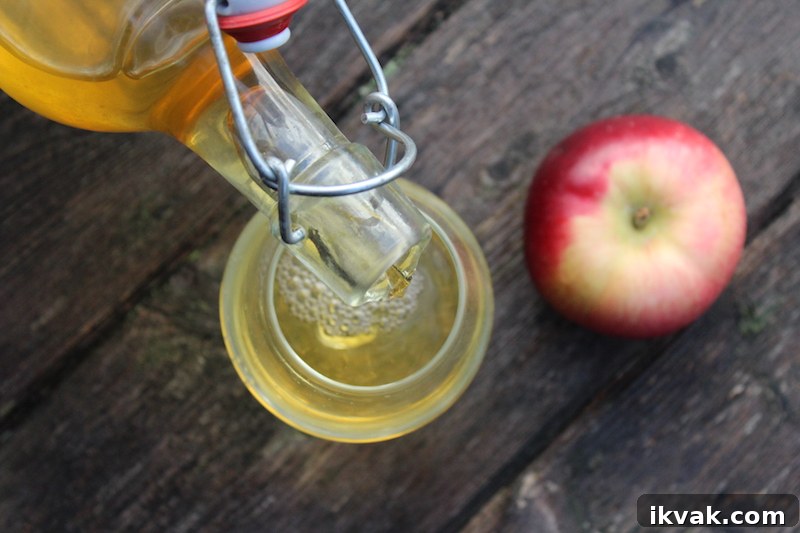
Making hard cider is straightforward—apples carry plenty of fermentable sugars and natural yeasts on their skins, so when you press fresh juice fermentation will often begin on its own. Left at room temperature, fresh-pressed cider can start fermenting within a day. Refrigeration slows that activity but doesn’t stop it entirely. Without preservatives and with an opened cap to relieve pressure, you can end up with hard cider in a few weeks.
While fermentation itself requires little skill, producing consistently good hard cider takes attention to ingredients and process. By selecting the right apples, using proper sanitation, and managing fermentation, you can make excellent cider at home with minimal equipment.
How to Make Hard Cider
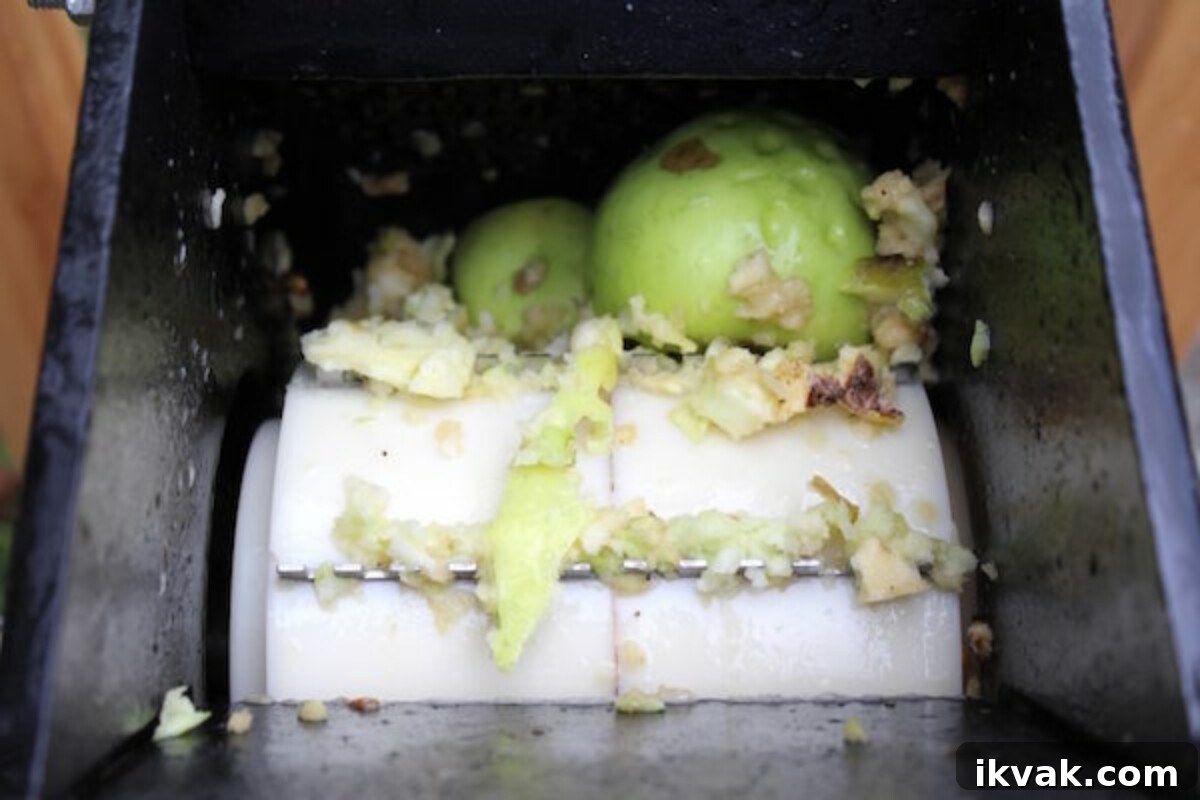
The process begins with fresh-pressed apple juice that contains no preservatives. Many store-bought ciders include potassium sorbate, which prevents fermentation, so be sure your juice is preservative-free. If you press your own apples, a quality press speeds the job and extracts more flavor.
Sanitize all equipment with a no-rinse brewing sanitizer. At minimum, you need a fermentation vessel (a one-gallon glass carboy for small batches or a five-gallon bucket for larger batches), a rubber bung and airlock, a siphon for racking and bottling, and bottles with caps or corks and a capper or corker.
Pour the fresh cider into the sanitized fermentation vessel. Some makers choose to add a Campden tablet (potassium metabisulfite) to kill wild yeasts—one tablet per gallon—and wait 24–36 hours before pitching a commercial yeast. This step gives total control over yeast strains but is optional. An alternative is low-temperature pasteurization: heat the juice to 165°F (74°C) for ten minutes, which will also kill wild yeasts but can reduce some aroma.
Optional additions that improve clarity and fermentation health include pectic enzyme and yeast nutrient. Pectic enzyme breaks down pectin in apple fibers, helping the cider clear; use about 1/2 teaspoon per gallon. Yeast nutrient supplies micronutrients that support a healthy, complete fermentation; 1 teaspoon per gallon is a common guideline.
Pitch a cider yeast for reliable, predictable fermentation. While wild yeasts on apples will ferment juice, they can produce inconsistent or off-flavors. A single packet of commercial cider yeast is sufficient for up to five gallons. Different strains give different profiles: neutral, dry finishes or more aromatic, fruity results—choose based on the style you want.
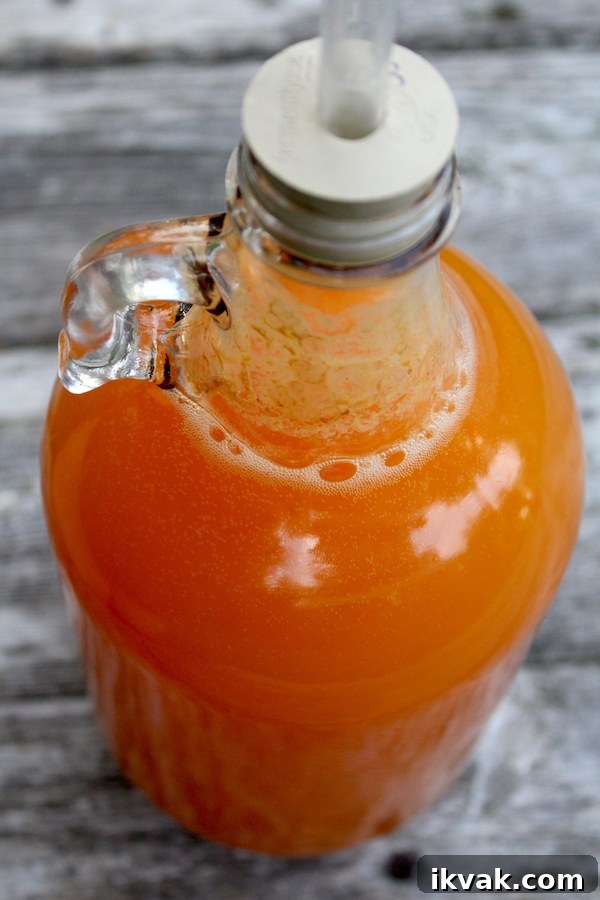
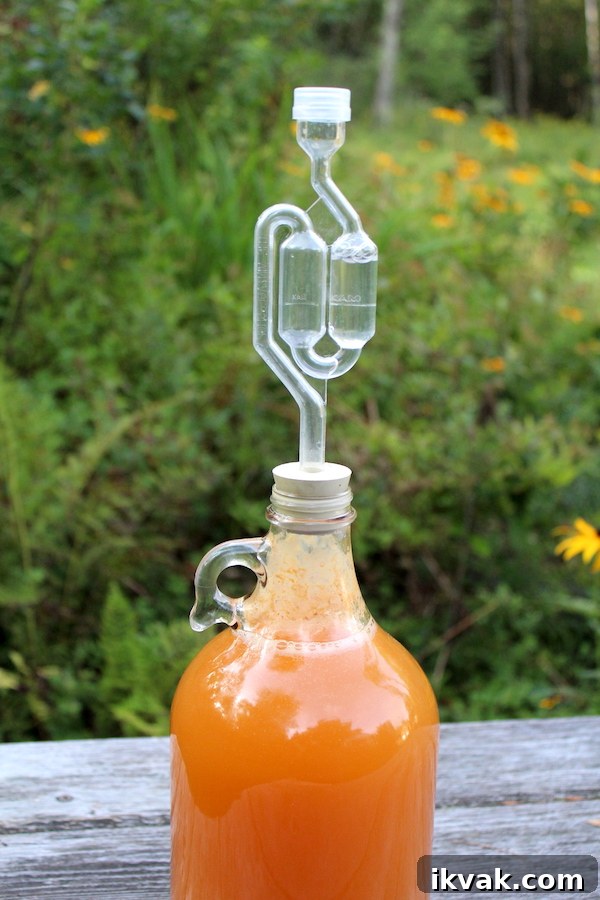
Fit the fermenter with a water lock to allow CO2 to escape while keeping contaminants out. Place the fermenter in a cool, dark spot around 60°F (15°C) if possible. Fermentation typically becomes vigorous within a day or two and continues actively for one to two weeks. Monitor the airlock during the first days in case foaming carries sediment into it; if that happens, clean the airlock and reseal.
After roughly two weeks the activity should slow and a layer of lees—dead yeast and apple solids—will settle. At this point you can either bottle the cider or rack it to a secondary vessel to separate it from the lees. Leaving cider on the lees too long can produce off-flavors, so transfer or bottle once active fermentation subsides.
If racking, siphon the cider carefully into a clean vessel and reseal with an airlock. A secondary fermentation period of two to four weeks helps the cider clarify and mellow.
Finishing Homemade Hard Cider
Finishing choices depend on the style you want. Unstabilized cider that ferments fully will typically be quite dry because apple sugar levels are modest relative to grapes. Average hard cider alcohol falls between 4% and 6% ABV unless you add significant fermentable sugar to raise the alcohol and body.
Common finishing options:
- Dry still cider — Bottle without back-sweetening for a dry, table-style cider around 4–6% ABV. This is traditional, stores well, and works well in mixed drinks.
- Natural, short-shelf-life cider — Bottle lightly while fermentation is slowing to create a lightly carbonated, preservative-free cider. Store cold and drink within a short period; this is rustic and unpredictable.
- Carbonated cider — After fermentation finishes, prime for carbonation by adding about 1 ounce of corn sugar per gallon (dissolved and cooled) before bottling. Let bottles carbonate at room temperature for a week, then move to cold storage to slow further carbonation.
- Still, sweet cider — Stabilize with potassium sorbate (about 1/2 teaspoon per gallon) to prevent renewed fermentation, then back-sweeten with sugar, honey, or maple syrup to taste. This yields a sweet, still cider suitable for longer aging.
Bottling Hard Cider
Sanitize bottles and bottling equipment. Choose flip-top bottles for small, reusable batches, or standard beer bottles with caps for larger runs. Wine bottles and corks also work. Use a siphon to fill bottles, leaving roughly 1–2 inches of headspace, then cap or cork.
Store carbonated bottles in a cool cellar or refrigerator to prevent over-carbonation. Still ciders benefit from aging three to six months in a cool, dark place to develop rounded flavors.
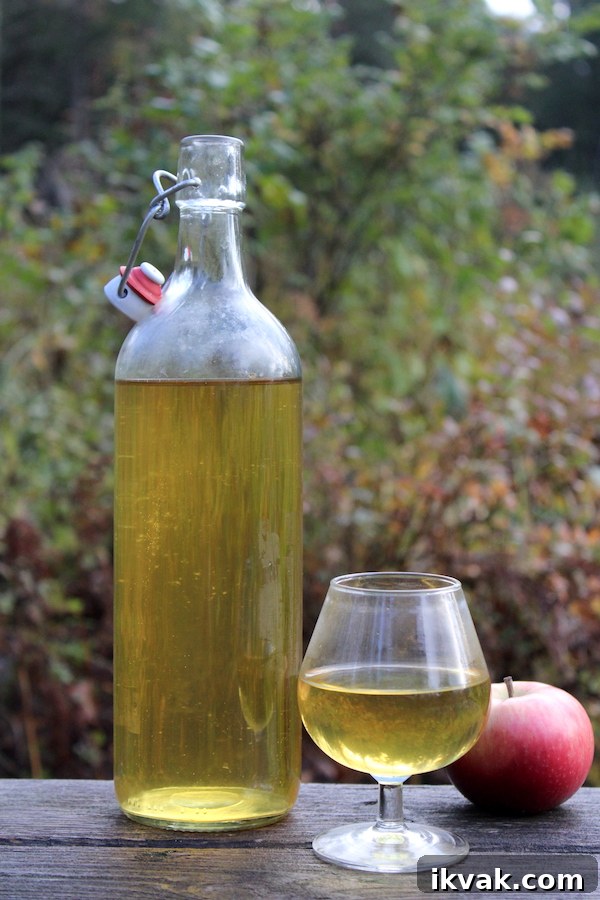
Hard Cider
Equipment
- One Gallon Carboy (glass carboy or fermentation bucket)
- Air Lock & Stopper
- Winemaking Auto-Siphon for racking and bottling
- Beer Bottles, Grolsch bottles, or wine bottles
- Bottle Caps or Corks and capper/corker
- One-step no-rinse sanitizer
Ingredients
- 1 gallon fresh-pressed apple cider, without preservatives
- 1 packet cider yeast (Safcider, Red Star Premier Blanc, etc.)
- 1 tsp yeast nutrient (optional but recommended)
- 1/2 tsp pectic enzyme (optional, for clarity)
- 1–2 Campden tablets (optional, for sterilizing cider)
Instructions
- Confirm the cider has no preservatives such as potassium sorbate.
- Pour the cider into a clean, sanitized fermentation vessel.
- Optional sterilization: add 1 Campden tablet per gallon and wait 24–36 hours, or pasteurize at 165°F (74°C) for 10 minutes (may reduce aroma).
- Add 1/2 tsp pectic enzyme per gallon to help clarify the cider.
- Optional: add 1 tsp yeast nutrient per gallon to support a healthy fermentation.
- Pitch one packet of cider yeast (sufficient for 1–5 gallons).
- Attach a rubber bung and airlock, then place the fermenter in a cool, dark spot (around 60°F/15°C). Fermentation should begin within 1–2 days and will bubble through the airlock.
- Allow fermentation to run 1–2 weeks until bubbling slows. Monitor the airlock for clogging from foam and clean if necessary.
- Optional racking: when fermentation slows, siphon the cider off the lees into a clean vessel to improve clarity and reduce off-flavors.
- If racked, allow an additional 2–4 weeks in secondary to clarify.
- Choose a finish: leave dry and bottle, prime for carbonation with corn sugar (about 1 oz per gallon) for fizzy cider, or stabilize and back-sweeten with potassium sorbate (1/2 tsp per gallon) and sugar for a still sweet cider.
- Sanitize bottles and bottling tools, fill leaving 1–2 inches headspace, then cap or cork.
- Age bottles before opening: still ciders benefit from 3–6 months in a cool, dark place; carbonated ciders can be refrigerated after a week of bottle conditioning to prevent over-carbonation.
Notes
Apple selection: Quality and variety matter. Blend apples to balance tannin, acidity, and aroma. A guideline: 30–60% neutral apples, 10–20% tart, 10–20% aromatic, and 5–20% astringent/tannin-rich apples for complexity.
Sanitation: Proper cleaning with a no-rinse sanitizer prevents acetobacter and other spoilage organisms that can turn cider to vinegar or cause off-flavors.
Sugar & alcohol: Apples have modest sugar, so typical ABV is 4–6%. Increase alcohol by adding fermentable sugars, but understand that dramatic increases can change the style toward an apple wine or cyser.
Variations: Try perry (pear cider), cyser (honey-added), hopped cider, fruit-infused ciders, or oaked ciders using oak chips or spirals for different flavors.
Nutrition
Nutrition information is approximate.
Brewing Sanitation
Sanitation matters for flavor and stability. Historically, cider vessels hosted desirable yeast strains from repeated use, but modern home cider makers should clean and sanitize equipment to avoid unwanted bacteria such as acetobacter, which converts alcohol to vinegar. Sanitation also helps ensure the chosen cider yeast dominates and produces the aromatic compounds you want.
Wash and sanitize fermenters, siphons, and bottles with a one-step no-rinse sanitizer before use.
Choosing Apples for Hard Cider
The best ciders come from thoughtful blends of apple types. A balanced mix provides tannin, acidity, and aromatics without needing additives. If possible, source cider apples or a blend from a mill. A recommended ratio for a complex cider is roughly 30–60% neutral base apples, 10–20% tart apples, 10–20% aromatic apples, and 5–20% astringent or tannin-rich apples. Local mills or orchards often sell mixed cider blends or will fill carboys with a good pressing.
Making Hard Cider from Store-Bought Juice
If you use store-bought juice, check the label for preservatives. Raw, preservative-free cider from a mill is ideal. Commercial shelf-stable juices are often pasteurized and can lack depth; they will ferment, but the character may be flat. For richer flavors, use fresh, unpasteurized cider when possible.
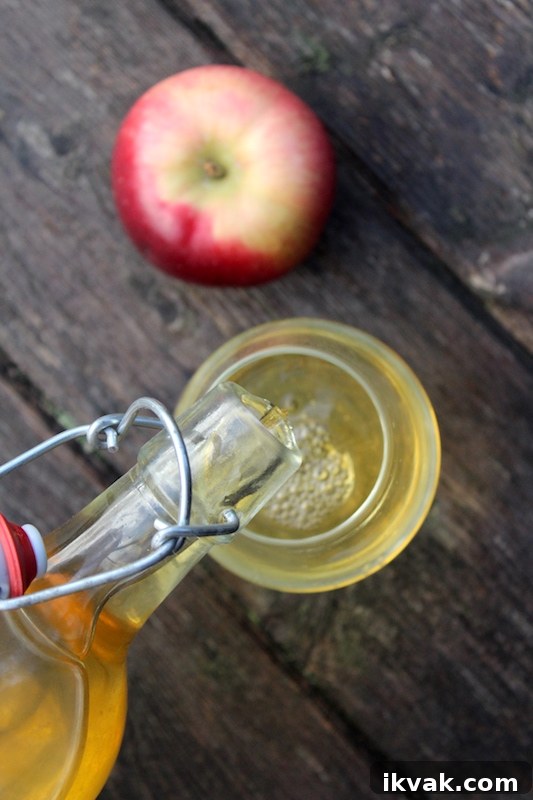
Hard Cider Recipe Variations
Once you master a basic cider, experiment with variations: perry (pear cider), cyser (honey-added), hopped ciders, fruit-infused ciders, oaked ciders using oak chips or spirals, or herbal-infused versions. Each addition changes aroma, body, and balance—start small and taste as you go.
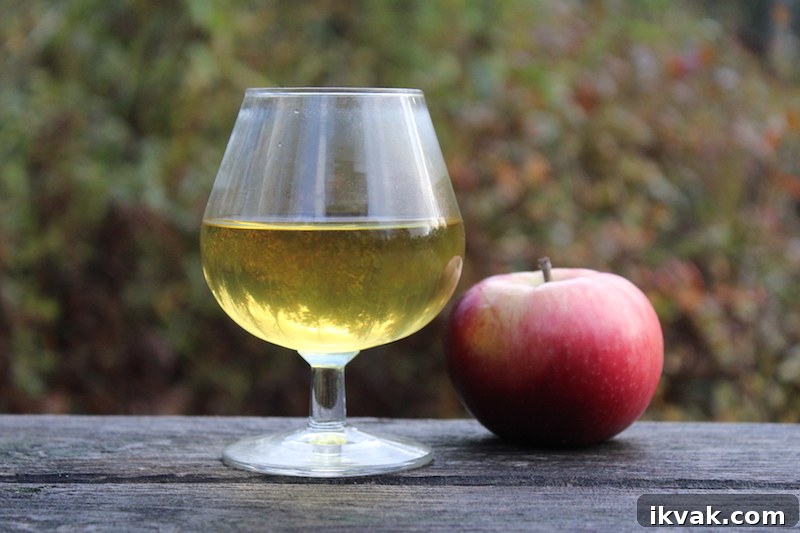
Hard Cider Kits & Resources
Starter kits can be a cost-effective way to get the basic equipment and ingredients together. Books on cider making are valuable references; older texts focused on traditional methods while newer guides often show modern techniques. If you have questions, try local orchards or experienced makers for advice.
Happy fermenting—leave a note in the comments if you have questions about home cider making.
Other Easy Homemade Beverages
- Peach Wine
- Blackberry Wine
- Rhubarb Wine
More Tasty Apple Recipes
- Apple Sugar (Extracting Sugar from Apples)
- Apple Pie Shortbread Bars
- Canning Apple Pie Filling
- Canning Apple Cider