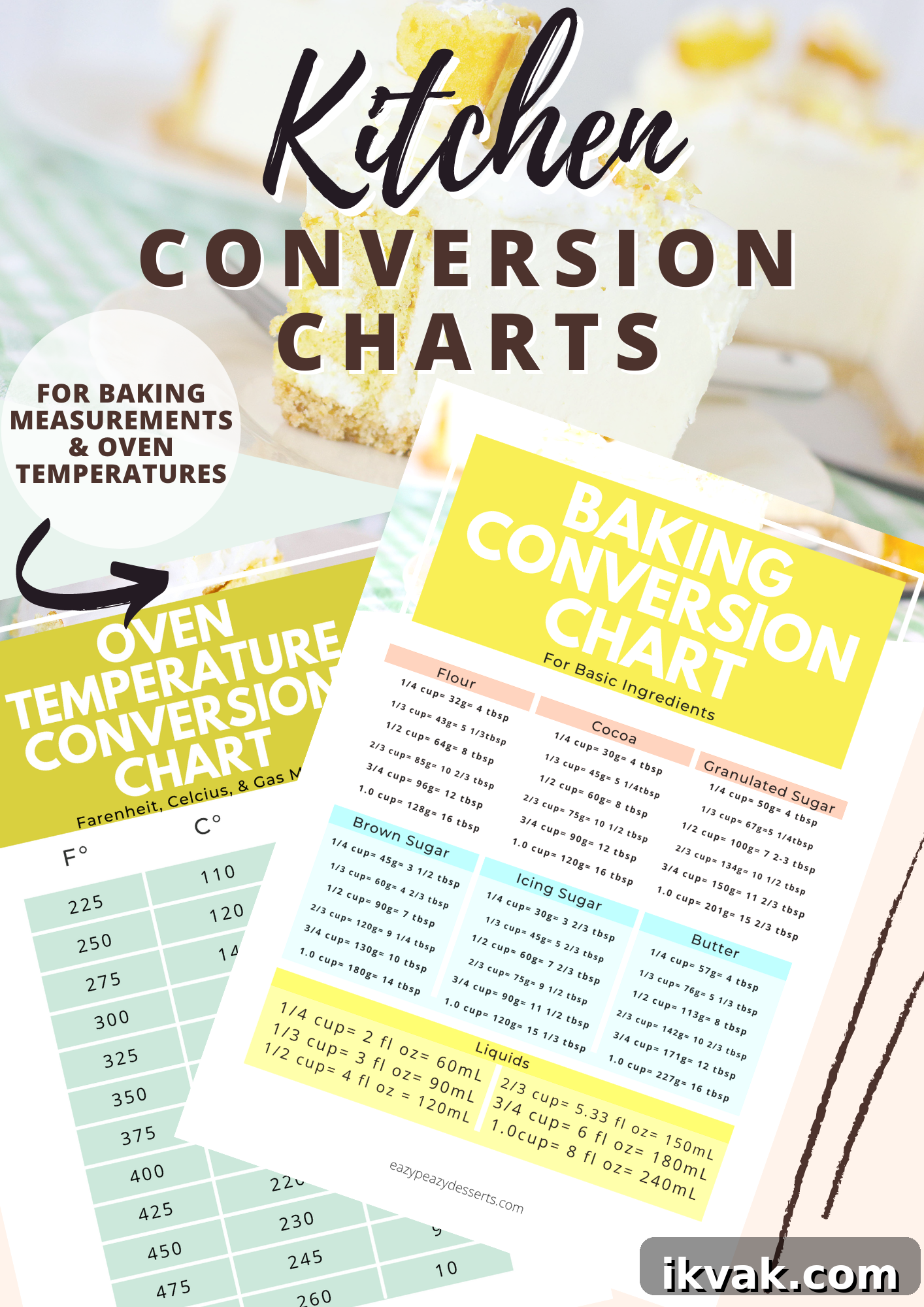
This kitchen conversion chart printable can be a real time-saver. It includes baking measurement conversions and an oven temperature conversion chart. Print it, keep it for reference, and share it with friends.
Kitchen conversion chart that makes cooking easier
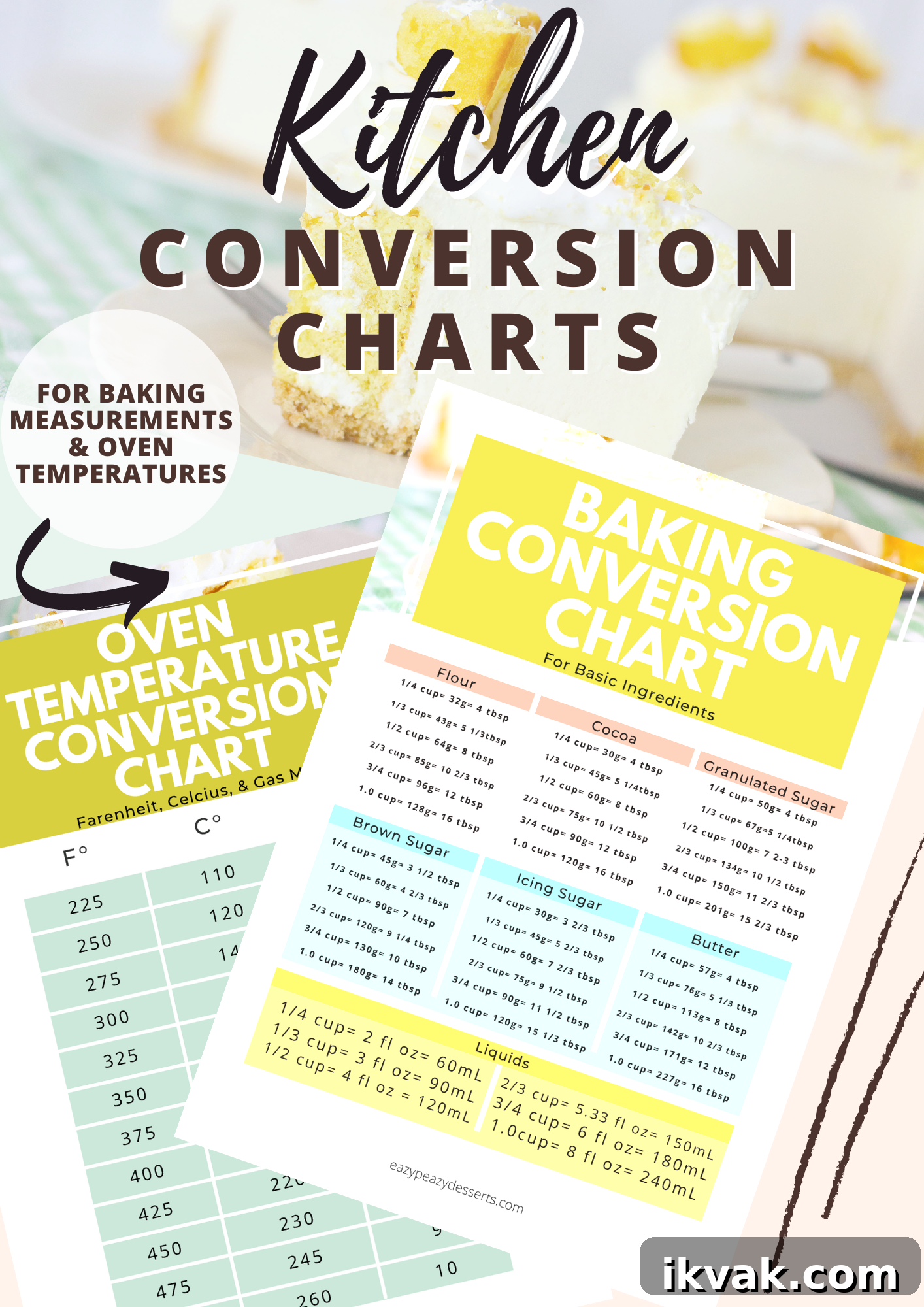
A kitchen conversion chart simplifies measurements and oven temperature changes so you can follow recipes confidently. These printable charts are helpful when a recipe lists ingredients in different units—ounces, cups, grams, or milliliters. They include clear conversion tables you can print and keep handy in the kitchen.
Print this kitchen conversion chart and store it near your work area. The charts cover common measures in cups, grams and milliliters to make everyday baking and cooking easier.
What are the benefits of a kitchen conversion chart?
Both the baking and oven conversion charts are designed to be easy to read and use the units most recipes require. They save time and reduce guesswork, which increases the chance of baking success. Print a copy and keep it on the counter, in a cookbook, or on the fridge so it’s available whenever a recipe uses different units.
How to use a conversion chart for cooking?
Using a printable conversion chart is straightforward:
- Find the ingredient listed in the recipe that uses different units (for example, grams versus cups).
- Locate that ingredient on the conversion chart and read the corresponding values for grams, cups, ounces, or milliliters.
- Measure the ingredient using the converted value and proceed with the recipe.
Common conversions and why they matter
Common conversions include Celsius to Fahrenheit, ounces to grams, pints to milliliters, and teaspoons to tablespoons. Converting correctly is important because recipes—especially baked goods—rely on accurate ratios. Small measurement or temperature mistakes can affect texture, rise, and overall results, so precise conversions help ensure consistent outcomes.
Some conversions are needed more often depending on whether a recipe uses metric or imperial units. Having a chart eliminates the need to calculate on the fly and reduces error.
Conversion charts are especially useful if math isn’t your favorite task or if you frequently work with recipes from different regions.
Why consistent units matter when scaling recipes
When scaling a recipe—say tripling a cake batter—using consistent units ensures ingredients keep the correct ratios. Mixing units or converting inconsistently can lead to imbalanced mixtures, incorrect moisture, or other issues that affect baking and cooking performance.
When to use a chart instead of converting by hand
Use a conversion chart whenever you need quick, reliable conversions of mass, volume, or temperature. Charts are handy for switching between metric and imperial units and save time compared to manual calculations. They’re practical for cooks of all skill levels who want consistent results.
How people converted measurements historically
Historically, people used rulers, scales, and informal measures like handfuls, pinches, or even body parts when exact tools weren’t available. While those methods can work in casual cooking, a chart or a scale provides far more accuracy for recipes that require precision.
Do you need special equipment?
No special tools are required—basic measuring cups and spoons will work with the conversion chart. For the most accurate results, use a kitchen scale to measure ingredients by weight.
Benefits of using a food scale
A food scale provides precise measurements and is especially useful for baking. Weighing ingredients reduces variation from how people pack cups and spoons, leading to more consistent results. If you bake often, a kitchen scale is a worthwhile investment.
How to measure ingredients with a food scale
To measure with a digital kitchen scale:
- Identify the ingredient and its unit in the recipe (for example, ounces, grams, or cups).
- Find the equivalent value on your conversion chart (for example, how many grams are in a cup for that specific ingredient).
- Weigh the ingredient on the scale using the converted value and proceed with the recipe.
Where to find a printable conversion chart for cooking
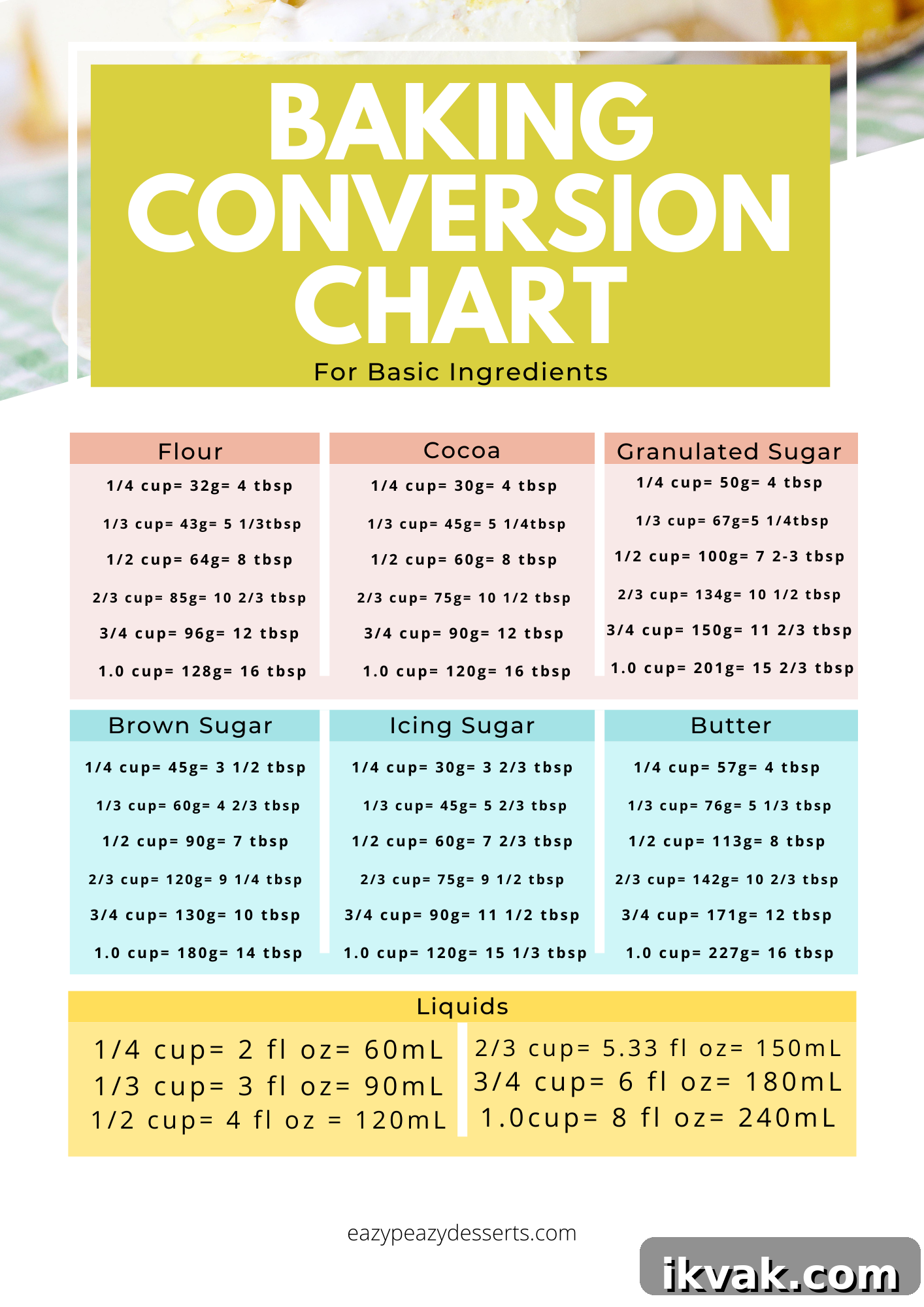
The printable conversion chart includes cup-to-gram conversions for common baking ingredients from 1/4 cup up to 1 cup, covering items such as:
- Flour
- Cocoa
- Granulated sugar
- Brown sugar
- Icing sugar
- Butter
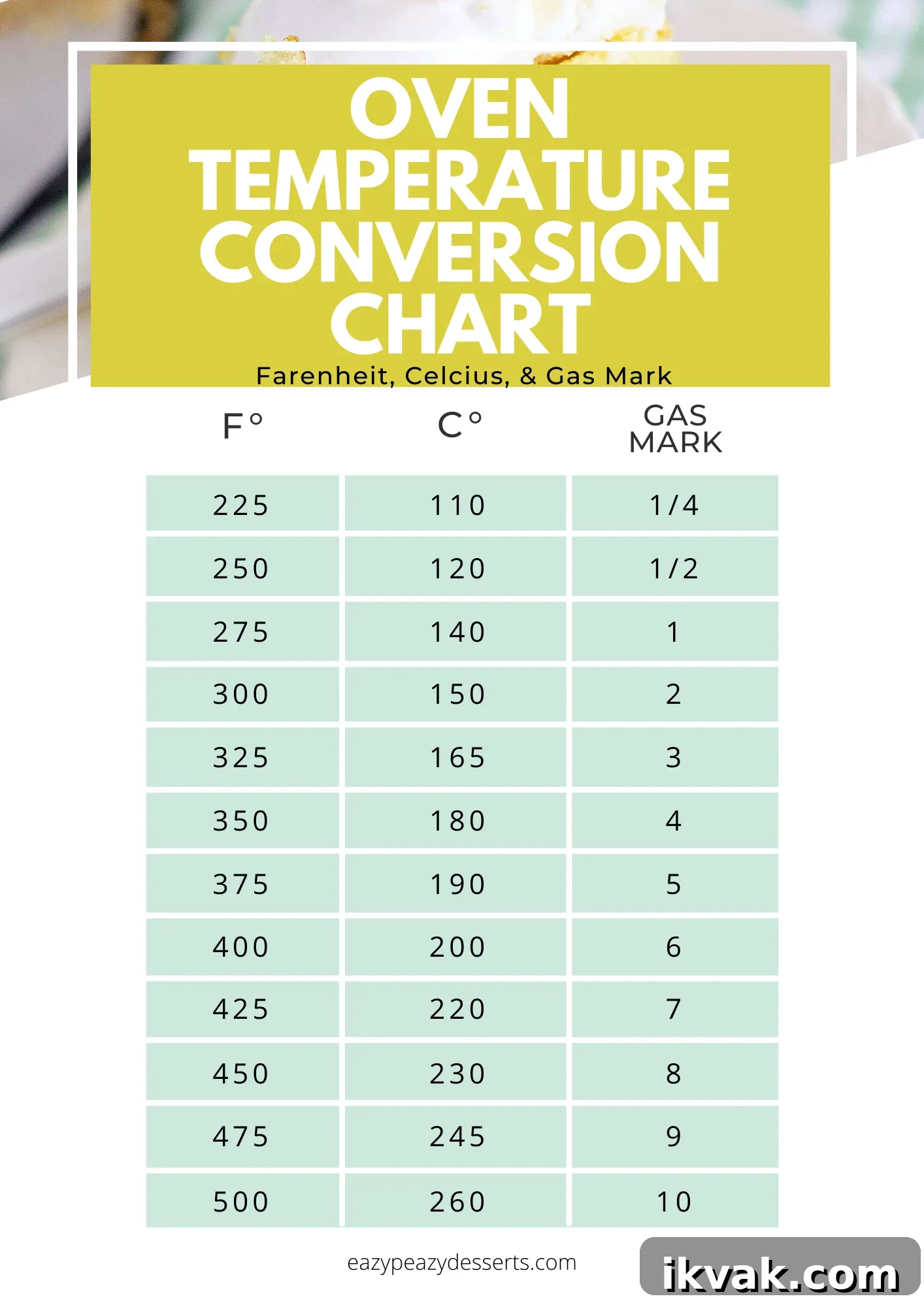
It also provides liquid measurements from 1/4 cup to 1 cup, and an oven conversion chart that converts Fahrenheit to Celsius and includes gas mark equivalents. Temperature conversions typically cover a useful range, often from around 225°F to 500°F, so you can match oven settings accurately.
Get the printable conversion charts from the original source.
How to protect your printed conversion chart
Protect printed charts by laminating them or placing them in a plastic sleeve. This keeps them safe from spills, moisture, and wear, and helps them last longer in a busy kitchen.
How to display your cooking charts
Place charts where they are easy to reach: attach them to the fridge with magnets, hang them with tape, or store them inside a cabinet near your prep area. A conveniently located chart saves time and prevents searching for measurements mid-recipe.
These printable conversion charts are sized to fit on a fridge door or tucked into a cookbook, so you’ll always have quick access to the conversions you need.
I hope these charts make cooking simpler and more enjoyable. If you try them, consider leaving a comment or note about how they worked for you.