DIY Light Reflector
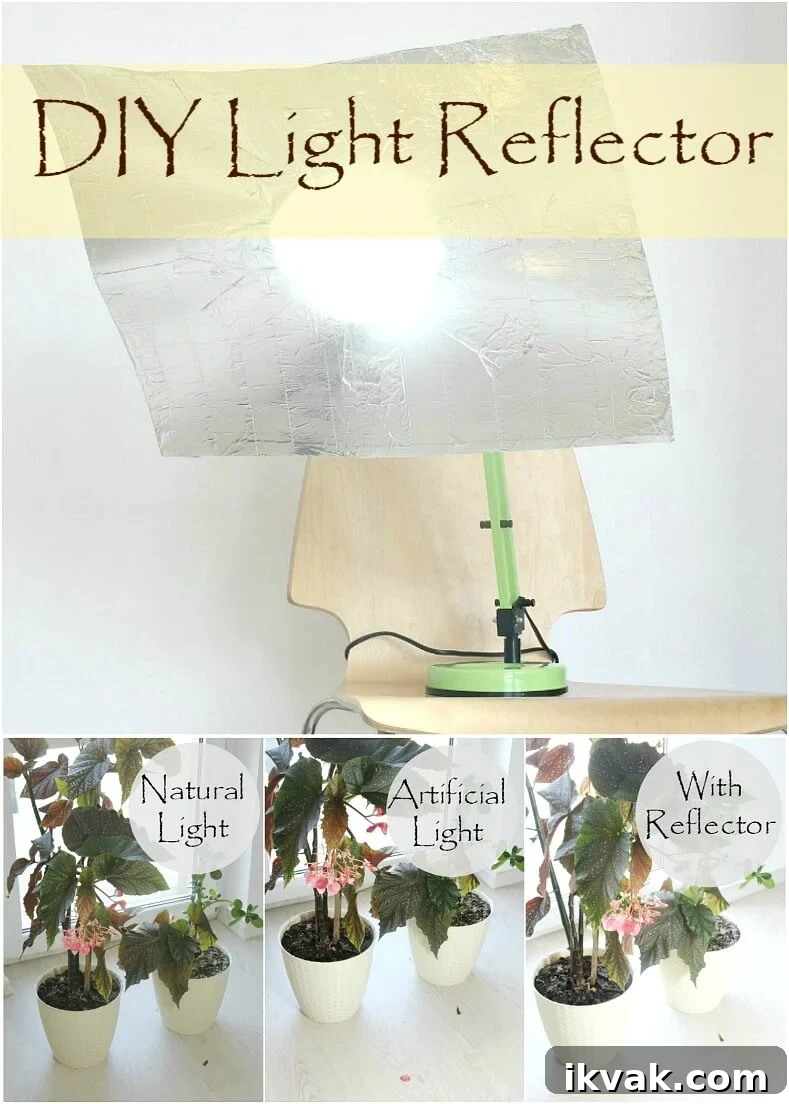
Reflectors are an inexpensive, effective way to shape and enhance light for photography. They’re especially useful for food, craft, or product bloggers who often shoot indoors where natural light is limited. A homemade reflector can soften shadows, brighten the front of a subject, and help create a more balanced, pleasing image without investing in professional gear.
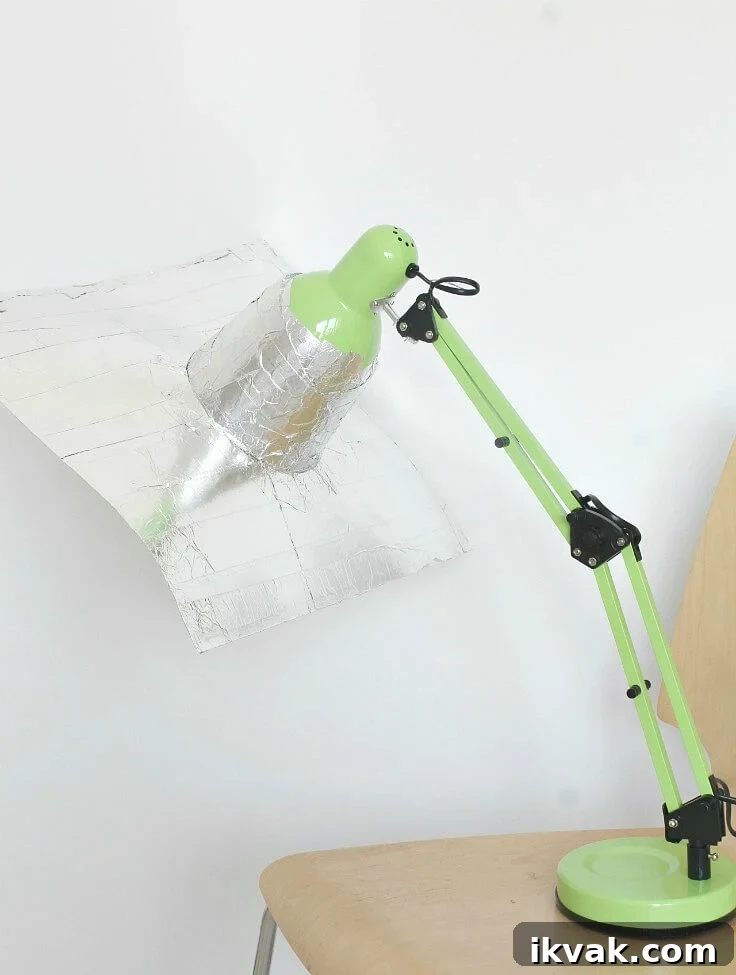
DIY reflectors come in many shapes and sizes and can be used in several ways. I often photograph small projects—dishes, crafts, or flat-lays—near a window or on a white backdrop. Even with good natural light, the front or sides of a subject can still look flat or shadowed, so a reflector helps direct additional light where it’s needed.
I already made two side reflectors by taping aluminum foil to polystyrene boards, but I wanted something to boost light from the front. A lamp alone didn’t produce the soft, even light I needed, so I created a small, cone-style reflector to amplify and focus the lamp’s output. My lamp has a swing arm and adjustable head, which makes positioning the reflector easy and flexible.
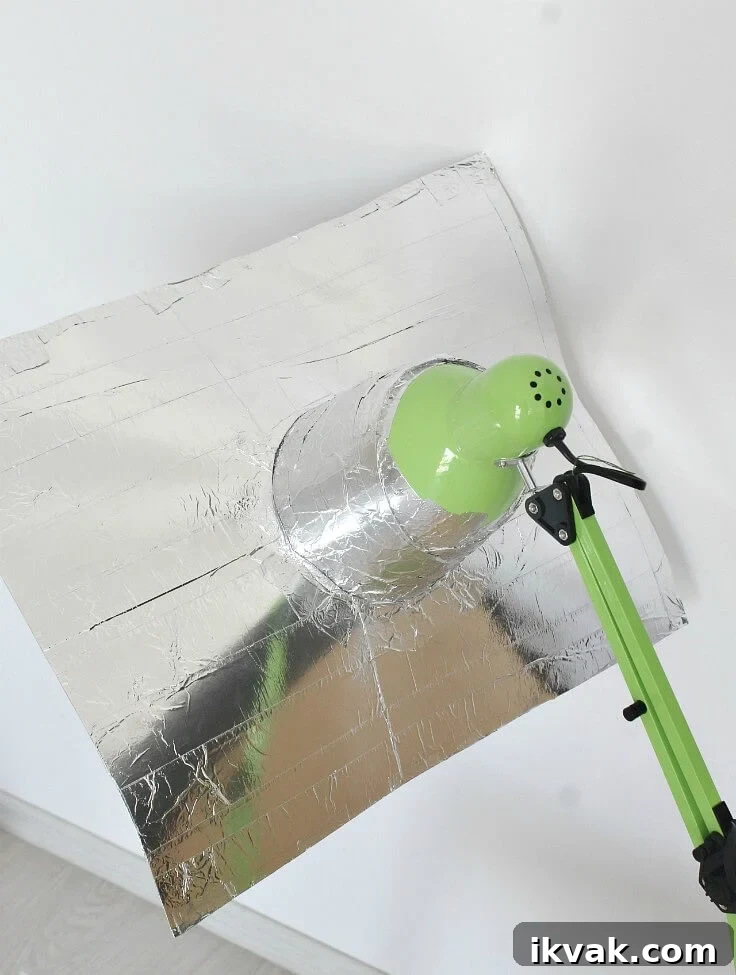
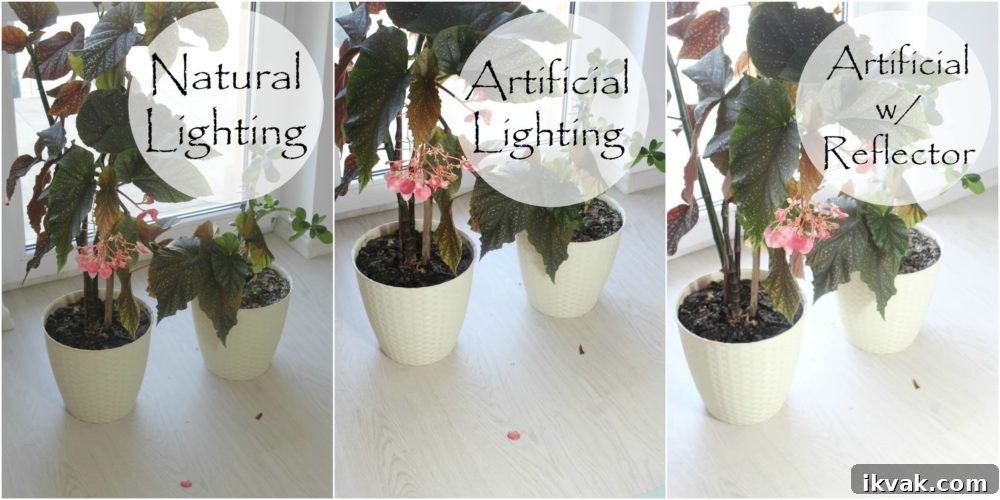
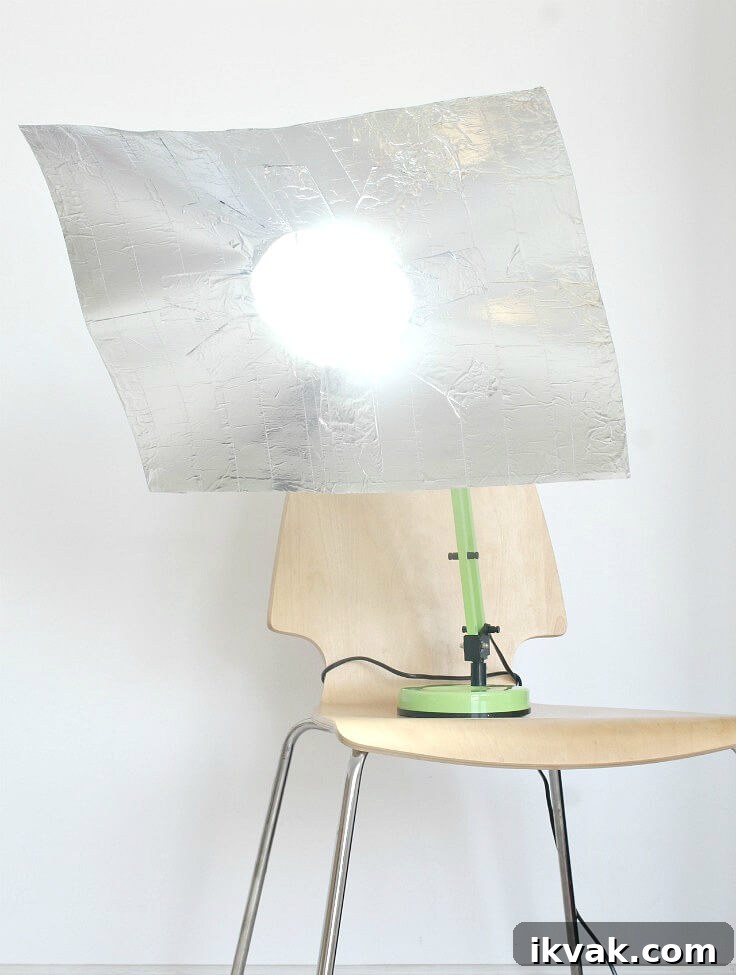
This reflector is compact, simple to build, and uses basic materials like aluminum foil tape and cardstock. It’s ideal for small indoor shoots where you need controlled, brighter light on subjects. The design below is a basic cone-style reflector that you can resize or reshape to match your own lamp and shooting needs.
DIY Light Reflector
Materials:
- Aluminium foil tape
- Scissors
- Cardstock sheets (taped together; more flexible and easier to shape than thick cardboard)
- Swing-arm lamp (or another adjustable lamp)
- Sharp cutter or razor knife
Directions:
- Take two cardstock sheets and cover the front side entirely with aluminium foil tape. You can cover the back as well for a cleaner finish.
- Trim any excess tape from the edges so the surface is neat.
- Wrap the taped cardstock around the lamp head to form a cone shape, with the reflective side facing out. Secure the cone to the lamp body with more foil tape. If you want stronger, more focused light you can add foil tape to the inside of the lamp housing, taking care to avoid contact with any wires or electrical parts.
- Trim the cone to the size that fits your lamp and shooting needs, or leave it larger for a wider spread of light.
- Reinforce raw edges with tape to prevent peeling.
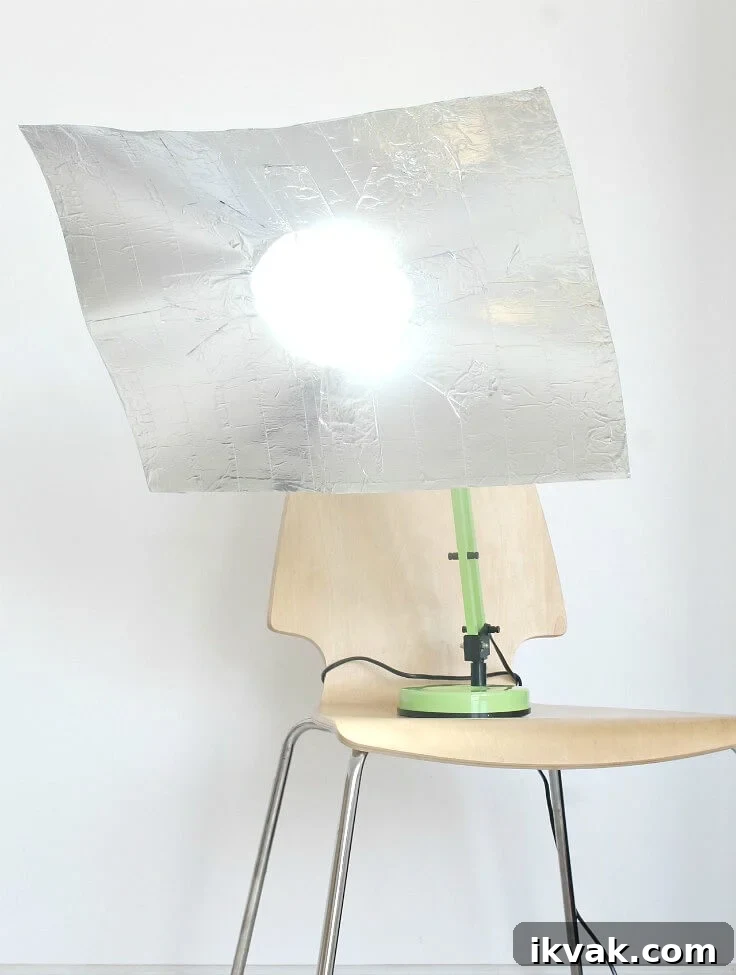
- For a wider reflector plate, tape four cardstock sheets together and cover them with aluminium foil tape to create a large reflective board.
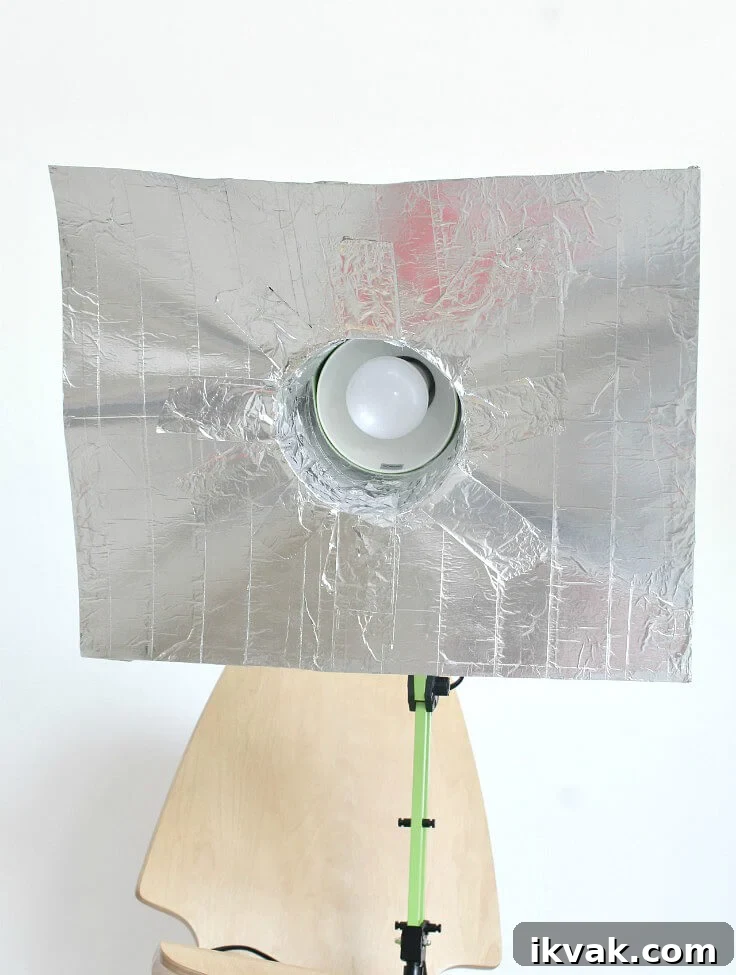
- Place the lamp head face-down on the large sheet, trace a circle around the lamp head, and cut the circle out with a razor knife.
- Pass the lamp head through the hole, bending the cardstock slightly as needed until it fits. Tape the edges where the lamp meets the cardstock for a secure fit and to reduce light leaks.
- Curve the cardstock slightly inward near the lamp head to shape the reflected light as desired.
- Your reflector is now ready—position it on your lamp and aim the light to soften shadows, brighten details, and improve the overall look of your indoor photos.
Note: The cone shape works well for my setup, but you might prefer a box, flat disc, or curved panel depending on your lamp and the effect you want. Adjust materials, size, and shape accordingly for best results.

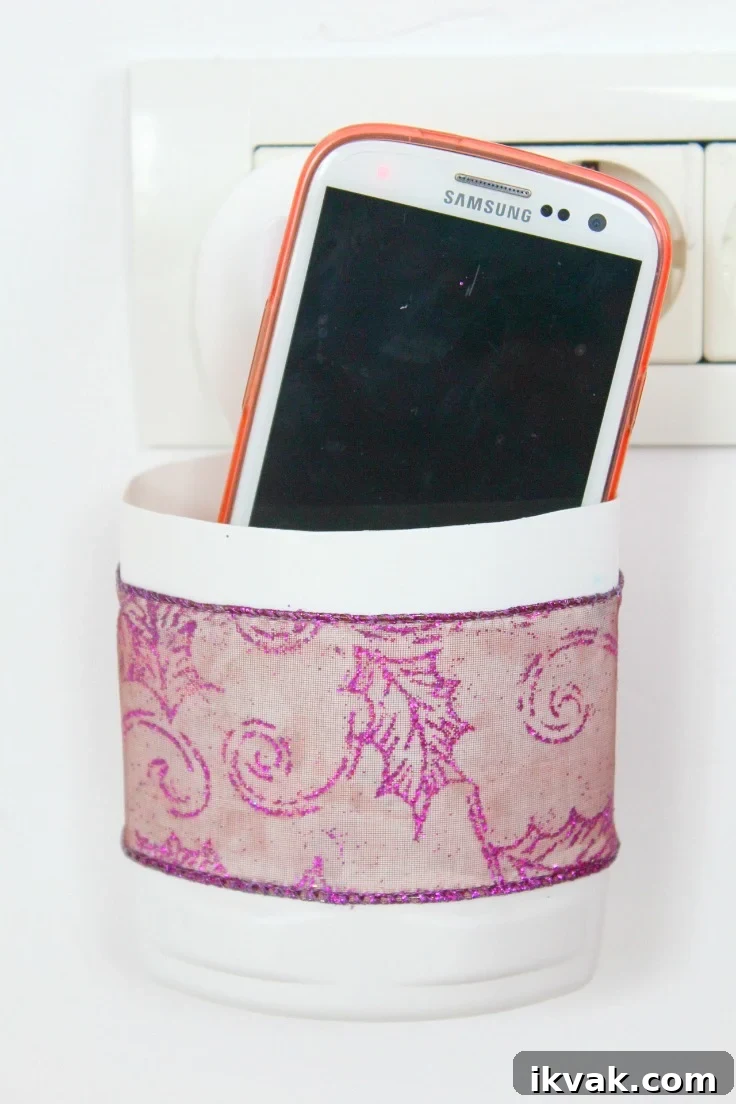
DIY Phone charging station
DIY Microwaved Lace Crown

DIY Luminaries