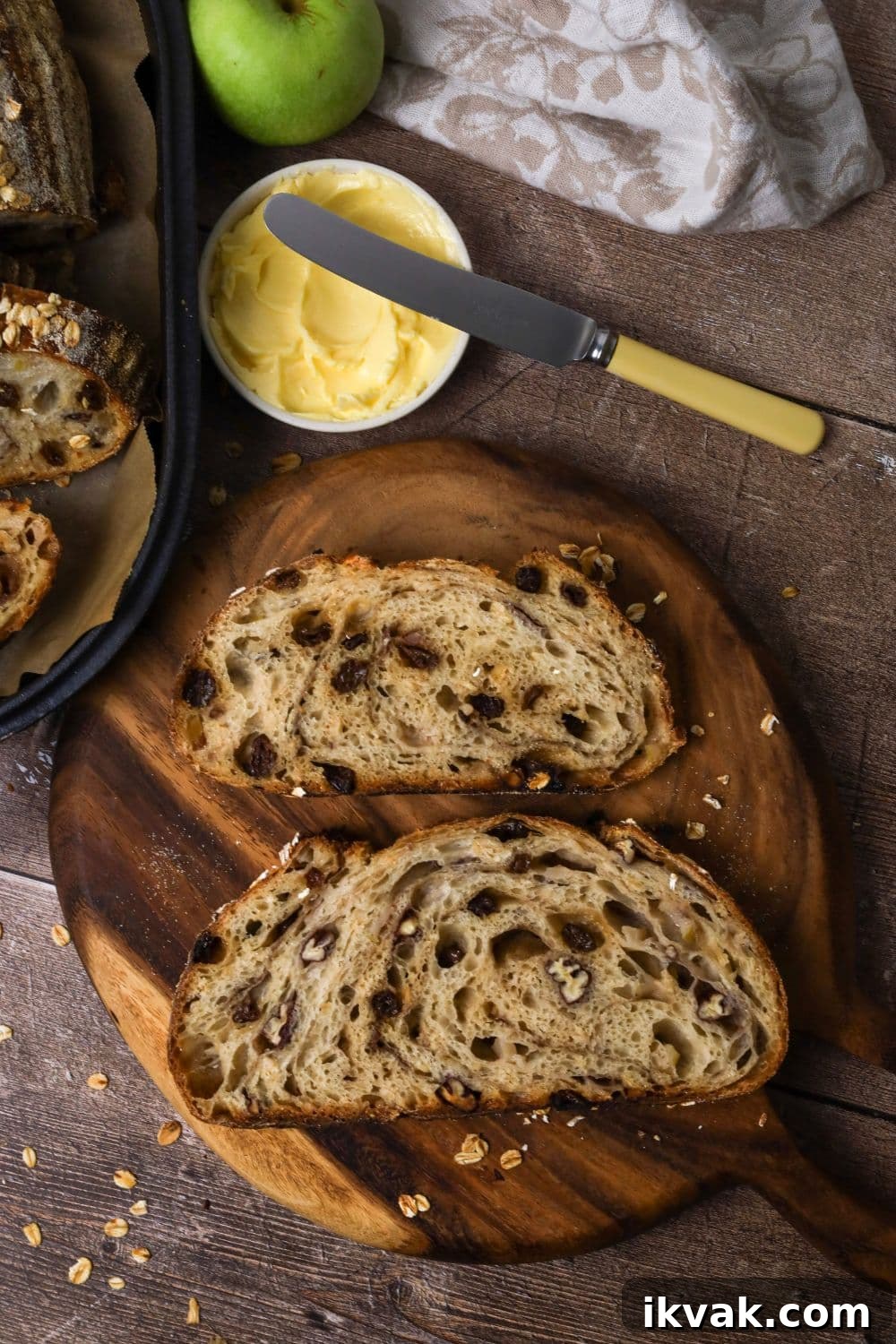
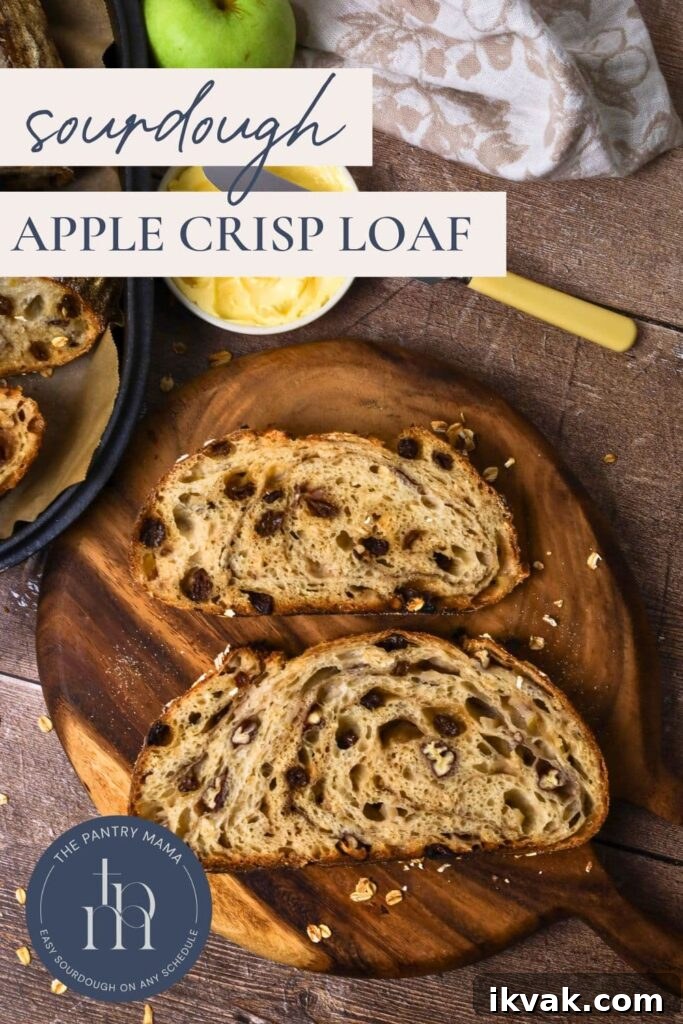
Who doesn’t love the cozy comfort of a warm apple crisp for dessert? I transformed all the flavors and textures of apple crisp into a sourdough loaf. This bread is warm and comforting, filled with diced apple, rolled oats, honey, raisins and warming spices — everything you want from apple crisp, baked into a sliceable loaf that’s perfect for breakfast, brunch or an indulgent snack.
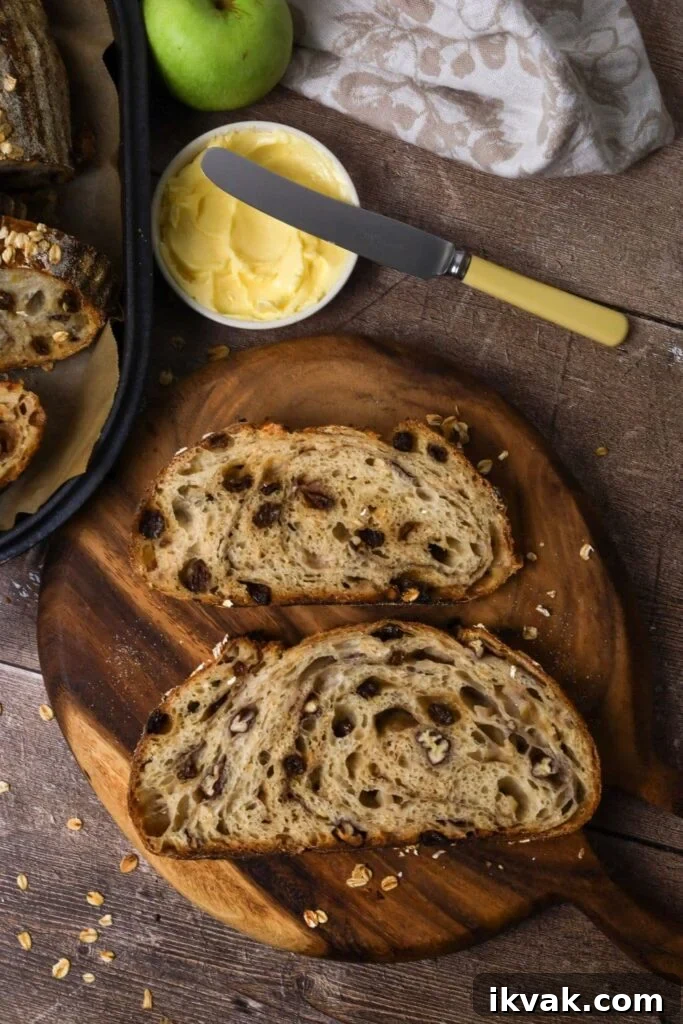
Why You’ll Love This Recipe!
All the best parts of apple crisp: this loaf combines oats, spices, sweetened fruit and a crunchy topping feeling inside sourdough bread. It’s a great way to enjoy dessert flavors at breakfast time.
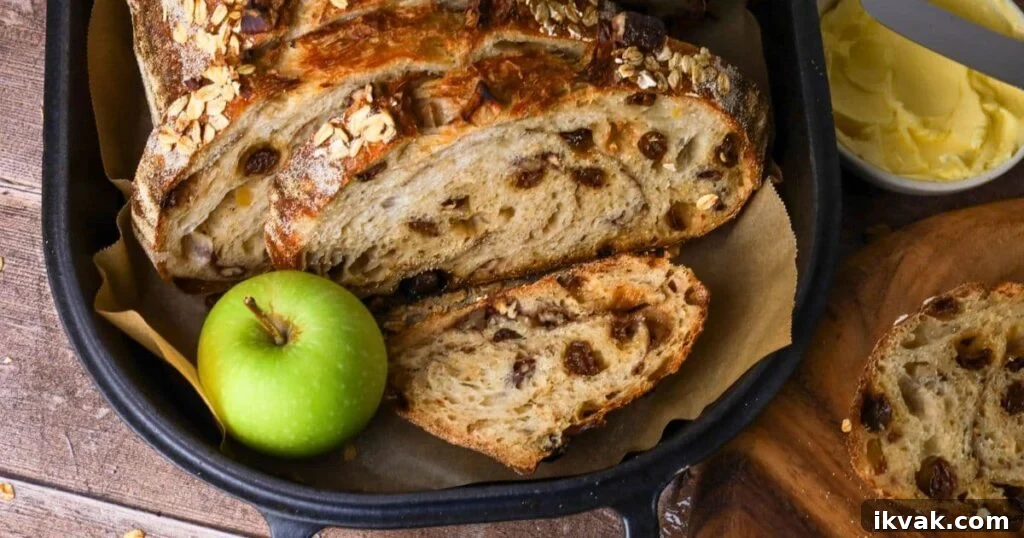
A beautiful brunch centerpiece: like other flavored sourdough loaves, this apple crisp loaf makes an attractive, seasonal offering on a fall or winter brunch table.
Ingredients
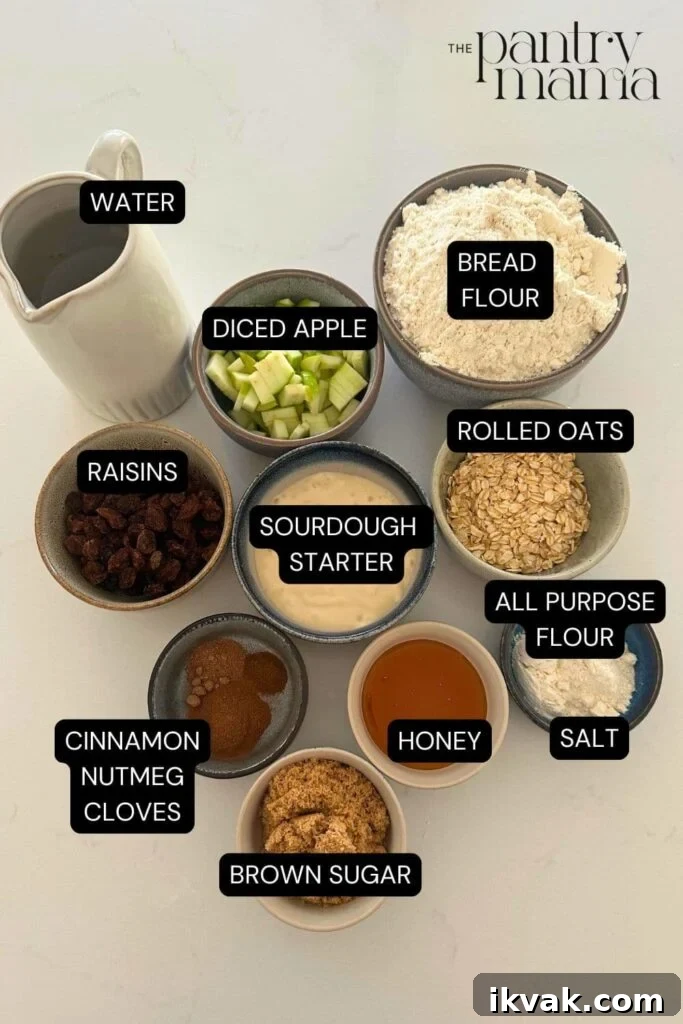
- Sourdough starter – active and bubbly, fed a few hours before you begin so it can properly leaven the dough.
- Water
- Honey – adds sweetness and helps fermentation. Maple syrup can be used instead if preferred.
- Bread flour – a good strong flour gives structure and chew.
- Rolled oats – use traditional rolled oats, not quick oats; they add texture and flavor and toast nicely on the crust.
- Salt – around 10 g is recommended for flavor and gluten development; adjust to taste.
- Raisins or sultanas – for sweet bursts throughout the loaf and visual contrast.
- Apple – diced with skin on for extra fiber; green apples are recommended but other varieties work.
- Warming spices – cinnamon, nutmeg and cloves provide classic apple crisp flavor; adjust quantities to suit taste.
- Brown sugar – contributes color and caramel-like sweetness; mixed into the spice blend.
- All-purpose flour – added to the spice mix to help keep the brown sugar from bleeding during cold fermentation.
- Pecans (optional) – chopped pecans in the topping add crunch; walnuts may be substituted or omitted.
How To Make A Sourdough Apple Crisp Loaf
This recipe layers flavor throughout the mixing, stretch-and-folds and shaping stages. Some ingredients are added during initial mixing, others during the stretch-and-fold sequence, and the spice-sugar mix is incorporated at shaping. The method is relaxed and rewarding — ideal for a quiet baking day.
Pre-mix & Autolyse
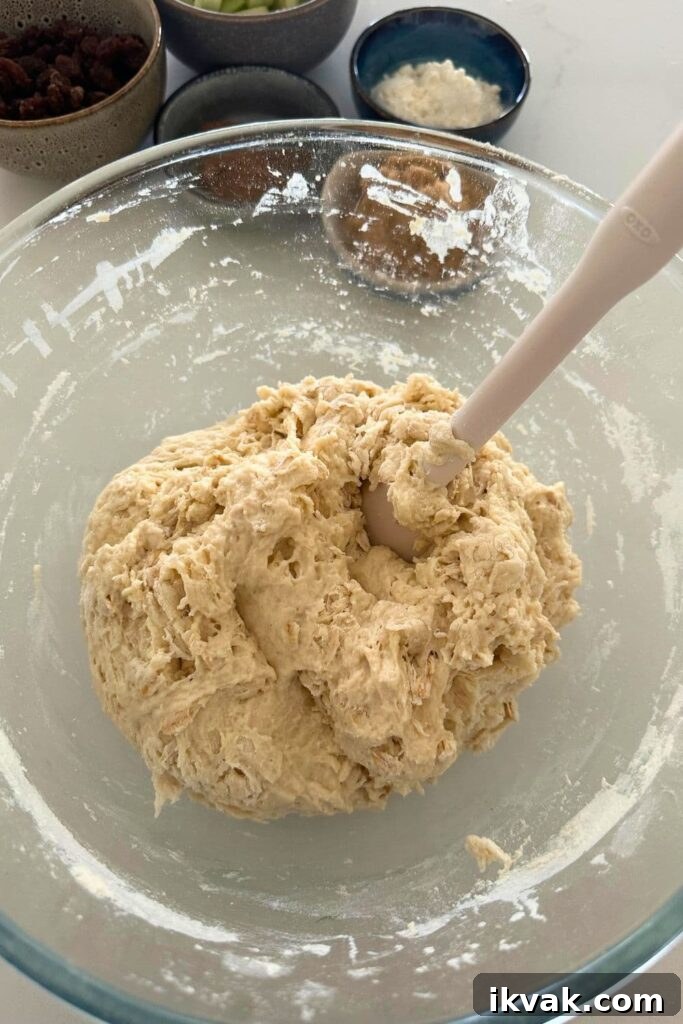
Measure your sourdough starter, water and honey into a glass or ceramic bowl. Stir until the honey and starter are well dispersed in the water. Add bread flour, rolled oats and salt, then mix with a spatula until the dough comes together; it will be fairly shaggy. Cover with cling film or a damp towel and let rest for about 1 hour to autolyse.
Forming Up Your Dough
Work around the bowl grabbing the dough from the edges and folding it over itself until it forms a smoother ball. Approximately 20–25 folds should be enough. Cover and rest the dough for 30 minutes before starting stretch-and-folds.
Stretch & Fold — Creating Structure
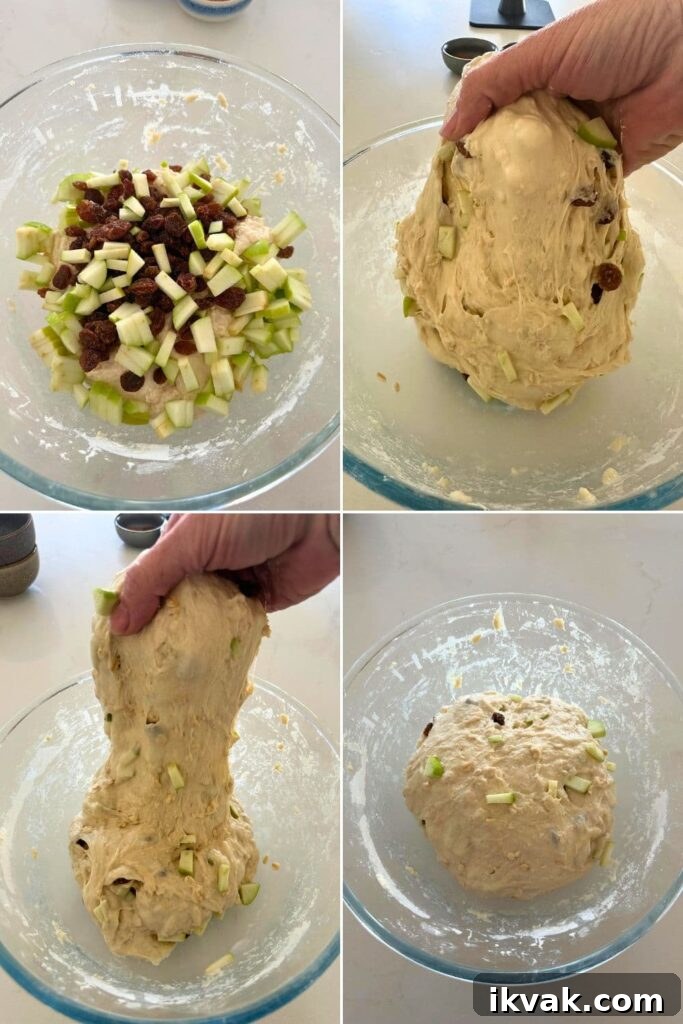
Add the raisins and diced apple during the stretch-and-fold phase so they are incorporated gently. Do your first set of folds without inclusions, then add half the apple and raisins on the second set and the remainder on the third, depending on dough strength. Aim for four sets of stretch-and-folds, about 15–30 minutes apart.
Bulk Fermentation
After your final stretch-and-fold, cover the dough and allow it to bulk ferment at room temperature. Honey and fruit inclusions can speed fermentation, so monitor the dough’s activity. While the dough ferments, mix together cinnamon, nutmeg, cloves, brown sugar and all-purpose flour for the shaping step. Chop pecans if using and set aside.
Shaping Your Dough
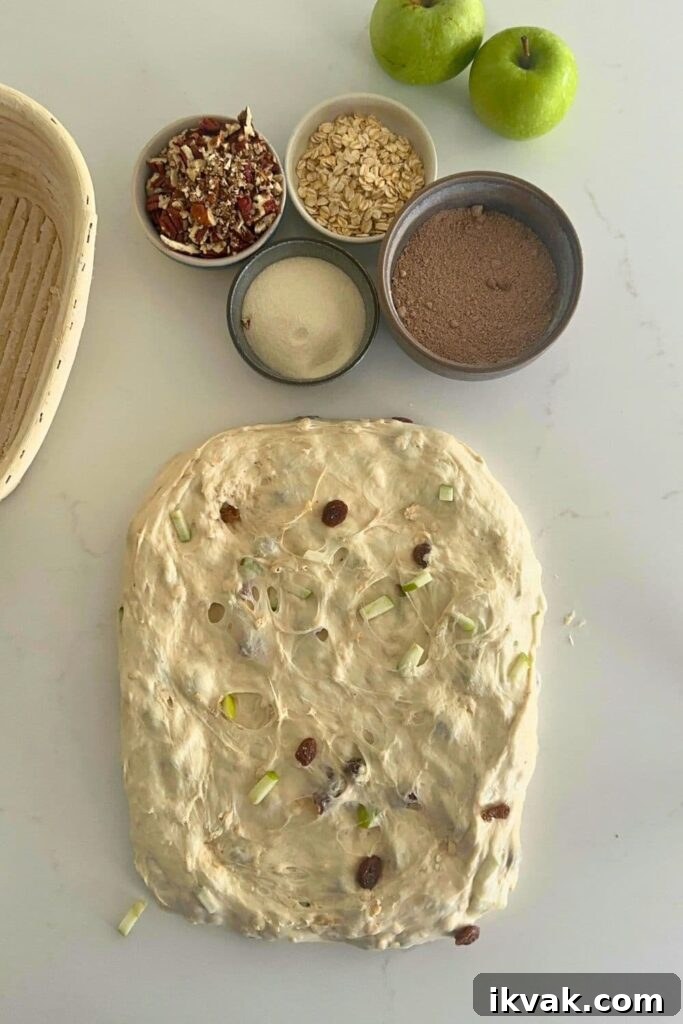
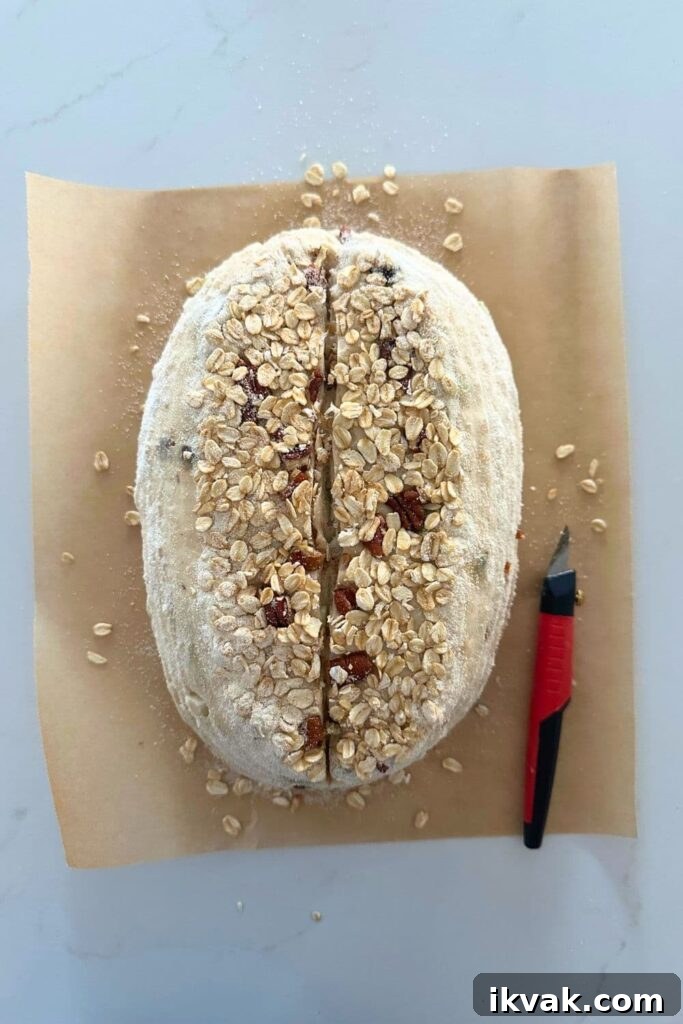
When bulk fermentation is complete, shape the loaf to create surface tension. A batard shape works well, but choose any preferred shape. Stretch the dough into a rough rectangle and scatter a generous amount of the spice-brown sugar mixture across the surface, adding pecans if desired. Fold the dough like a burrito, roll to build tension, and place seam-side up in a floured banneton. Sprinkling rolled oats into the banneton will help oats stick to the crust for a toasted finish.
Cold Ferment
Cover the shaped dough loosely and refrigerate to cold ferment. Leave it a minimum of 5 hours; I generally keep this loaf in the fridge no longer than 12 hours to avoid excess moisture from the apple causing sogginess.
Preparing to Bake
Preheat the oven to 230°C (450°F) and place your Dutch oven inside while it heats. Preheat for about 1 hour if possible to ensure the pot is thoroughly hot.
Baking
When ready to bake, remove the shaped dough from the fridge and place it on a piece of baking paper. Score the top with a lame or sharp knife. Carefully remove the hot Dutch oven, lift the dough with the paper into the pot, cover and bake.
Bake time: 30 minutes with the lid on at 230°C (450°F), then 10–15 minutes with the lid off at 210°C (410°F) until the crust is deeply colored and the loaf sounds hollow when tapped. If the base shows signs of burning, place a baking sheet on the rack under the Dutch oven. Remove the loaf promptly from the pot and transfer to a wire rack to cool.
Suggested Baking Timeline
This timeline is a flexible example you can adapt to your schedule. Feeding your starter the night before so it peaks in the morning works well. Adjust times and starter amount for your ambient temperature and starter activity.
| Time | Process |
|---|---|
| 9:00 am | Premix and autolyse for ~1 hour, form dough, rest 30 minutes. |
| 11:00 am | 1st stretch & fold. |
| 11:30 am | 2nd stretch & fold — add half the diced apple and raisins. |
| 12:00 pm | 3rd stretch & fold — add remaining apple and raisins. |
| 12:30 pm | 4th stretch & fold. |
| 1:00 pm | Bulk fermentation at room temperature; watch closely due to honey and fruit. |
| 6:00 pm | Shape into a batard, place in banneton and refrigerate for cold fermentation. |
| Next morning | Bake after the cold ferment: preheat oven and Dutch oven, score and bake. |
Equipment
- Mixing bowl
- Digital scale
- Banneton or proofing basket
- Dutch oven (or alternative covered baking vessel)
Ingredients (for one loaf)
- 100 g active sourdough starter
- 350 g water
- 40 g honey (or maple syrup)
- 500 g bread flour
- 50 g rolled oats (not quick oats)
- 10 g salt
- 100 g raisins or sultanas
- 100 g apple, diced (skin on)
- 1 tsp ground cinnamon
- 1/2 tsp ground nutmeg
- 1/4 tsp ground cloves
- 40 g brown sugar
- 20 g all-purpose flour
- 50 g chopped pecans (optional)
Instructions
- Pre-mix & autolyse: Combine starter, water and honey. Stir in flour, oats and salt. Cover and rest 1 hour.
- Form the dough: Fold the dough into a smooth ball (20–25 folds), cover and rest 30 minutes.
- Stretch & fold: Perform four sets of stretch-and-folds, adding raisins and diced apple during the 2nd and 3rd sets. Wait 15–30 minutes between sets.
- Bulk ferment: Cover and allow to bulk ferment at room temperature. Prepare the spice-sugar mixture (cinnamon, nutmeg, cloves, brown sugar, all-purpose flour) and chop pecans while the dough ferments.
- Shape: Shape into a batard or preferred shape, sprinkle the spice mixture and pecans into the dough while shaping, roll to create surface tension and place seam-side up in a banneton. Sprinkle oats if desired.
- Cold ferment: Refrigerate for at least 5 hours and up to about 12 hours.
- Bake: Preheat oven and Dutch oven to 230°C (450°F). Transfer dough to baking paper, score, place in the hot Dutch oven, cover and bake 30 minutes. Remove lid and bake a further 10–15 minutes at 210°C (410°F).
- Cool: Remove loaf from pot and cool on a wire rack. Allow several hours of cooling before slicing for best texture.
Notes
- Starter readiness: Use a well-fed, active starter. Reduce starter quantity in warmer environments if needed.
- Inclusions: Add inclusions gently — the dough may tear slightly but will recover during resting.
- Spice mix: Including all-purpose flour with the brown sugar helps prevent sugar bleed during the cold ferment.
- Baking tips: If the base browns too quickly, place a baking sheet under the Dutch oven. If uncertain about doneness, you can switch off the oven and leave the loaf on the rack inside with the door slightly open for a short period. Allow the loaf to cool fully (4–6 hours) before slicing.
Nutrition (approximate)
Nutrition information is automatically calculated and should be used as an approximation only.
Enjoy this seasonal sourdough loaf — leave a comment or note about your bake if you like!