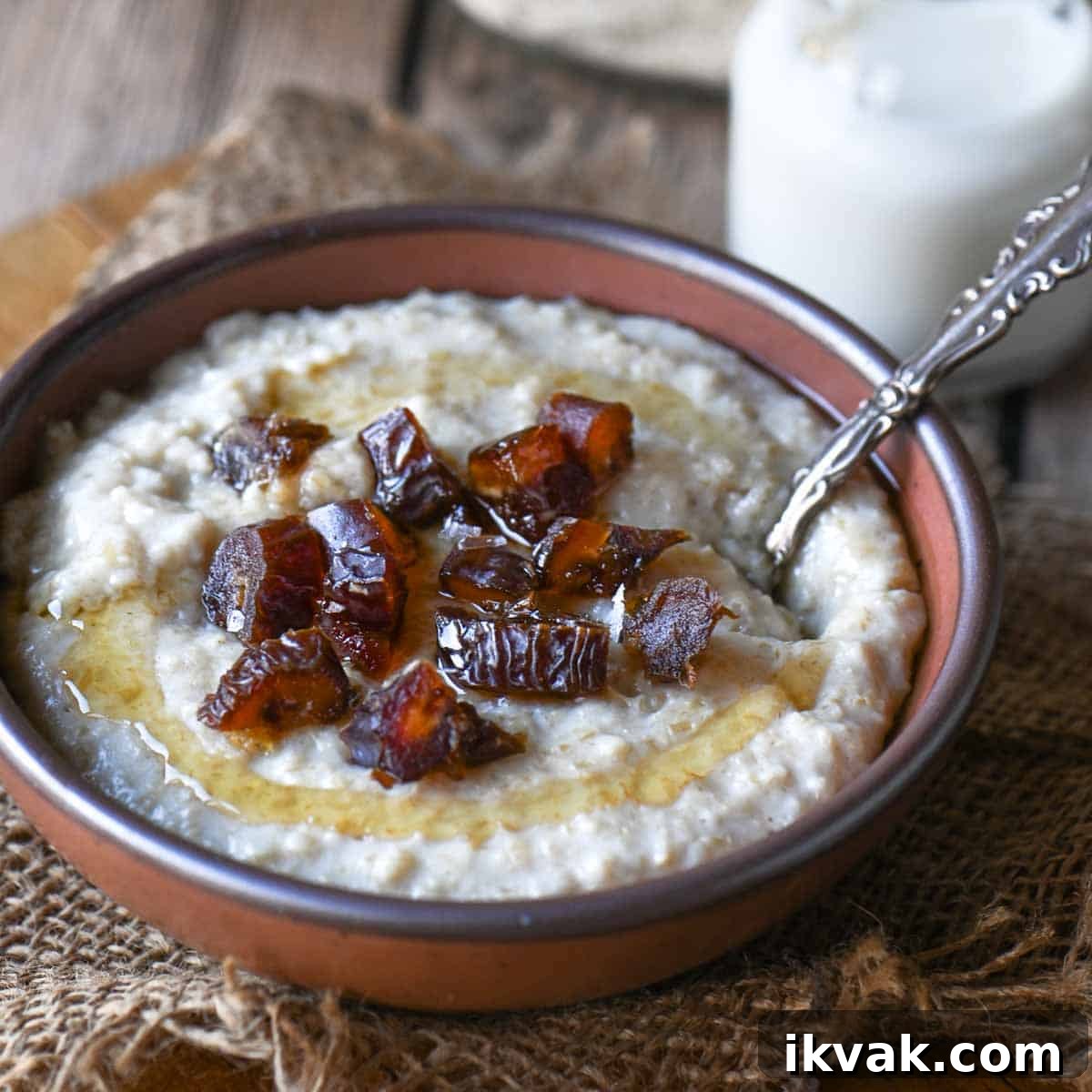
Creamy, hearty, and deeply comforting, this Scottish-style oatmeal with dates and honey makes a luxurious start to the day. Silky and velvety in texture, it feels special while remaining easy to prepare—like a warm bowl of comfort that doubles as a cozy breakfast treat.
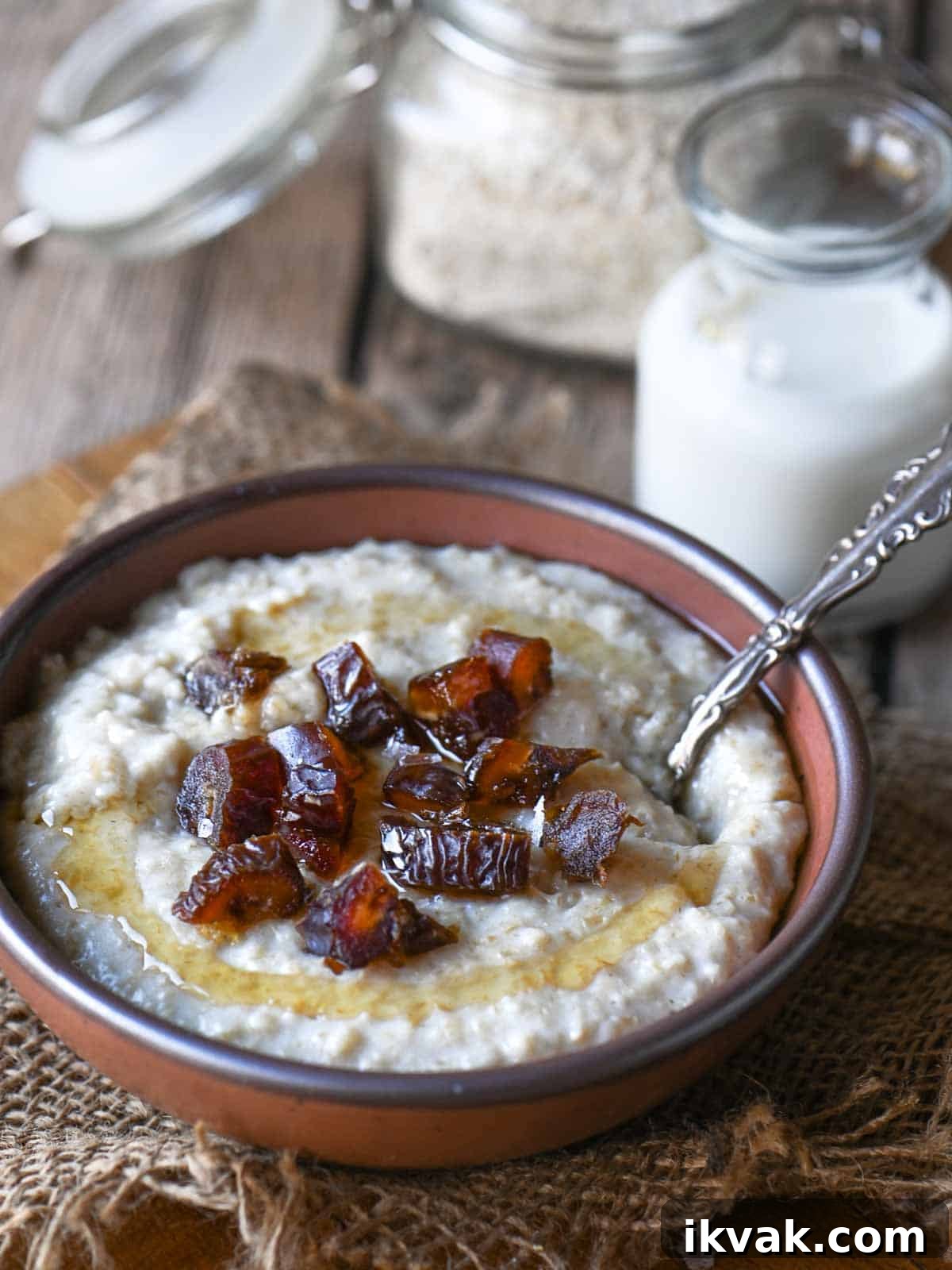
After a recent trip to Scotland I fell for the classic porridge made from stone-ground oats. Scottish oatmeal is distinguished by its finer, almost powdery grind, which yields an exceptionally creamy porridge when cooked. Paired with sweet Medjool dates and a drizzle of honey, this preparation highlights the oats’ smooth mouthfeel and makes a breakfast that feels indulgent without fuss.
Key ingredient
The key to this recipe is true Scottish-style oats, traditionally stone-ground to a finer texture than rolled or steel-cut oats. That fine grind is what produces the silky, almost custard-like consistency. If you can’t find Scottish oats locally, many grocery stores and online retailers offer brands that follow the traditional milling process. If you prefer rolled oats or steel-cut oats, use a recipe formulated for those varieties, as the liquid ratios and cooking times will differ.
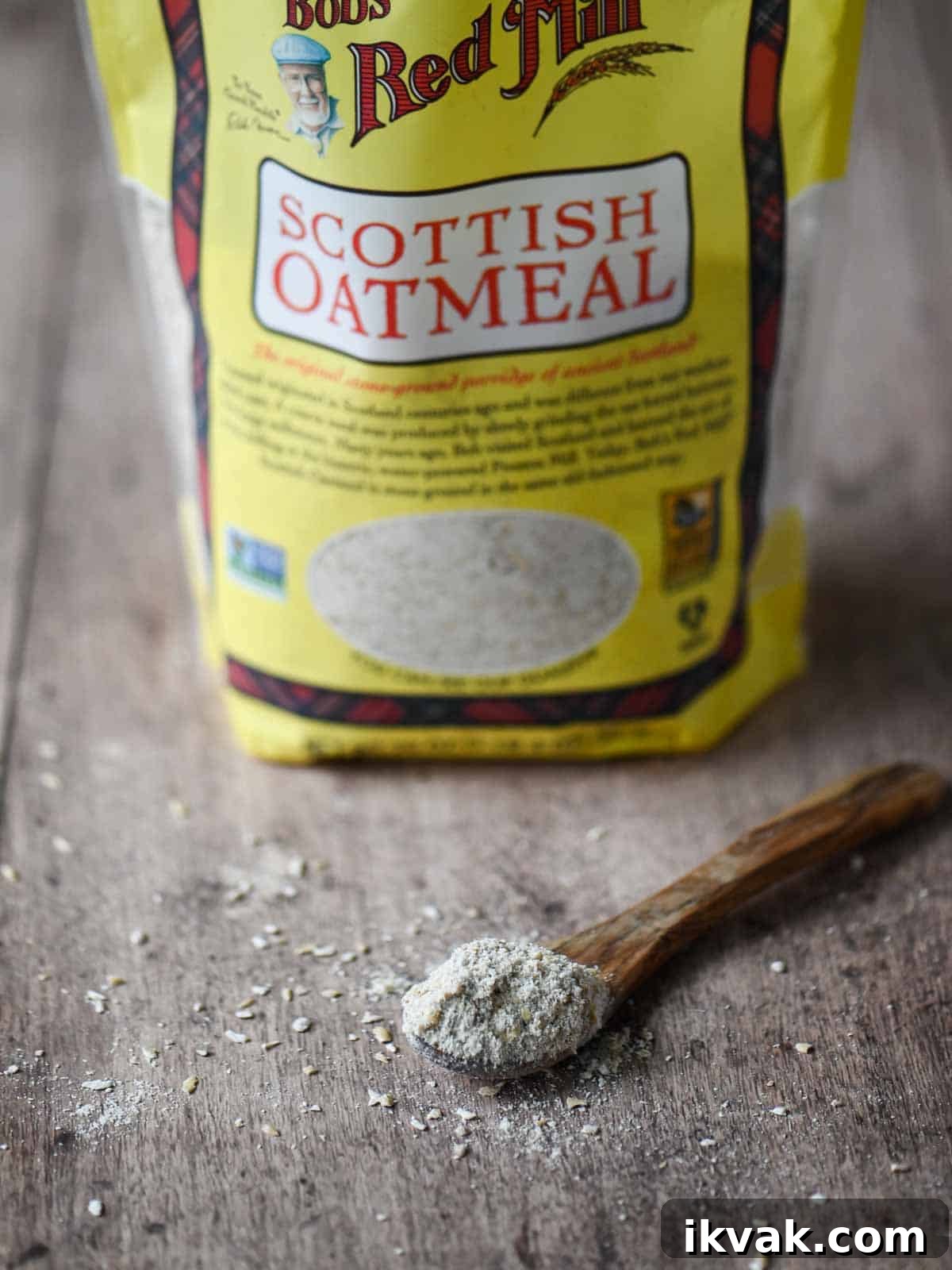
Below you will find the complete ingredient list and full recipe instructions in the recipe card.
Step-by-step instructions
Scottish oatmeal comes together quickly and requires minimal attention. I use a 3:1 liquid-to-oats ratio for a reliably creamy texture. The process mainly involves bringing liquid to a gentle boil, whisking in the oats gradually to avoid lumps, and simmering until smooth.
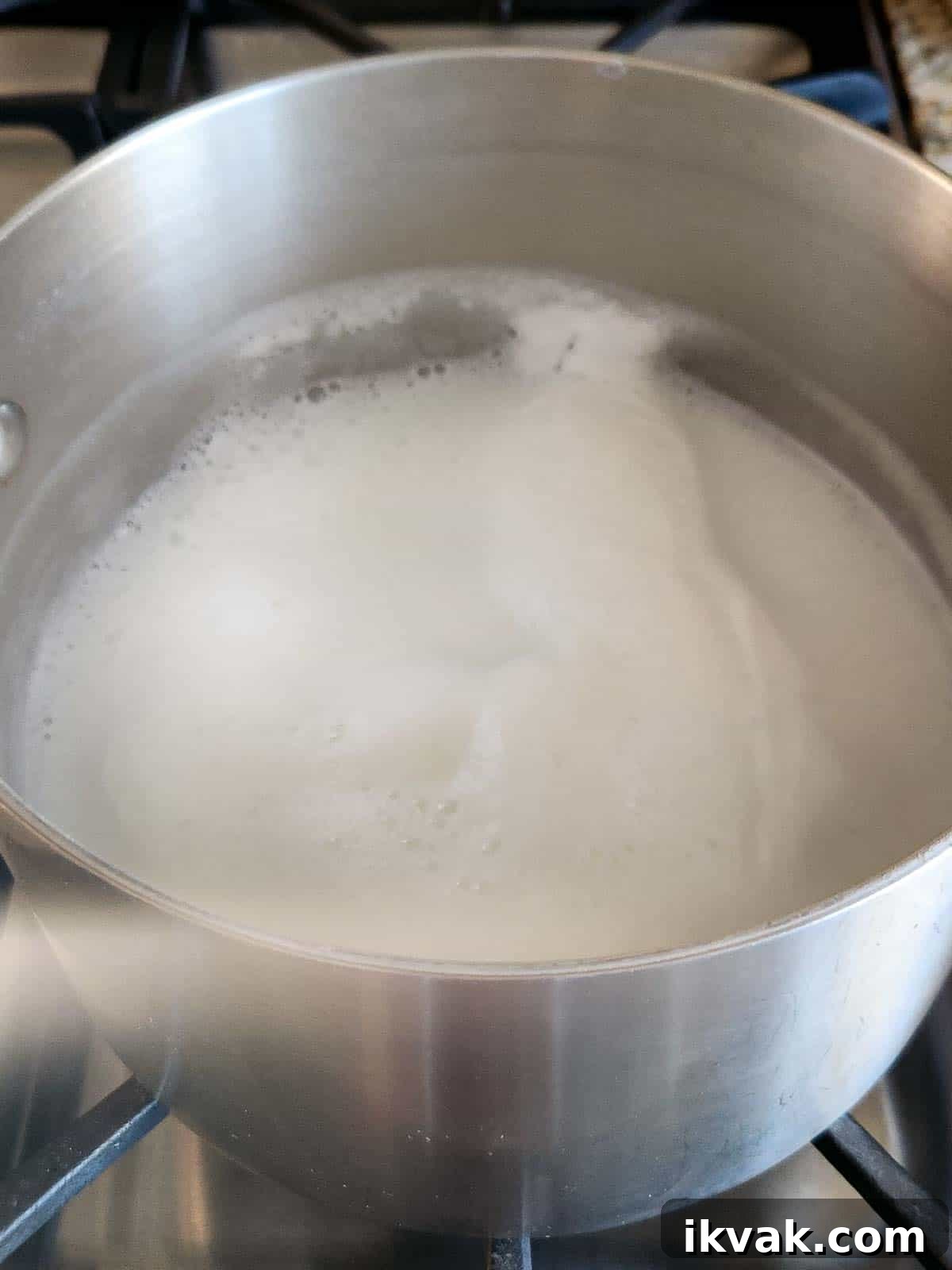
Step 1. Combine water, milk, and a pinch of salt in a large pot and bring to a gentle boil. Watch closely: milk can bubble up quickly when heated.
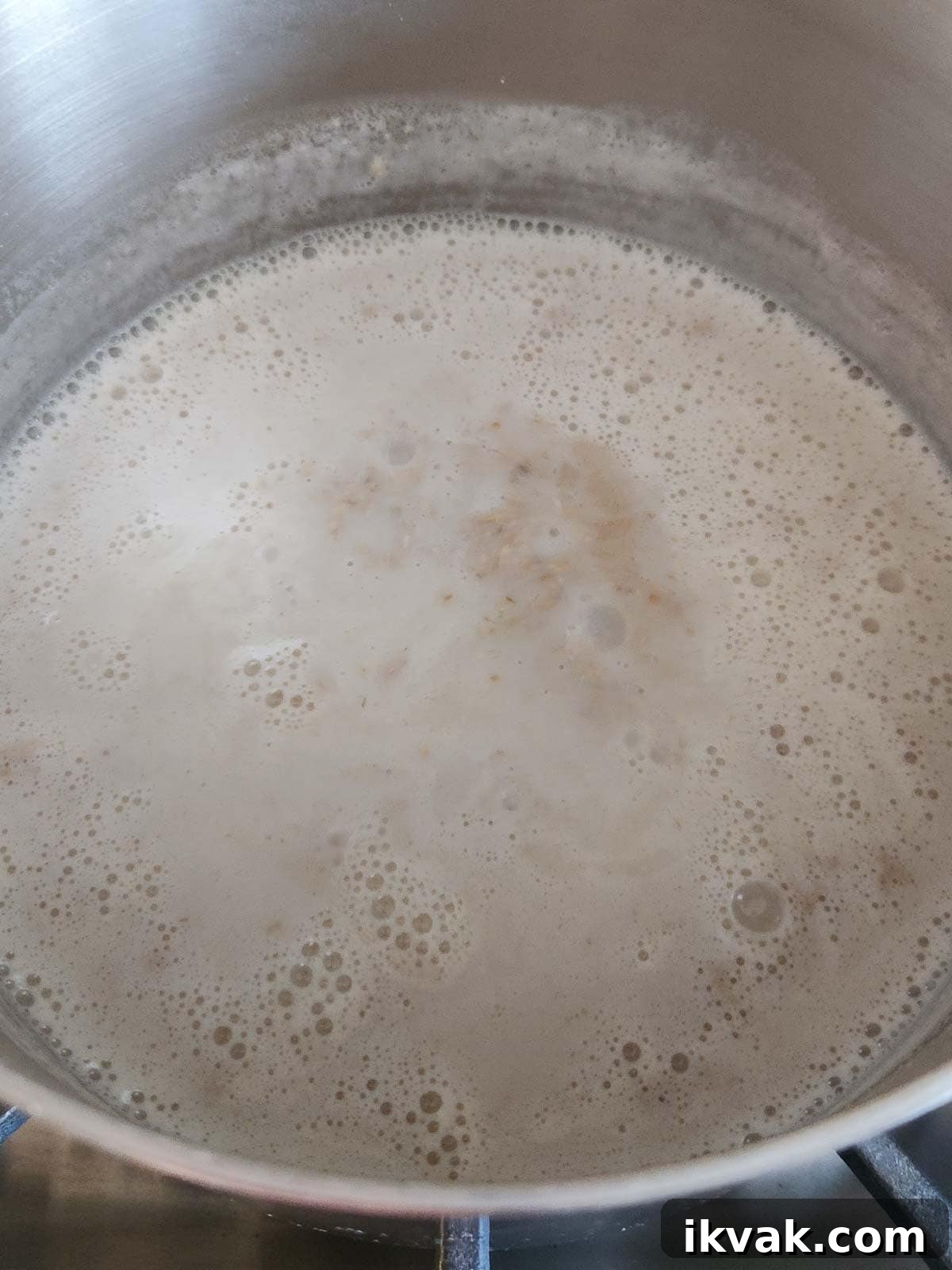
Step 2. Remove the lid and reduce the heat to low. In a steady stream, whisk the oats into the hot liquid to prevent lumps. Whisk continuously until the oats are fully incorporated, then switch to a wooden spoon.
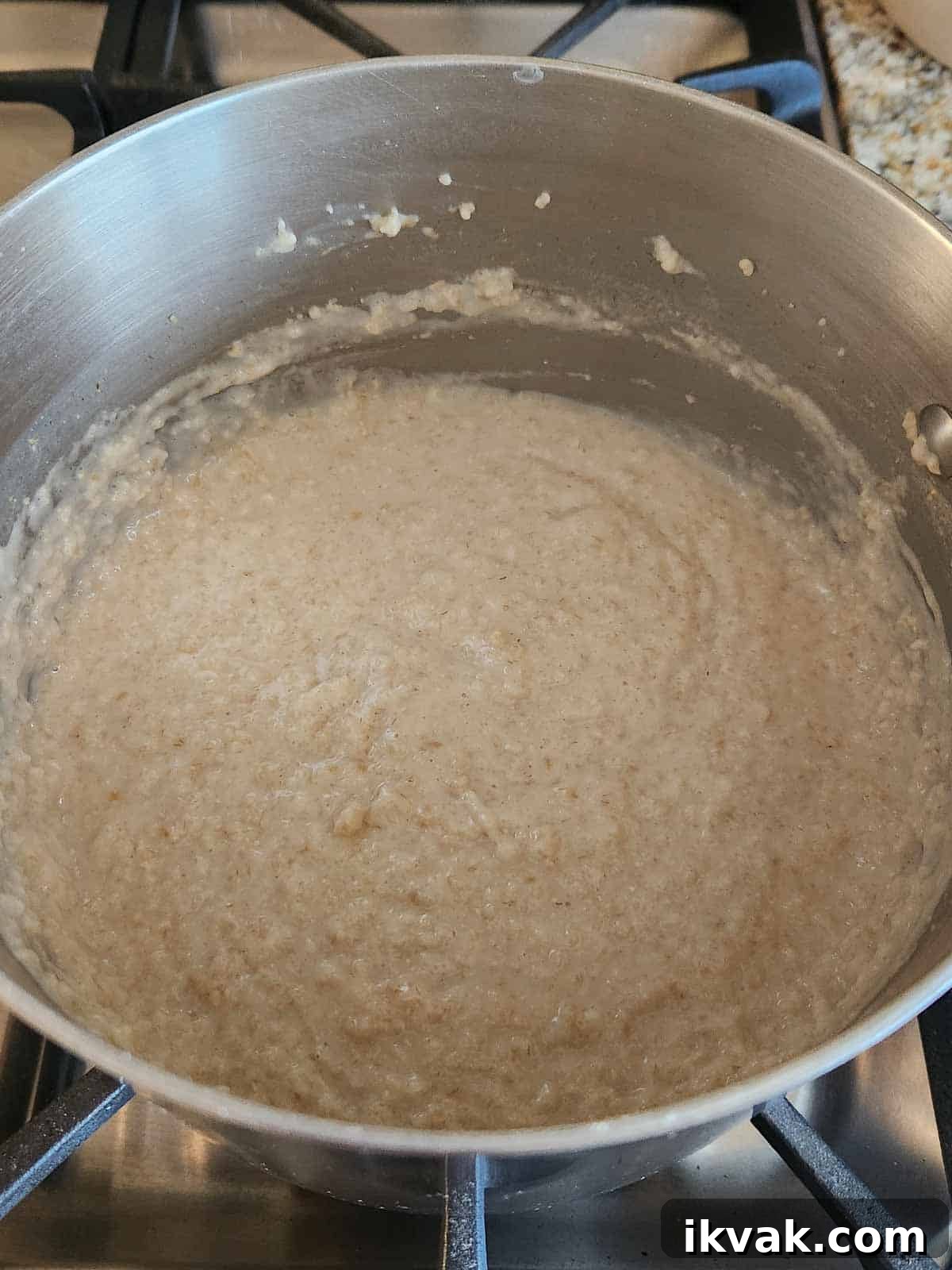
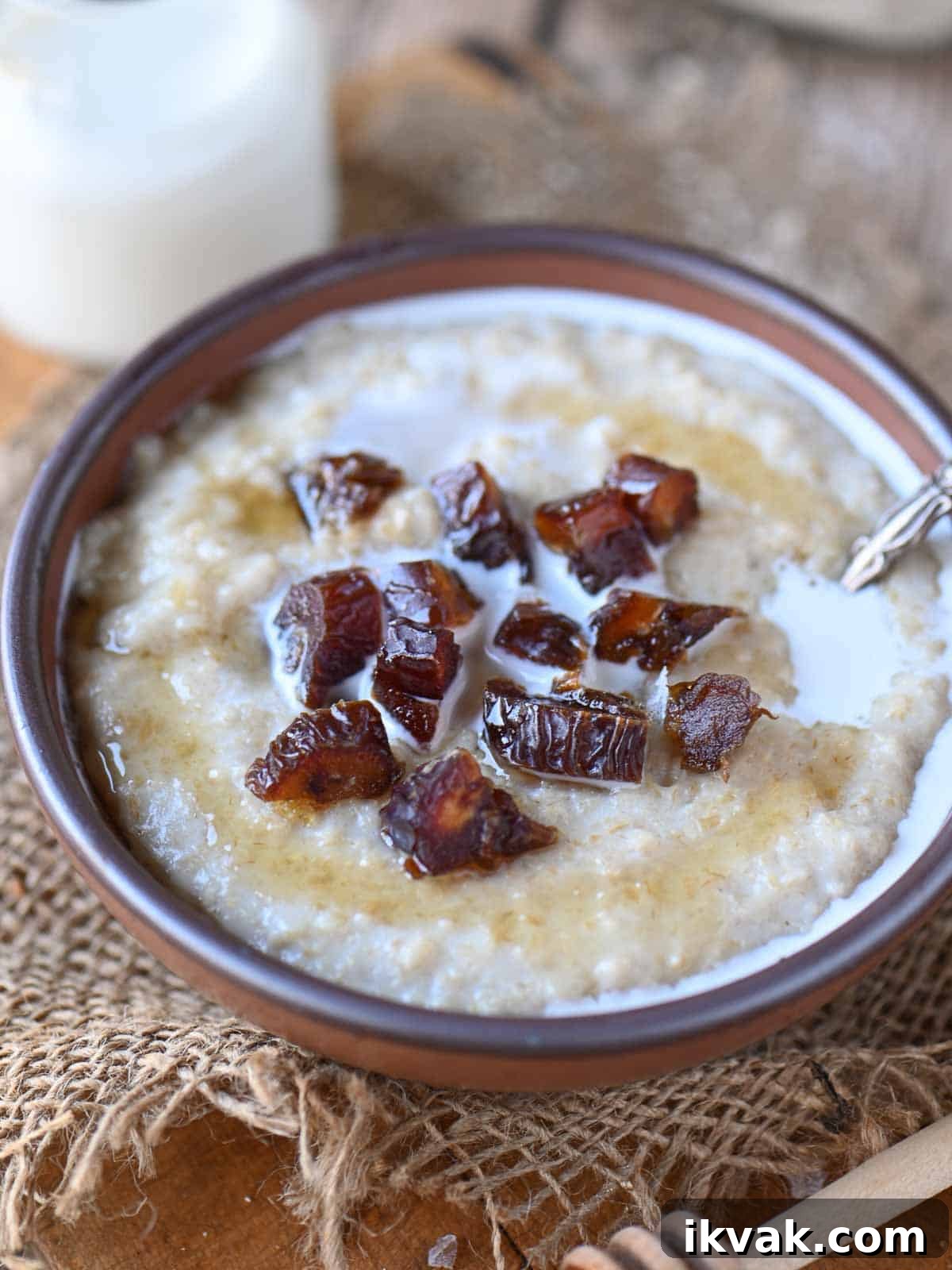
Step 3. Cook uncovered for about 8–10 minutes, stirring occasionally, until the porridge is thickened yet still creamy. Adjust the cooking time to reach your preferred thickness: shorter for looser porridge, longer for a firmer texture. Serve immediately, topped with chopped dates and a generous drizzle of honey.
These are concise directions; the full recipe card below includes exact measures and optional notes.
Expert tips
- Keep an eye on the milk. Milk boils rapidly and can overflow; do not leave it unattended once it starts bubbling.
- Add oats slowly. Pour the oats in a steady stream while whisking to avoid lumps. Once smooth, continue stirring occasionally with a wooden spoon.
- Use an appropriately sized pot. A larger pot gives more surface area and can shorten cooking time slightly while reducing the chance of spills.
Variations
This oatmeal is a perfect base for many toppings and flavor variations. Try the following:
- Dried fruit: Swap or add dried cranberries, raisins, or chopped dried apricots.
- Fresh fruit: Sliced banana, berries, apples, or seasonal fruit add brightness.
- Warm spices: Cinnamon, nutmeg, ginger, cloves, or allspice enhance warmth and depth.
- Nuts and seeds: Toasted almonds, walnuts, chia, or pumpkin seeds add crunch and contrast.
- Crunchy topping: Sprinkle granola, toasted oats, or crushed cereal for texture.
Serving suggestions
Scottish oatmeal stands on its own as a satisfying breakfast, especially with toppings. It also pairs well with soft-boiled eggs, toast, a fruit smoothie, or a warm cup of tea for a fuller brunch spread. For extra richness, serve with a splash of lightly warmed cream or half-and-half and a pinch of flaky sea salt to balance the sweetness.
Storage and reheating
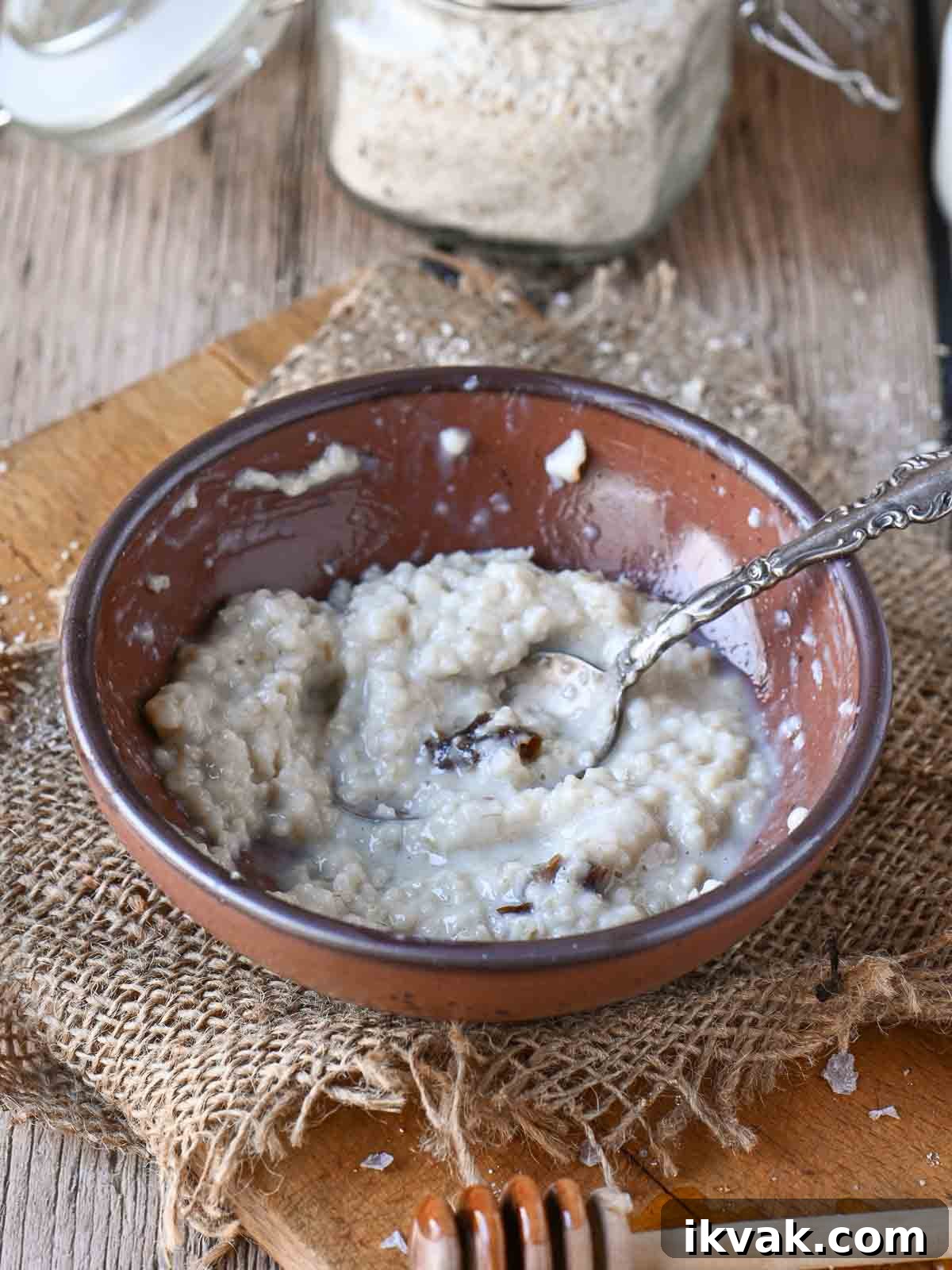
Store leftover cooked oatmeal in an airtight container in the refrigerator for 4–5 days. The porridge will thicken as it cools; gently reheat on the stovetop or in the microwave with a splash of milk or water, stirring until smooth and heated through.
Frequently asked questions
Can I use a different type of oats? This recipe is calibrated for Scottish-style oats, which have a finer grind and produce a distinctively creamy texture. Using rolled or steel-cut oats will change the consistency and require different liquid ratios and cook times.
Can I make Scottish-style oats by blending rolled oats? Pulsing rolled oats in a blender will not reliably reproduce true stone-ground Scottish oats. For authentic texture and results, use oats labeled Scottish-style or stone-ground.
Made this recipe? If you try it, feel free to leave a rating and note your adjustments—feedback helps refine the recipe and inspires new variations.
Recipe

Scottish-Style Oatmeal with Dates and Honey
A silky, comforting porridge made with Scottish-style oats, finished with tender Medjool dates and a drizzle of honey.
Equipment
- Large pot
Ingredients
- 2½ cups water
- ½ cup milk
- Pinch Kosher or fine sea salt
- 1 cup Scottish oats
- ¾ cup Medjool dates, pitted and chopped
- 2–4 tablespoons honey, for serving
- Heavy whipping cream or half-and-half, slightly warmed, optional
- Flaky sea salt, for serving, optional
Instructions
- Optional: If dates are firm, soak them in warm water for 10 minutes to soften, then drain.
- In a large pot, bring water, milk, and salt to a boil. Watch carefully to prevent the milk from boiling over.
- Remove the lid, reduce heat to low, and whisk the oats into the liquid in a steady stream, stirring constantly to avoid lumps.
- Switch to a wooden spoon or spatula and cook uncovered for 8–10 minutes, stirring occasionally, until the porridge is smooth and creamy. It will thicken slightly as it cools.
- Divide among bowls and top with the softened dates and honey to taste. If desired, add a drizzle of warmed cream and a sprinkle of flaky sea salt. Serve immediately.
Notes
- Store leftovers in an airtight container in the refrigerator for 4–5 days. Reheat gently with a splash of milk or water, stirring until smooth and warmed through.
Nutrition information is an estimate and provided as a courtesy. Actual values will vary based on ingredients and portions.