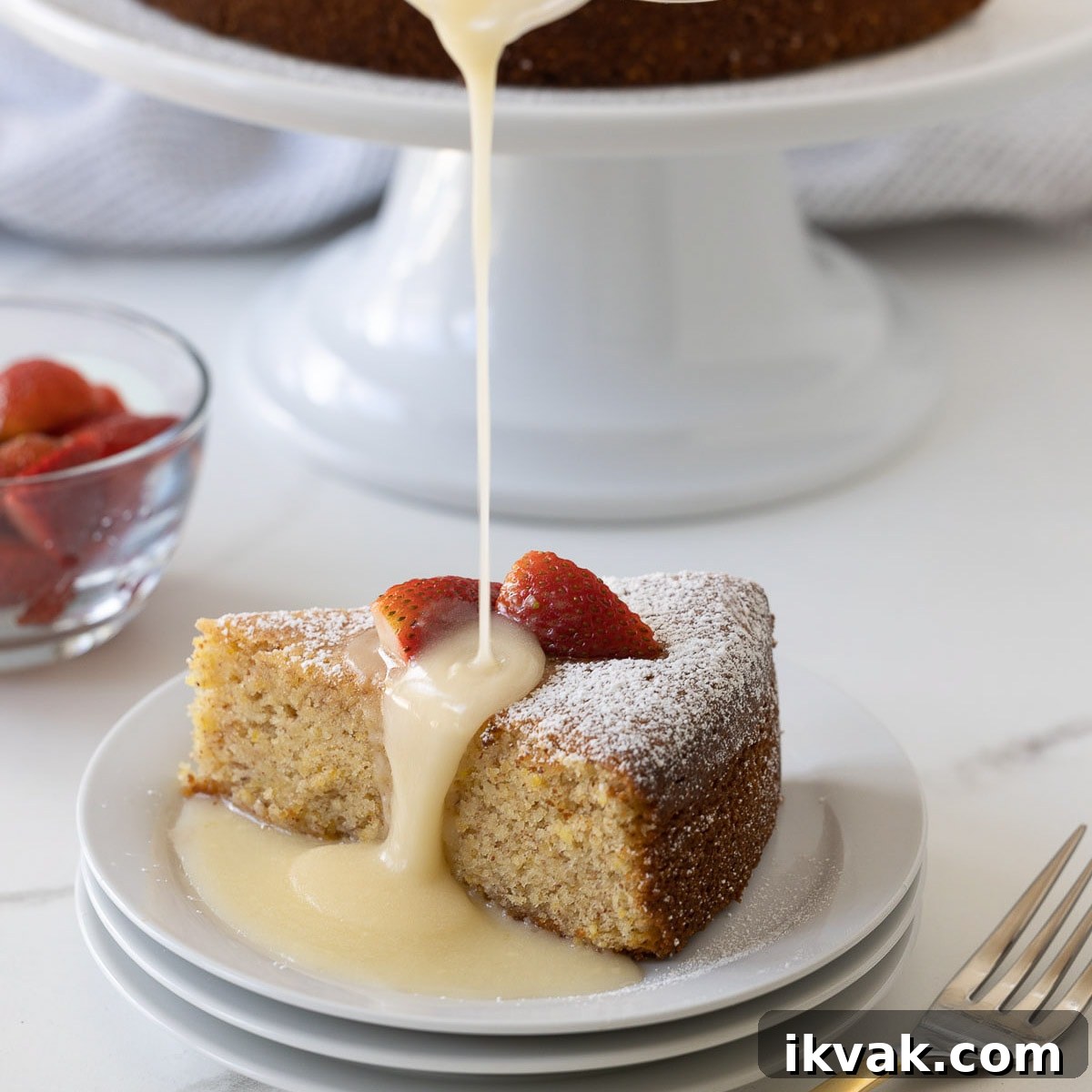
Bright lemon flavor, a tender crumb with a light crunch from polenta (cornmeal) and ground almonds, and moist richness from extra-virgin olive oil—this lemon olive oil cake is one of my favorite go-to desserts. It can be made gluten-free using a good gluten-free flour blend or with all-purpose flour if you don’t need GF. The recipe is easy to make dairy-free if desired, and it’s reliably delicious every time.
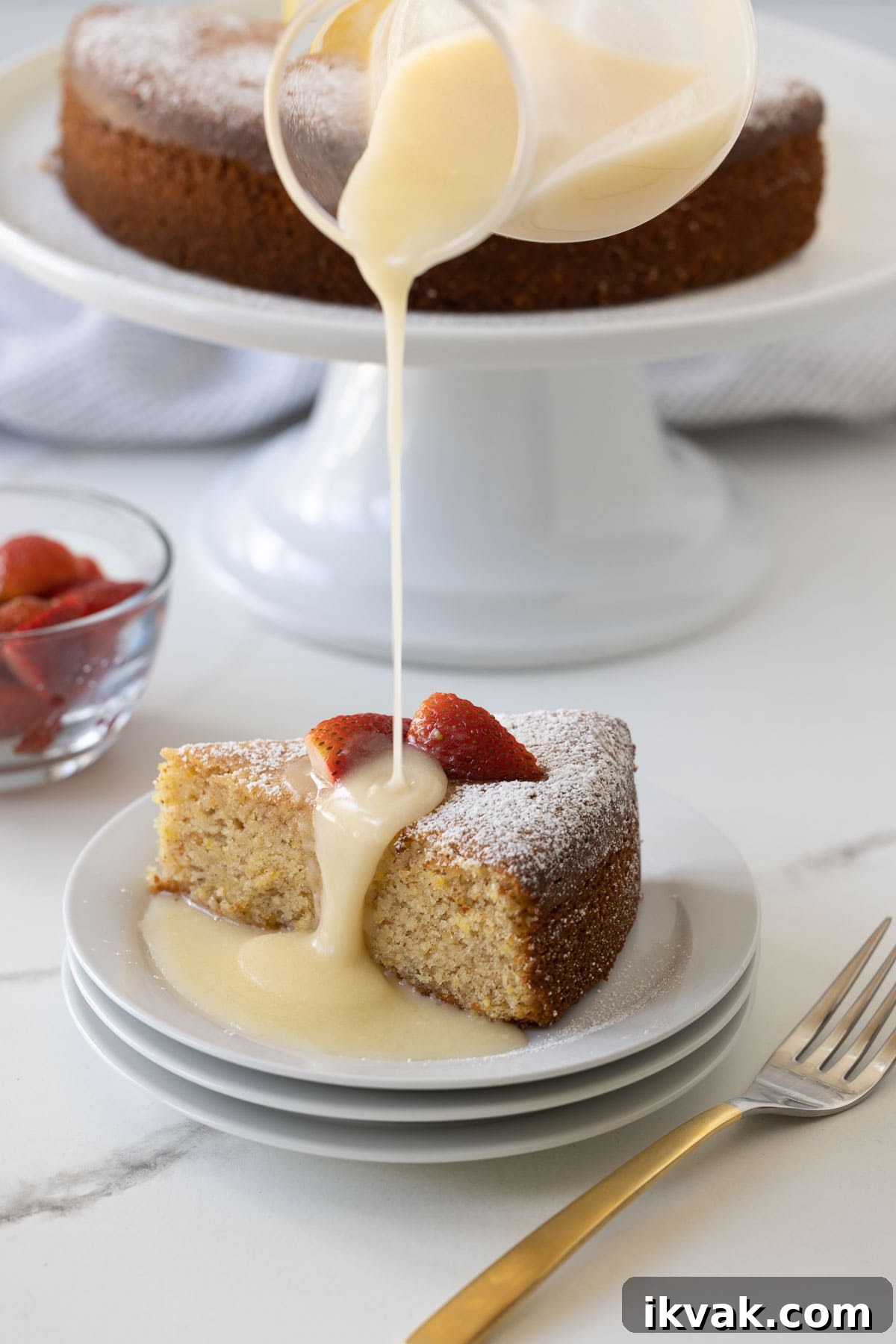
This cake is sometimes called a polenta cake or cornmeal cake, and it works equally well as a simple everyday cake or a lightly dressed dessert for guests. The whole lemon in the batter gives it a bright, fresh citrus note, and the almonds add depth and a satisfying texture. It’s been one of my favorites for many years because it’s straightforward and surprisingly elegant.
Why you’ll like this recipe
- It’s a crowd-pleaser for lemon lovers.
- You can make it ahead and it keeps well refrigerated.
- Versatile for brunch, afternoon tea, or dessert.
- Dress it up with glaze, cream or berries, or keep it simple with a dusting of powdered sugar.
- Easy to prepare—using a food processor streamlines the steps.
Recipe ingredients
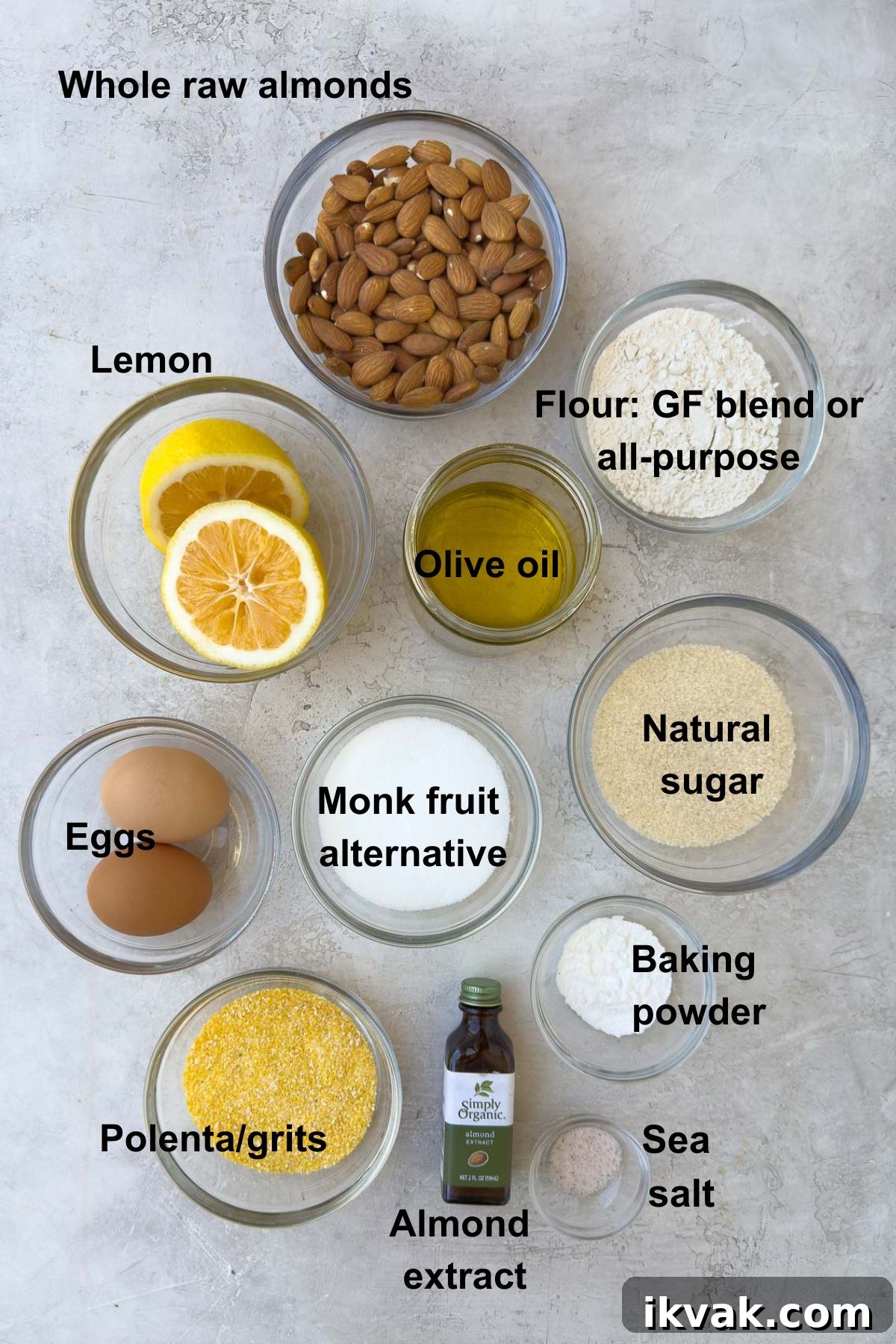
- Polenta / Cornmeal: Use regular (not instant) polenta or coarse cornmeal for texture.
- Flour: A good all-purpose flour or a quality gluten-free blend if you need GF.
- Baking powder: Aluminum-free is preferred; make sure it’s fresh.
- Salt: Fine sea salt or table salt.
- Almonds: Raw whole almonds (weighing is best—about 7½ ounces / 1¼ cups).
- Sugar: Granulated cane sugar, or use a low-calorie sweetener blend if desired.
- Lemon: Fresh lemons—this recipe uses the juice and a halved lemon processed into the batter for bright flavor.
- Olive oil: Extra-virgin olive oil with a mild, fruity profile for best results.
- Milk: Dairy milk or unsweetened almond milk both work.
- Eggs: Large eggs to bind the batter.
- Extract: A little almond extract enhances the almond flavor.
Please see the recipe card below for exact measurements and nutritional information.
Chef’s tip: For consistent baking results, measure dry ingredients by weight using a digital kitchen scale whenever possible. Baking is precise, and weighing ingredients improves accuracy.
Substitutions and variations
If you prefer to use almond flour instead of whole almonds, substitute 7.5 ounces (about 2 cups + 3 tablespoons) of almond flour for the whole almonds. Weighing the almond flour is recommended for best results. To make this cake vegan, try egg substitutes such as flax “eggs,” aquafaba, or chia eggs—results will vary so test the texture and rise before serving to guests.
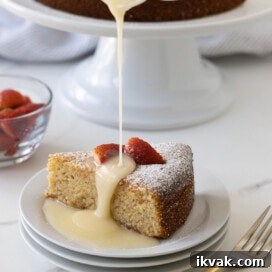
Serve the cake with a simple berry sauce, whipped coconut cream for a dairy-free option, or fresh berries and a lemon glaze for a more festive presentation.
Recipe instructions
Using a food processor makes this cake straightforward because it grinds the almonds and blends the batter smoothly. You will need a 9″ springform pan lined with parchment paper. Follow these simplified steps:
Set-up: Preheat the oven to 325°F (conventional). Spray a 9″ springform pan with nonstick spray and line the bottom with a parchment round.
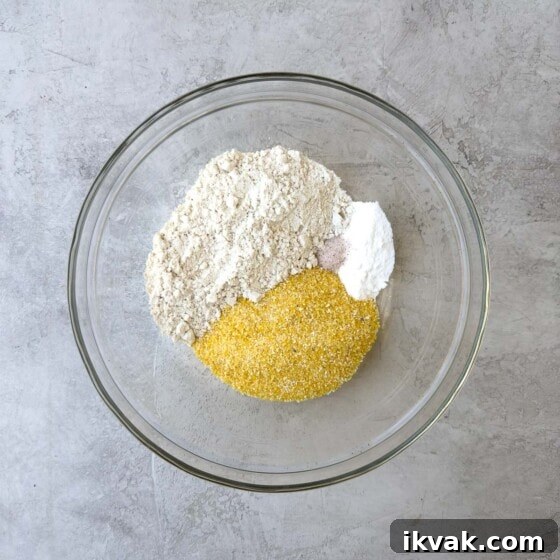
Step 1: In a medium bowl, whisk together cornmeal, flour, baking powder, and salt.
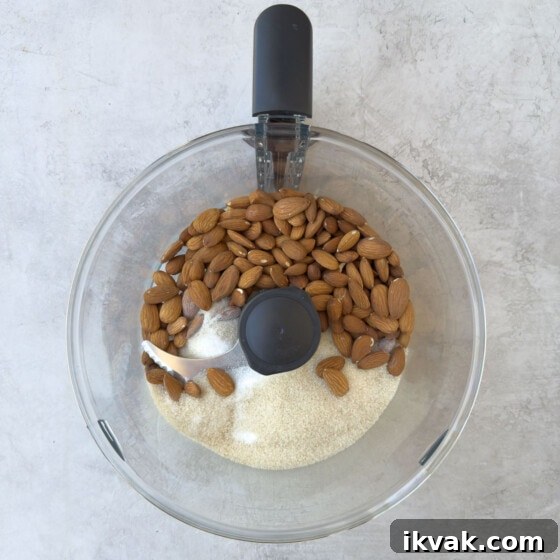
Step 2: In the food processor bowl, pulse the whole almonds and sugar until they are coarsely ground and have a sandy texture (about 30 seconds).
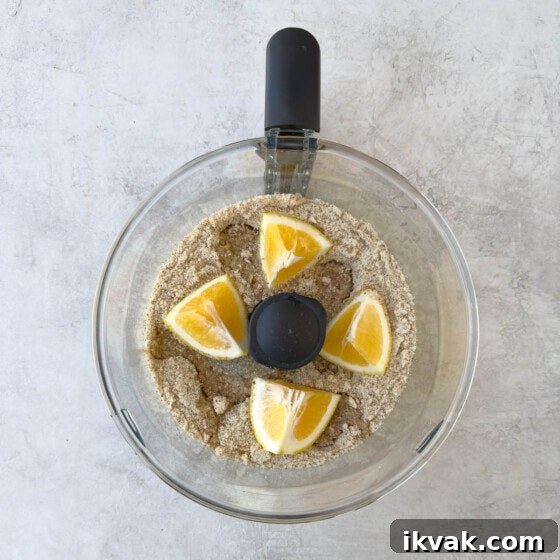
Step 3: Add the lemon juice and the other lemon half (seeds removed and cut into pieces) to the processor and process about 45 seconds. Scrape the bowl down with a spatula.
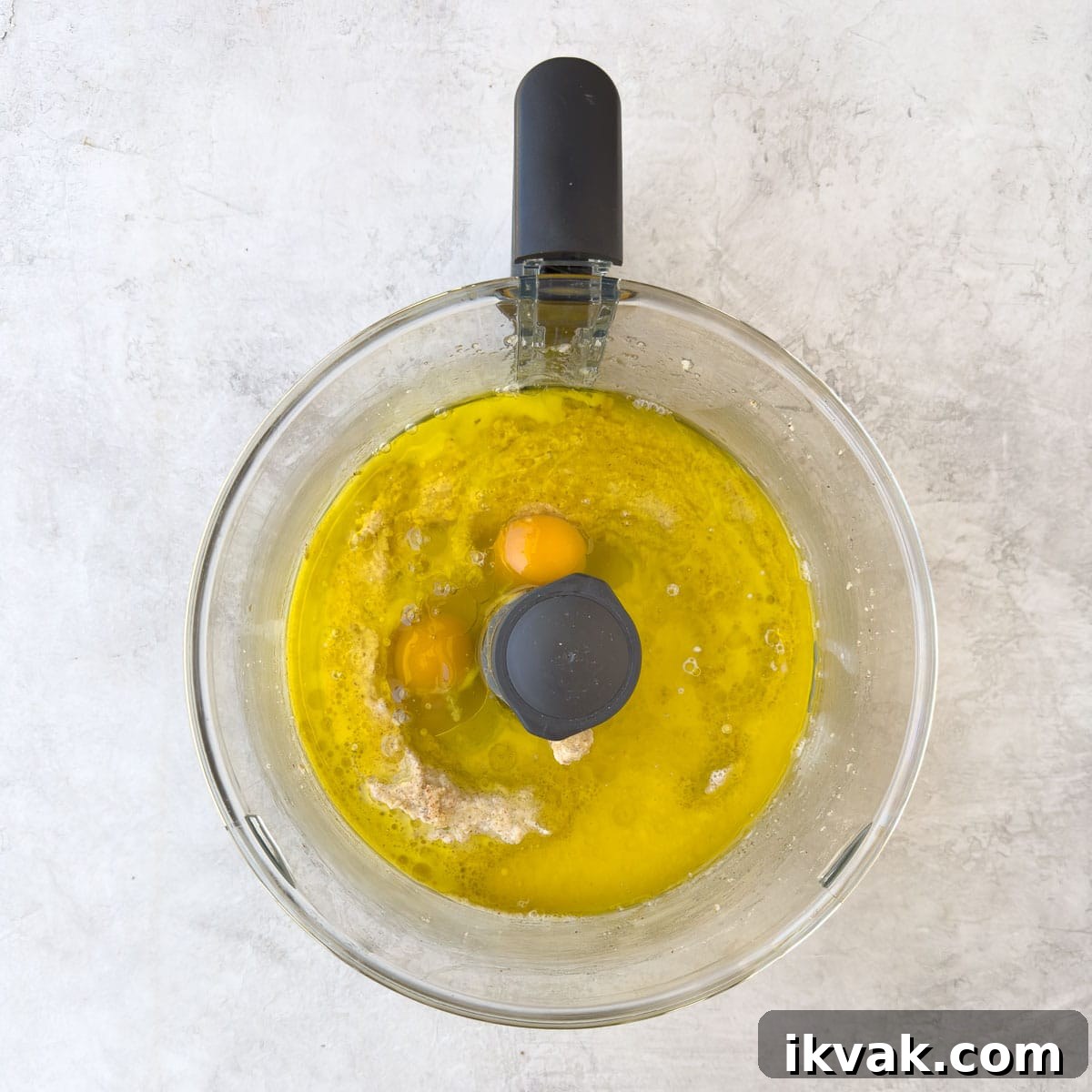
Step 4: Add the olive oil, milk, eggs, and almond extract. Process until the batter is smooth, about 1½ minutes. Add the cornmeal and flour mixture and pulse a few times to combine fully.
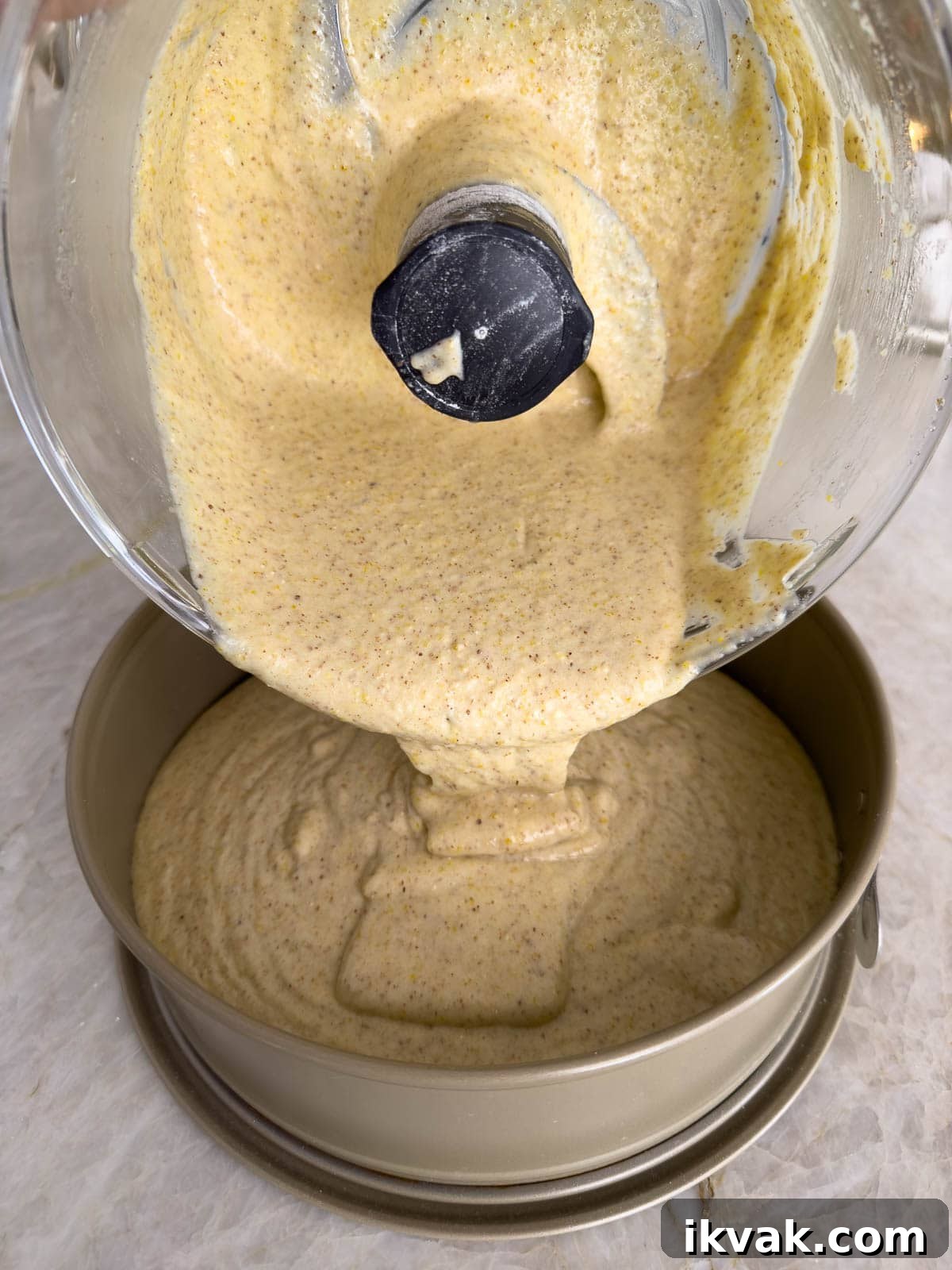
Step 5: Pour the batter into the prepared pan and smooth the top. Bake 50–60 minutes until the cake is golden and springs back slightly when touched. A tester inserted into the center should come out with only moist crumbs attached. Allow the cake to cool in the pan for 10 minutes, then release the springform and transfer the cake to a wire rack to cool completely.
Oven times vary—convection ovens often bake faster, so check the cake early if using convection. If possible, use the conventional bake mode for more even results.
Serving suggestions
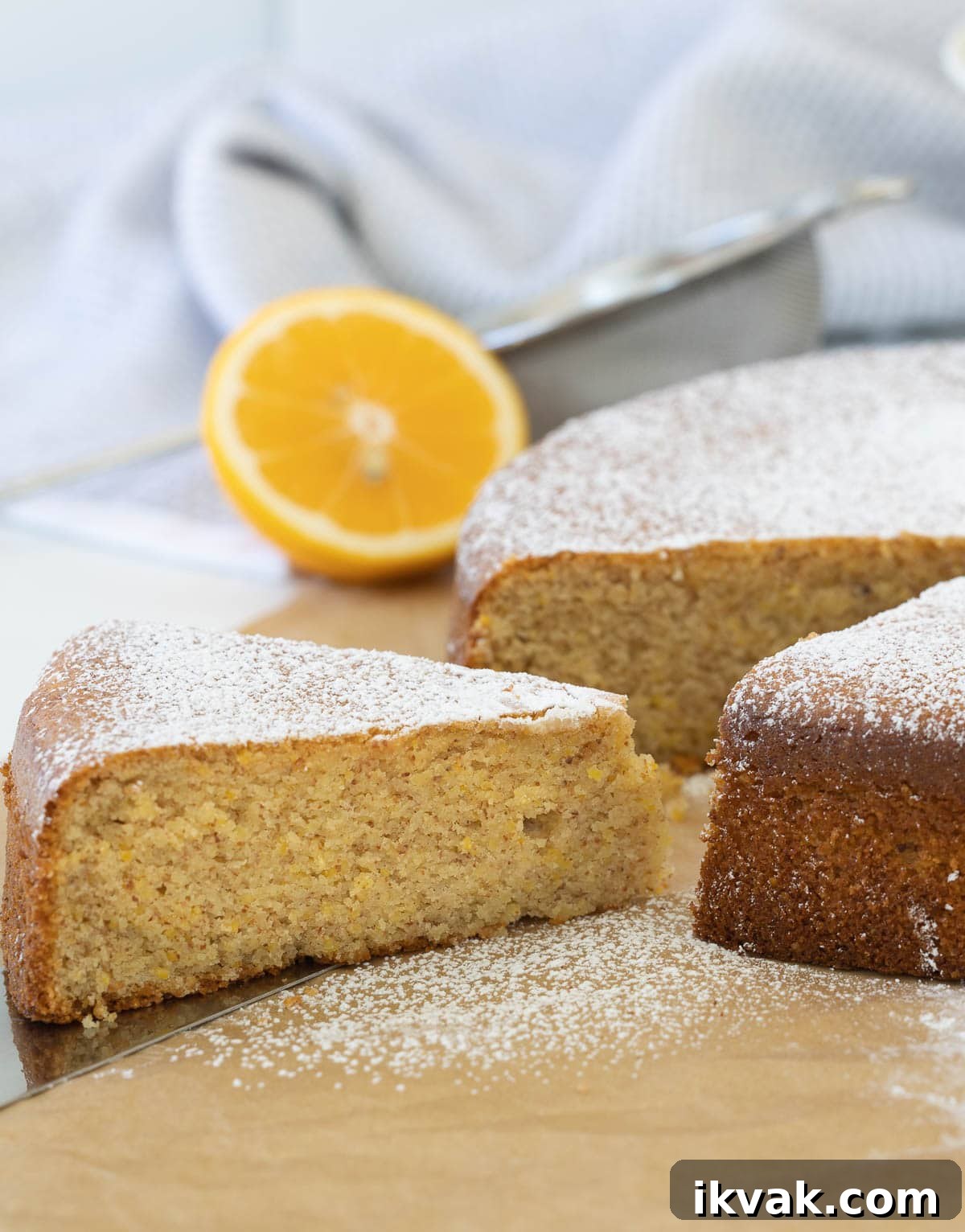
This cake is lovely simply dusted with powdered sugar or a powdered sweetener blend. It’s not overly sweet, which makes it perfect for brunch or afternoon tea. For a dressed version, top with fresh berries, a lemon glaze, or lightly sweetened whipped cream. It also pairs well with a berry coulis for extra color and flavor.
The cake keeps well: wrap it tightly and refrigerate for up to 3–4 days. It can be made two days ahead and chilled until serving; it also freezes well if you want to store it longer.
How to dress it up
- Lemon glaze: mix 1 cup sifted powdered sugar with 2–4 tablespoons fresh lemon juice until you reach the desired consistency. Add 1–2 tablespoons melted unsalted butter to soften the tartness if you like.
- Softly whipped cream: flavor with vanilla or a touch of almond extract and serve alongside fresh berries.
- Berry sauce: a simple strawberry or mixed berry coulis complements the lemon and almond flavors.
Recipe FAQs
This cake is rich and moist with bright lemon notes and a subtle almond depth. The oil lends a tender texture without an overt olive oil taste.
Use a quality extra-virgin olive oil with a mild, fruity flavor. Avoid very peppery or intensely flavored finishing oils for the batter.
Yes. Because oil is 100% fat while butter contains about 18% water, cakes made with oil tend to remain moister for longer.
A light dusting of powdered sugar, fresh berries, a lemon glaze, or a dollop of whipped cream are all excellent choices.
Recipe
Lemon Olive Oil Cake (gluten free option)
This tender lemon olive oil cake is made with olive oil, almonds, polenta (ground cornmeal) and a whole lemon. Serve with powdered sugar, lemon icing, whipped cream or berries.
Ingredients
- ½ cup gluten-free cornmeal / polenta (3 ounces)
- ½ cup all-purpose or gluten-free flour blend (about 2.4 ounces)
- 2 teaspoons aluminum-free baking powder
- ¼ teaspoon salt
- 7½ ounces whole raw almonds (about 1¼ cups)
- 1 cup granulated sugar (or half sugar, half sweetener blend)
- 1 large lemon
- ¾ cup extra-virgin olive oil
- ½ cup unsweetened almond milk or dairy milk
- 2 large eggs
- 1 teaspoon almond extract
Optional garnishes
- Powdered sugar
- Fresh berries
- Whipped cream or whipped coconut cream
- Lemon glaze (recipe below)
Instructions
- Preheat oven to 325°F. Spray a 9″ springform pan and line the bottom with parchment. In a medium bowl, whisk cornmeal, flour, baking powder and salt.
- In a food processor, pulse the almonds and sugar until coarse and sandy, about 30 seconds.
- Juice one half of the lemon to yield about 1½ tablespoons and discard the rind. Remove seeds from the remaining half, cut into pieces and add to the processor along with the juice; process 45 seconds and scrape down the bowl.
- Add the olive oil, milk, eggs and almond extract and process 1½ minutes until smooth. Add the dry cornmeal/flour mixture and pulse a few times to combine.
- Pour batter into the prepared pan and bake 50–60 minutes, until golden and a tester shows moist crumbs but not raw batter. Cool 10 minutes in the pan, then remove the ring and parchment, and cool completely on a wire rack.
Easy lemon glaze (optional)
Mix 1 cup sifted powdered sugar with 2–4 tablespoons fresh lemon juice until you reach the desired consistency. To mellow the tartness, whisk in 1–2 tablespoons melted unsalted butter (dairy or plant). Add a drop of almond or vanilla extract if desired. If chilled, allow the glaze to come to room temperature before serving.
Storage
Wrap the cake well and refrigerate for up to 3–4 days. It can be frozen if you need longer storage.
Notes
This version is adapted from a classic olive oil cake technique, using whole almonds processed into the batter for texture and flavor. Adjust sugar to taste and try almond flour as a direct swap if you prefer.