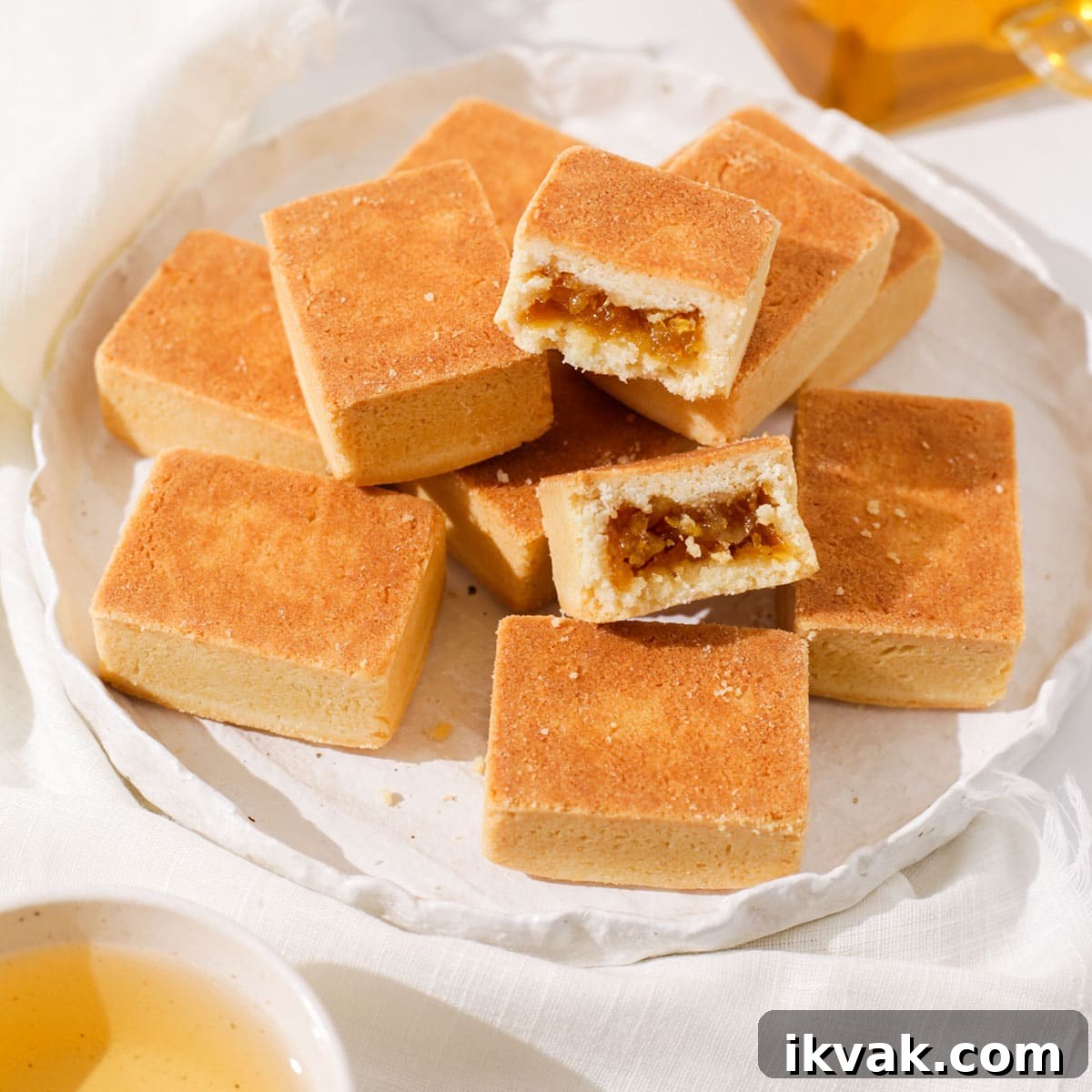
This Chinese pineapple tart recipe guides you step by step to make the classic pineapple tarts often shared during Lunar New Year, Mid-Autumn Festival, and other celebrations. With clear instructions, photos, and helpful tips, you can make melt-in-your-mouth pineapple tarts at home.
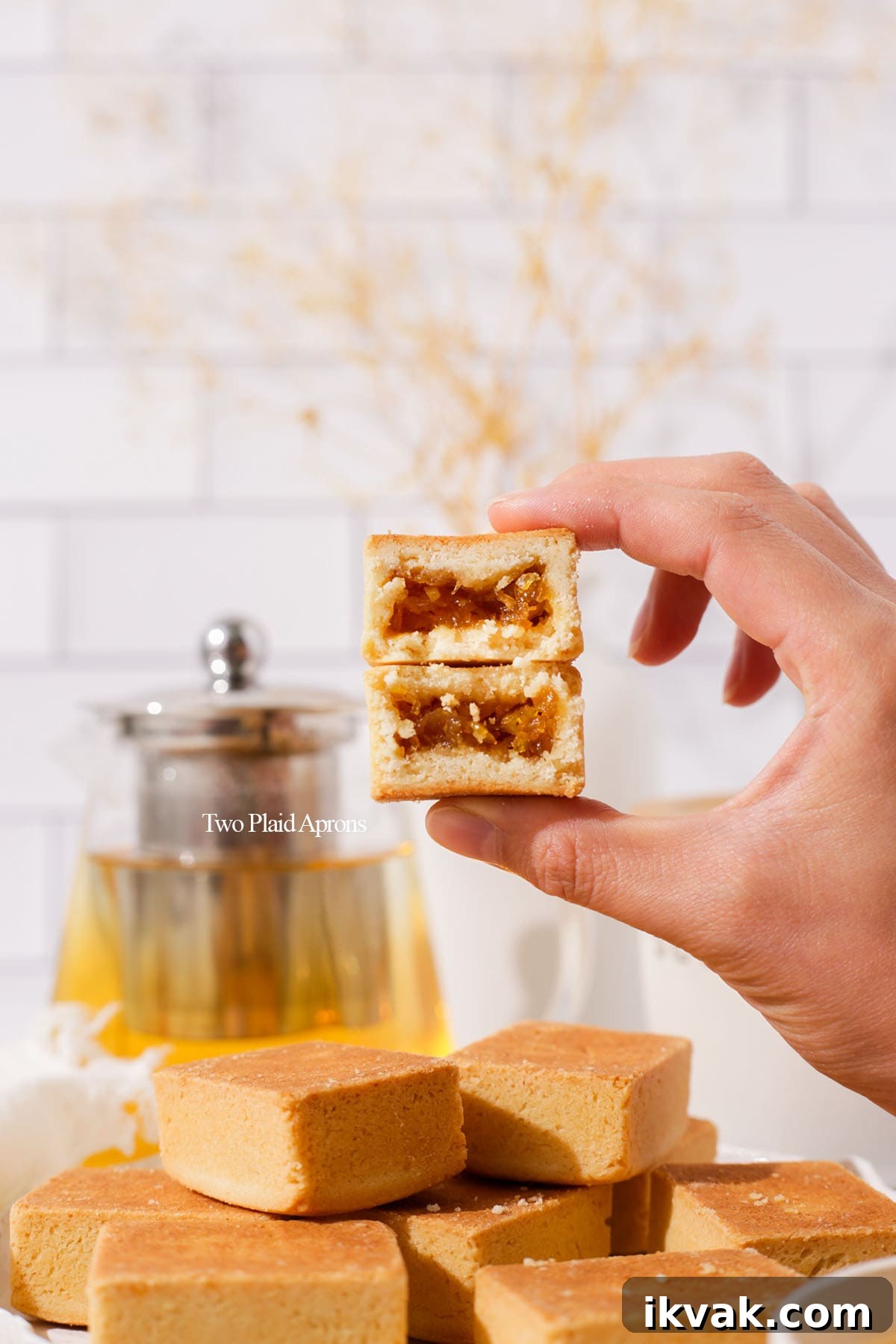
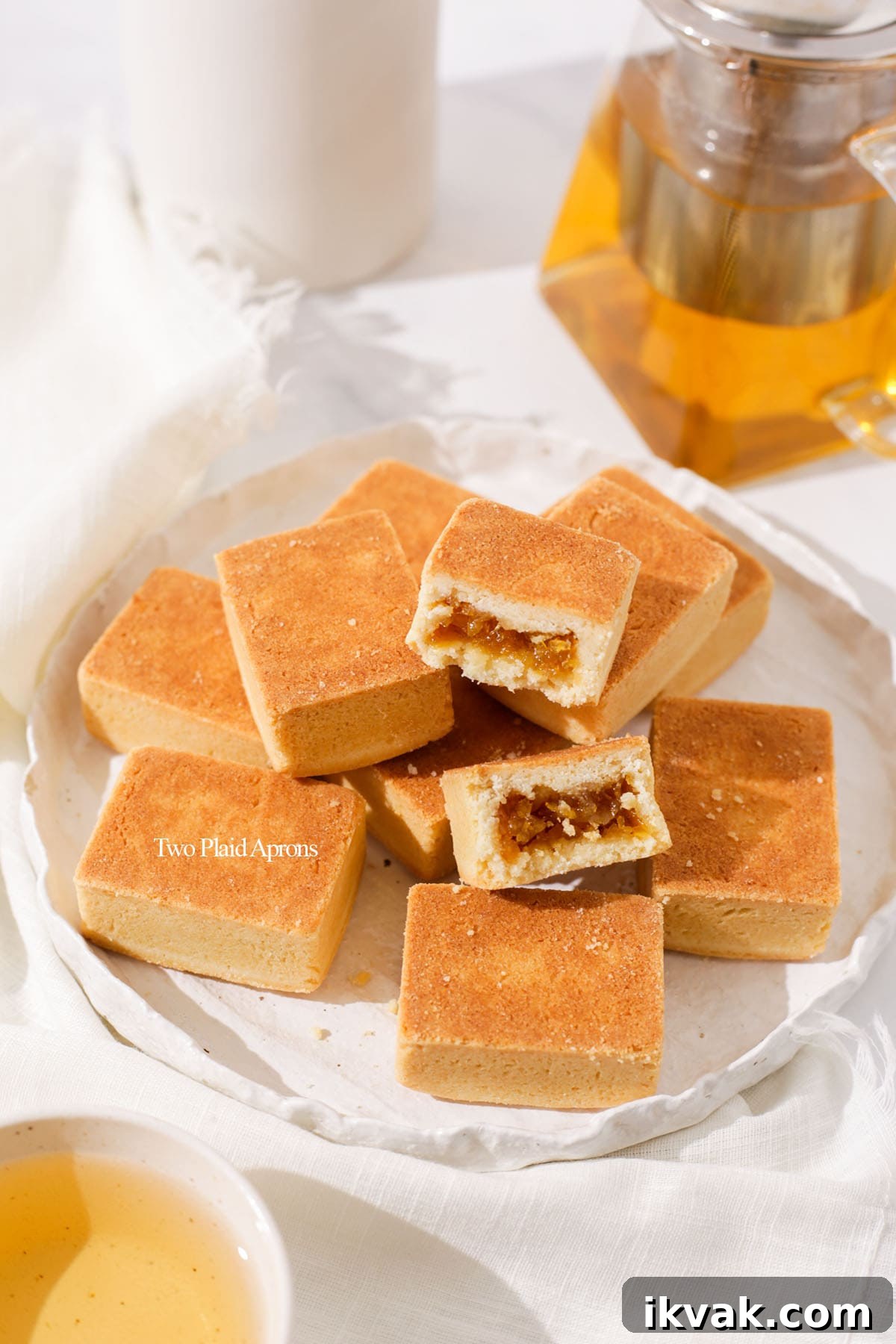
Pineapple tarts (also called fèng lí sū or 凤梨酥) are a beloved Chinese and Taiwanese shortbread pastry filled with a concentrated pineapple jam made from fresh fruit. The exterior shortbread is tender and buttery, while the filling brings bright, sweet-tart pineapple flavor—together they make an addictive snack with tea.
This recipe presents the classic rectangular tart that’s ideal for beginners. If you want a more decorative version, try shaping pineapple pastries into little pineapple motifs for a cute presentation. These tarts also pair well with other traditional treats made for festivals.
Ingredients
See the recipe card below for exact quantities.
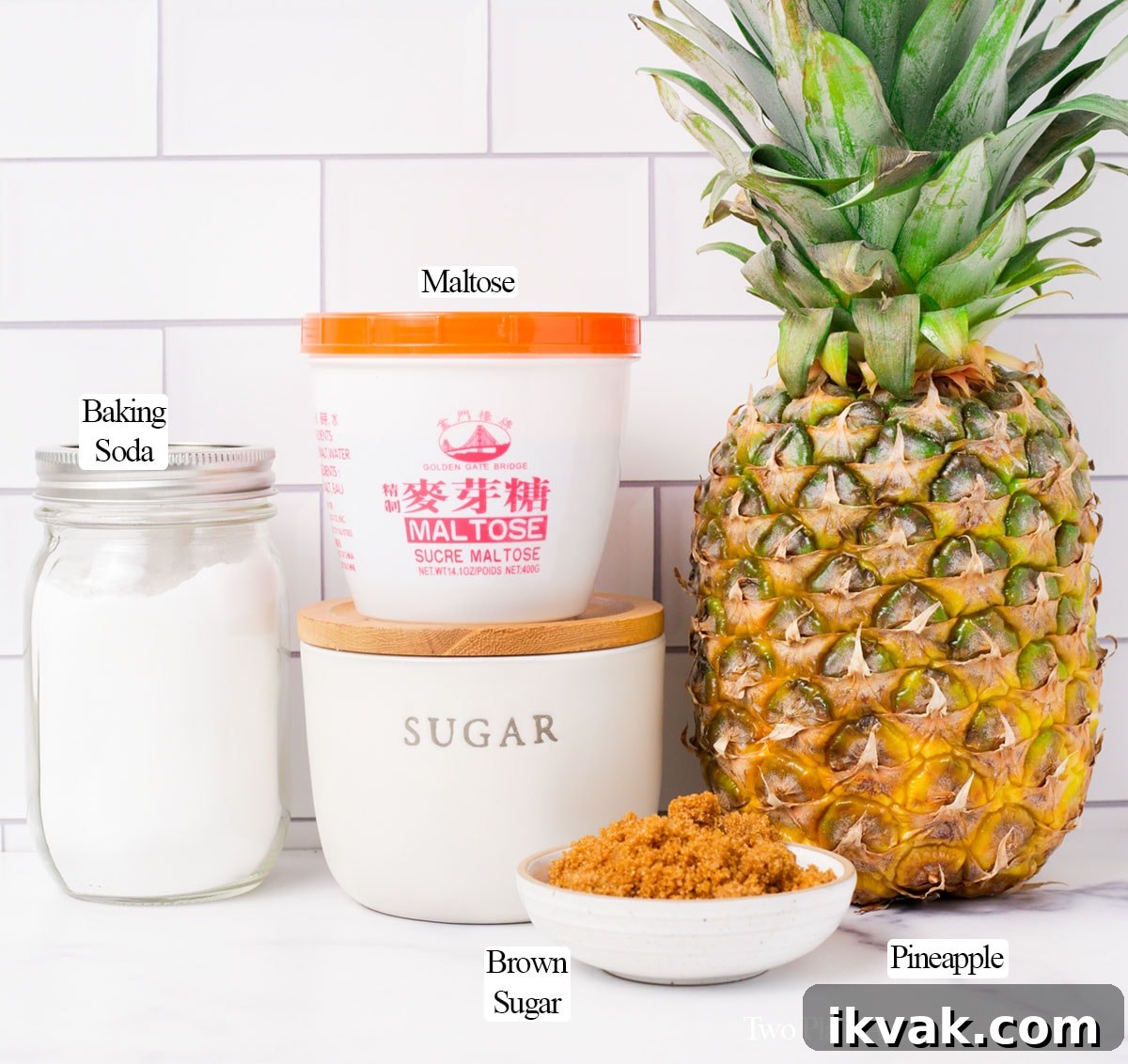
Pineapple filling
- Fresh pineapple – choose fruit that’s beginning to ripen for a balanced sweet-tart flavor.
- Granulated sugar – to sweeten and balance the pineapple.
- Dark brown sugar – adds depth and color to the filling. You may substitute a darker cane sugar sparingly if desired.
- Maltose syrup – a sticky syrup that helps prevent sugar crystallization and gives the filling a firmer, moist texture. Warm slightly if it’s thick, to make it easier to stir in.
- Baking soda – a pinch helps reduce sharp acidity in under-ripe pineapple. Use sparingly.
Shortbread dough
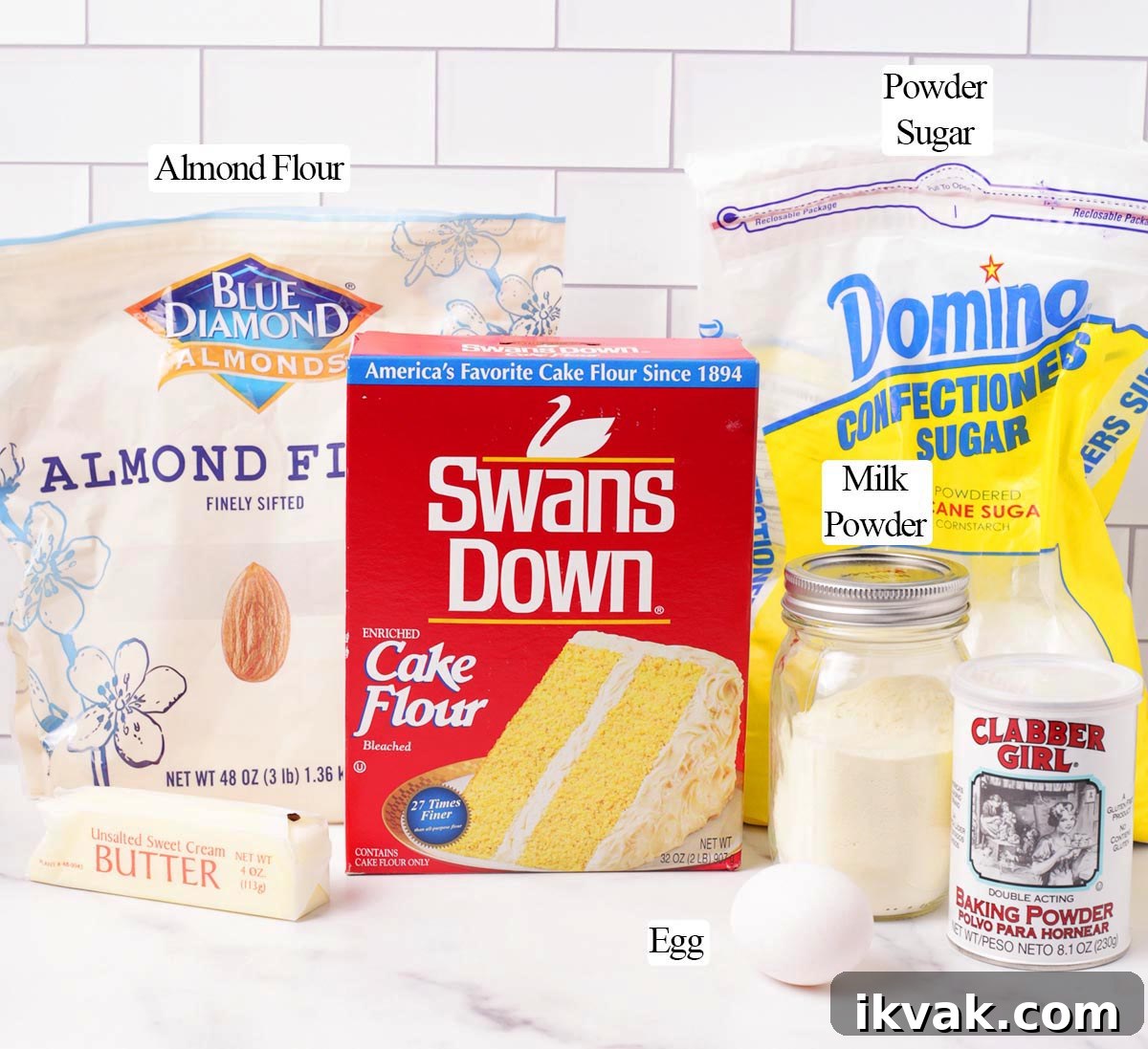
- Unsalted butter – the main fat for a tender shortbread texture; use softened butter.
- Powdered (confectioners’) sugar – gives the crust a soft, melt-in-your-mouth quality versus the crispness granulated sugar would produce.
- Egg yolk – helps bind the dough and adds color.
- Cake flour – low in gluten for a tender crumb; preferred for this shortbread.
- Almond flour – lightens the dough and adds a subtle nutty note.
- Milk powder – adds richness without introducing liquid.
- Baking powder – a small amount to give a light lift.
- Optional natural powders (matcha, turmeric) or gel food coloring for coloring.
How to make Chinese pineapple tart
For the pineapple filling
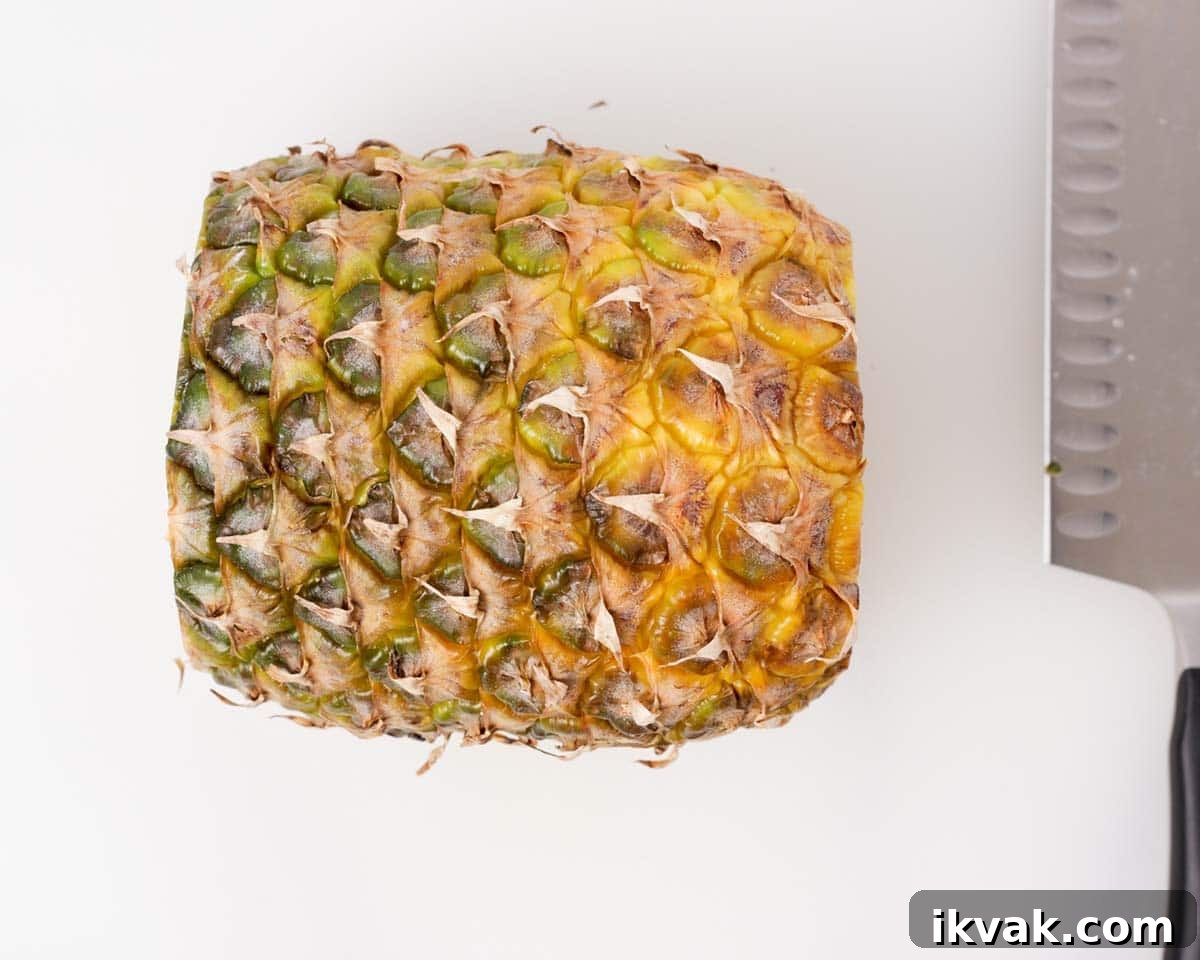
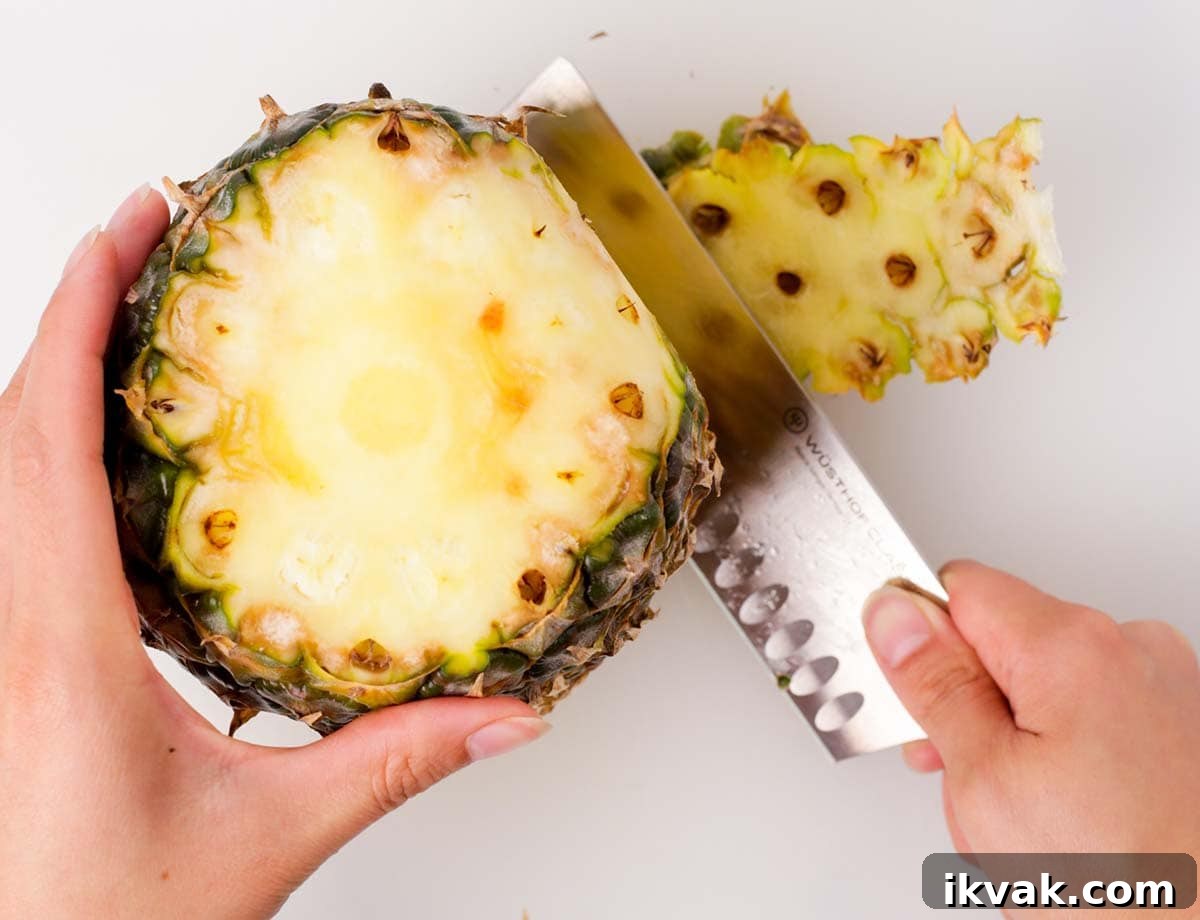
1. Trim the top and bottom of the pineapple and remove the skin. Use a small knife to follow and remove the “eyes” with minimal waste.
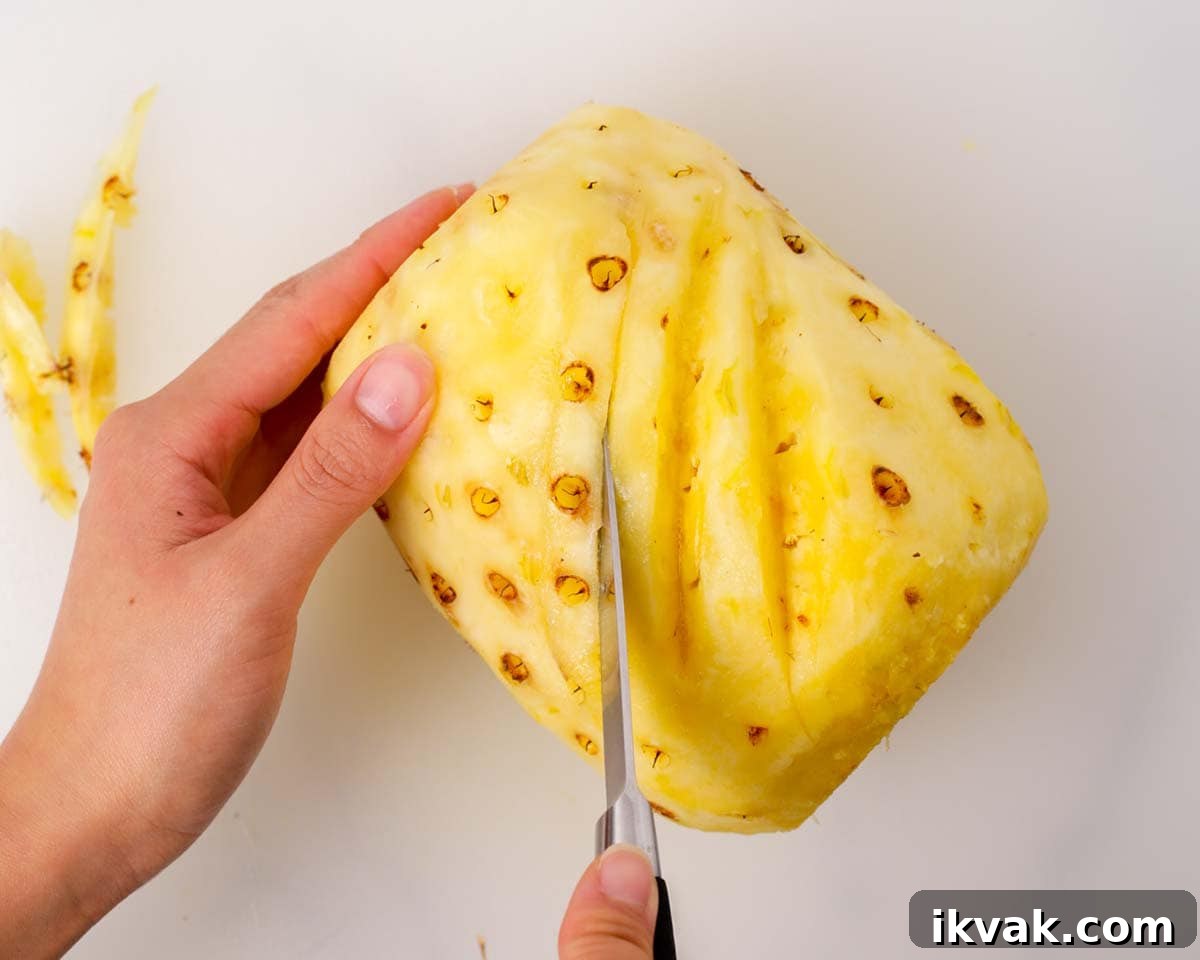
2. Slice the pineapple lengthwise and remove the tough core pieces. Thinly slice the flesh then cut into matchsticks. Roughly chop the matchsticks so the fruit pieces are small but still textured.
3. Place all pineapple and its juices in a wide nonstick pan. If the pineapple is underripe, add a small pinch of baking soda and stir briefly to neutralize some acidity.
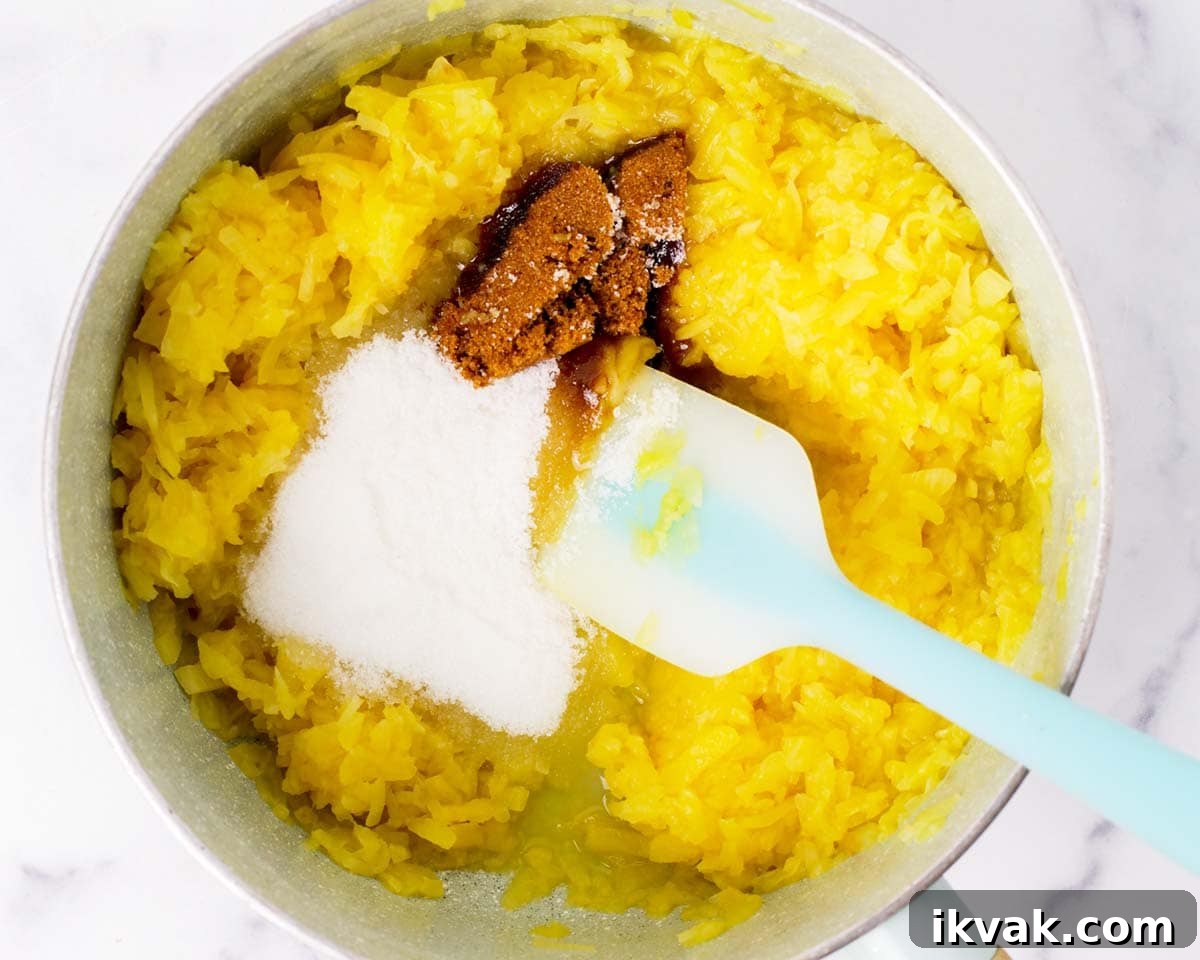
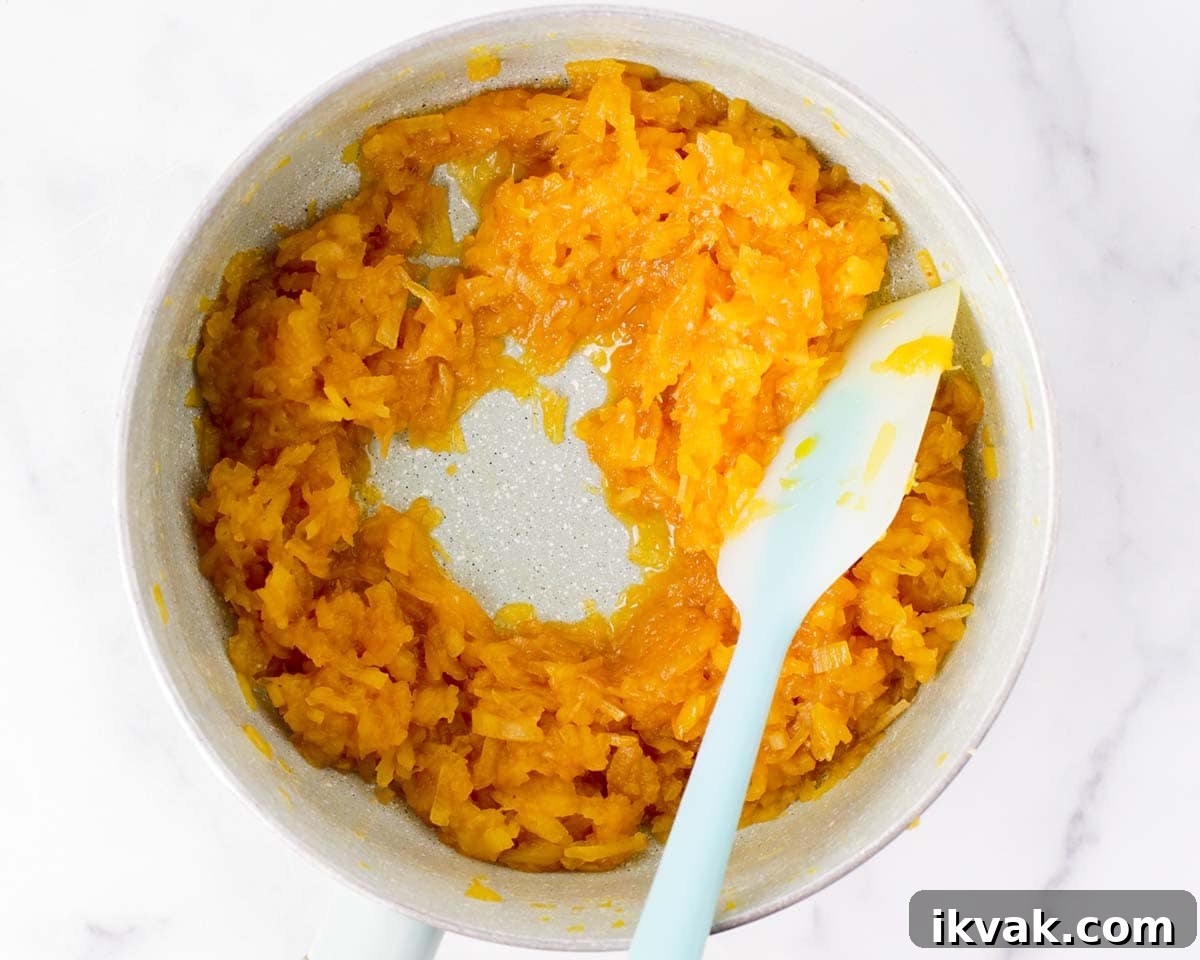
4. Cook over medium-high heat, stirring occasionally, until most juices evaporate. Reduce to medium and add granulated and brown sugar; continue cooking and stirring. Lower to medium-low, stir in maltose, and keep stirring until the pineapple becomes thick, clumps together, and no excess liquid remains.
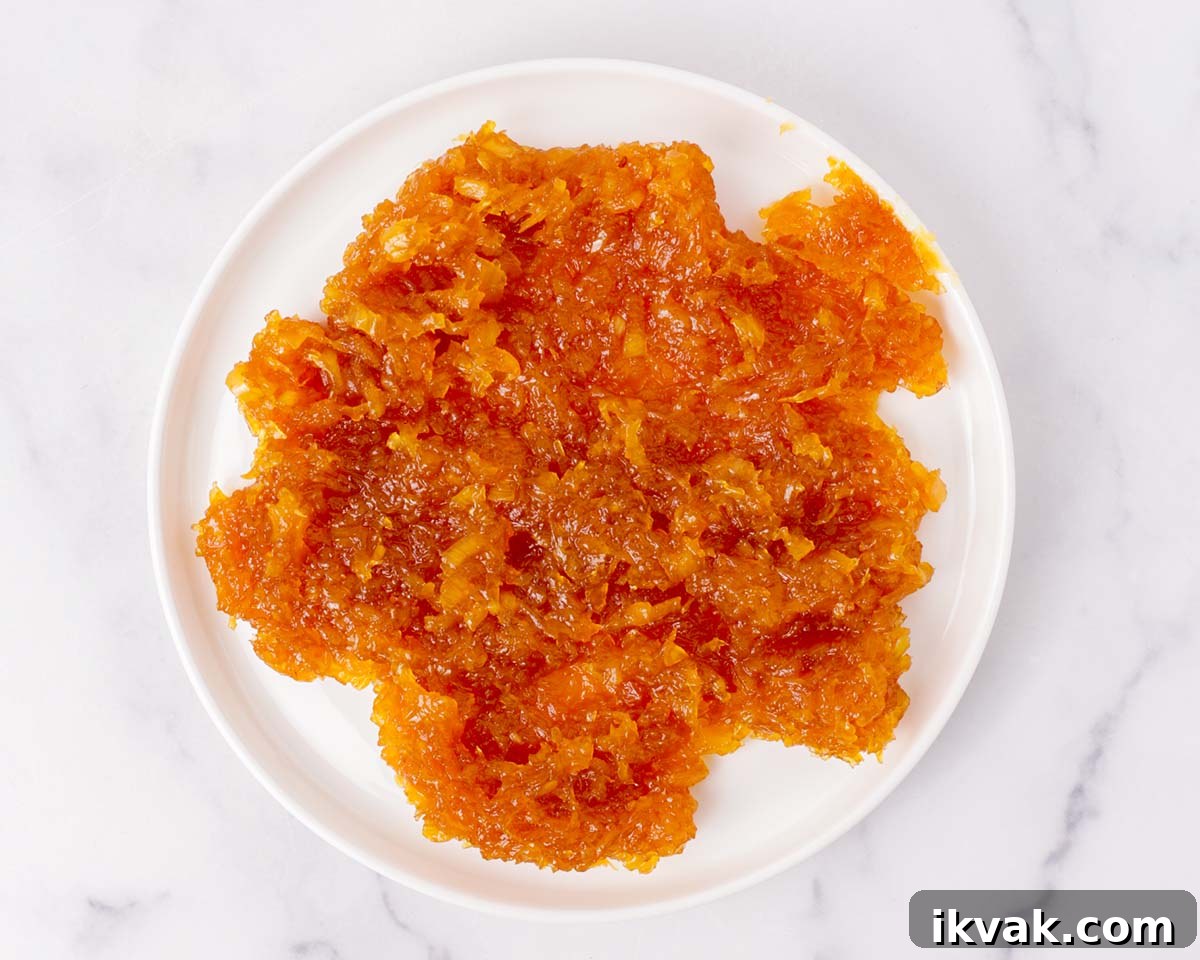
5. Transfer to a plate, spread thin to cool at room temperature, then divide the cooled filling into portions and roll into small balls for filling.
For the shortbread dough
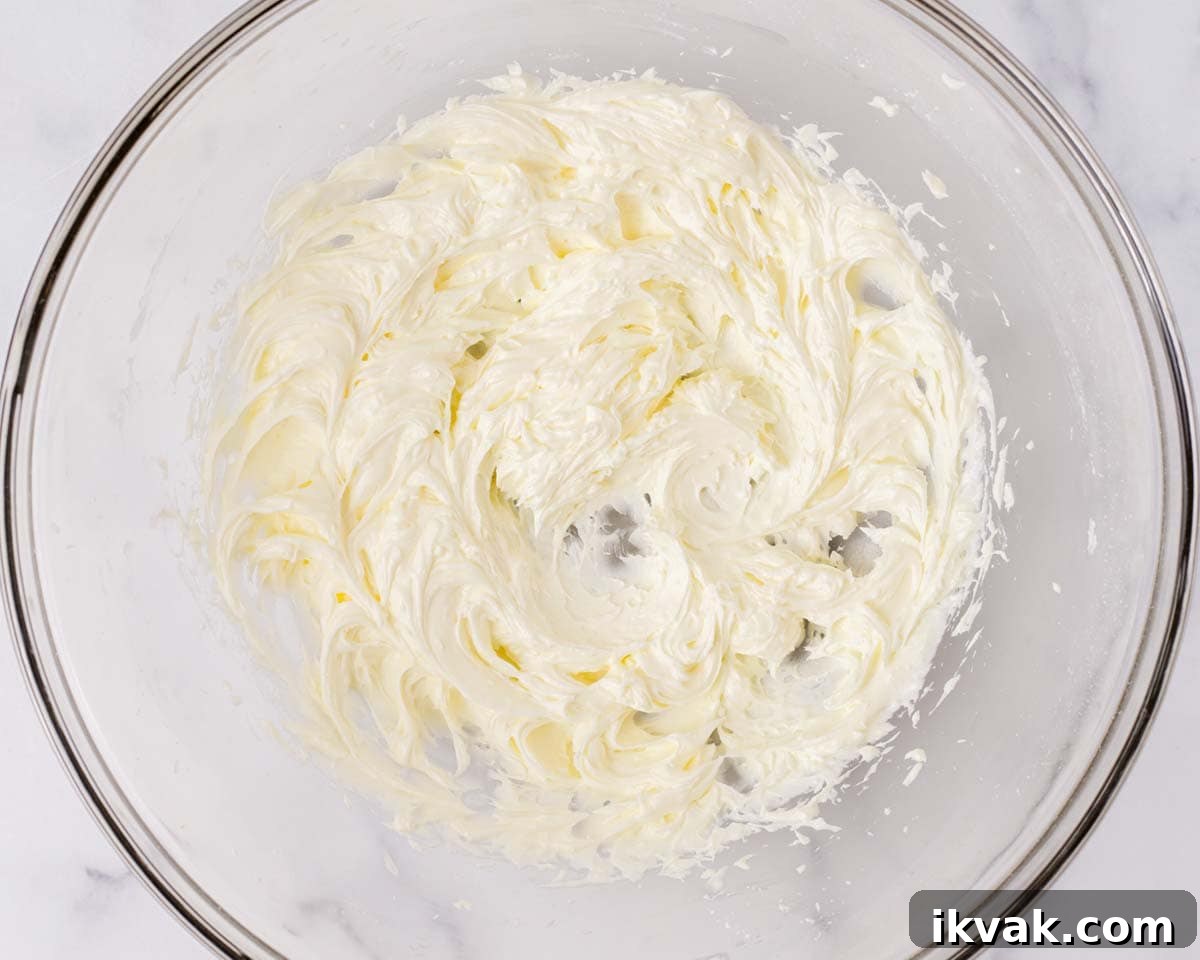
1. Beat softened butter until light and fluffy. Add powdered sugar and mix on low until combined, then beat until pale and airy.
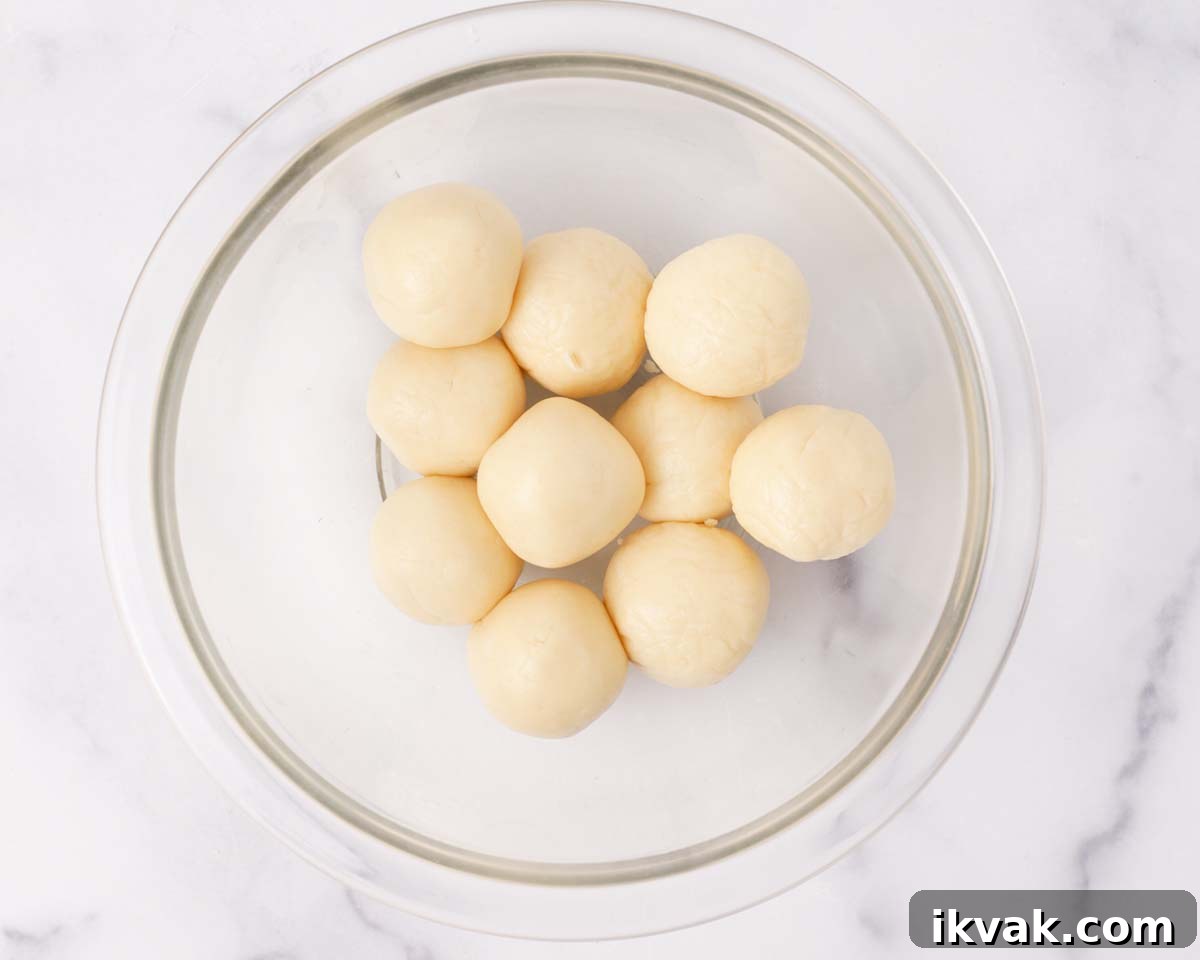
2. Add the egg yolk and mix until incorporated. Sift in cake flour, almond flour, milk powder, and baking powder. Mix on low just until the dough starts to come together, then gently knead until smooth. Divide into equal portions and roll into balls, keeping them covered to prevent drying.
Shaping and assembling
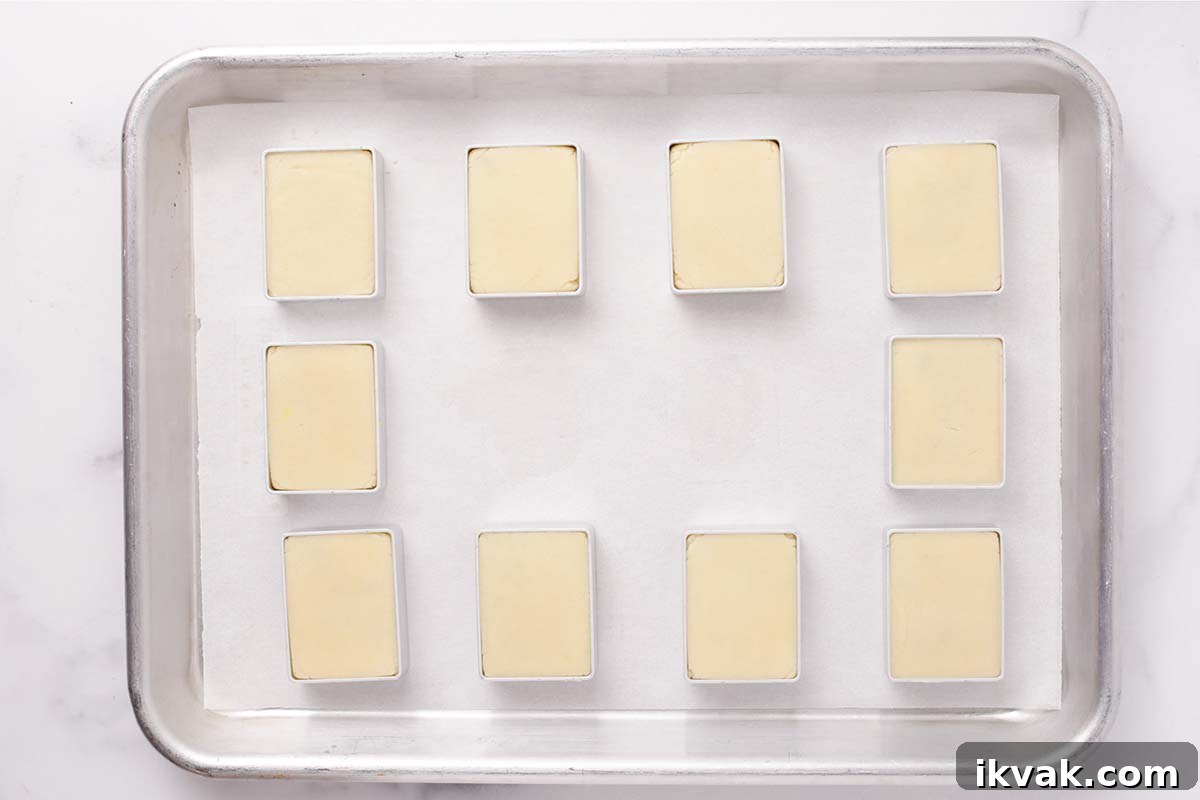
1. Line a sheet pan with parchment paper and prepare rectangular molds if you have them.
2. Flatten a dough ball in your palm, creating a well with your thumb. Place a pineapple filling ball inside, then gently wrap and seal the dough around it. Shape into a smooth cylinder sized to fit your mold.
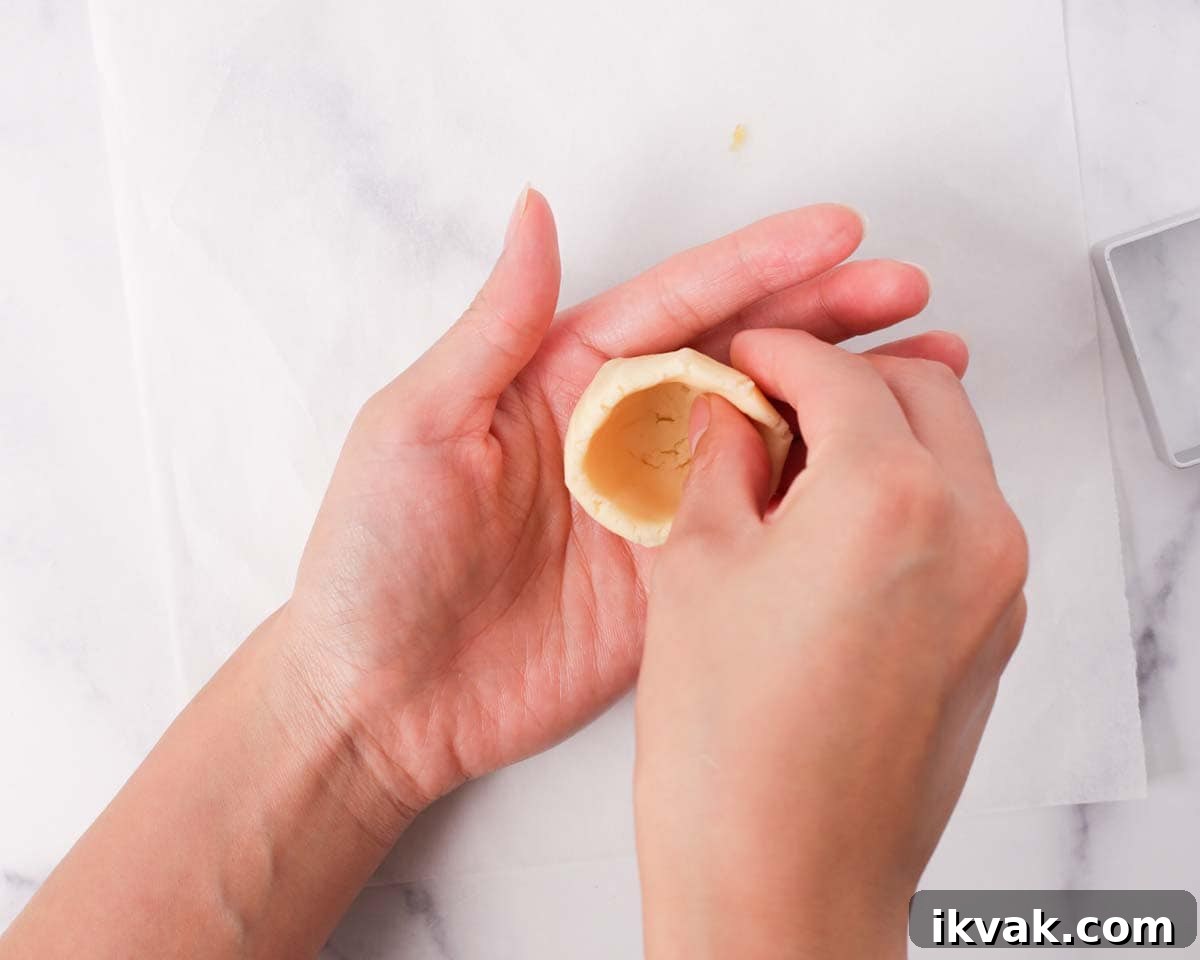
3. Place the filled pastry inside the mold and press lightly with your palm to fill the corners. Remove from the mold and arrange on the sheet pan. Repeat until all tarts are formed.
Baking
1. Preheat the oven to 375°F (190°C).
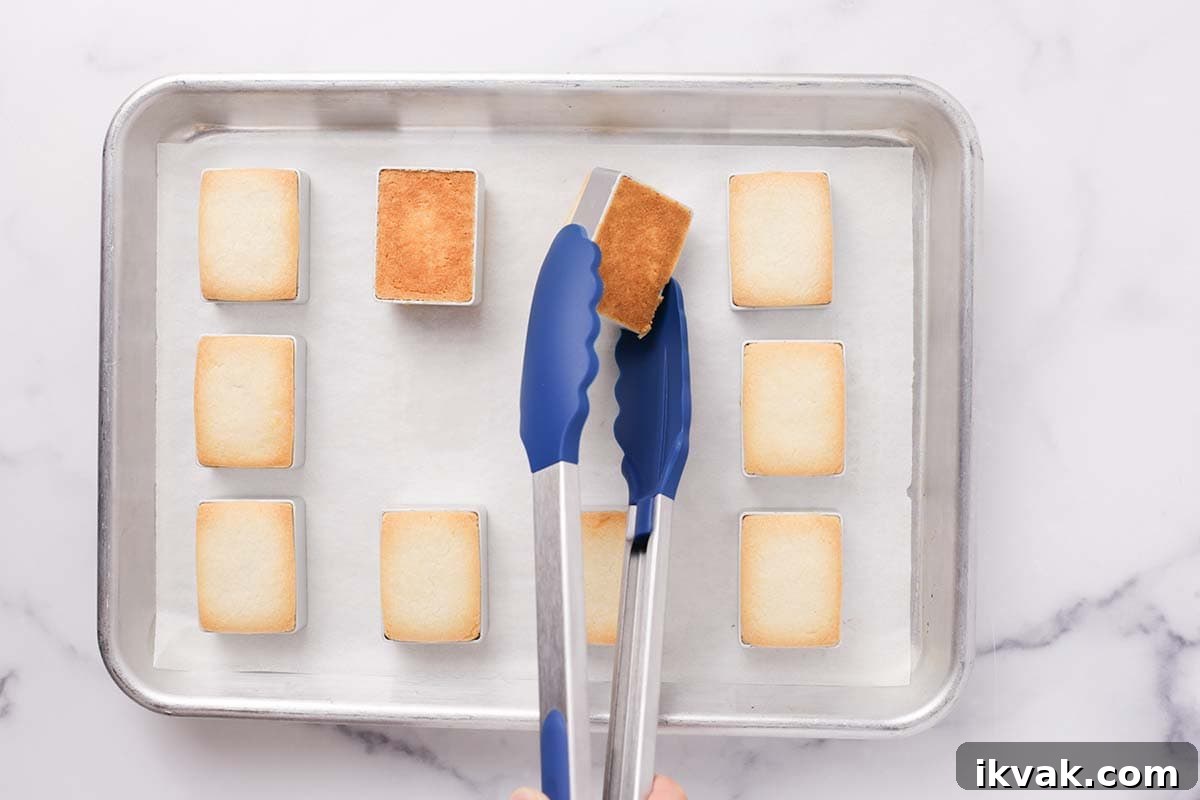
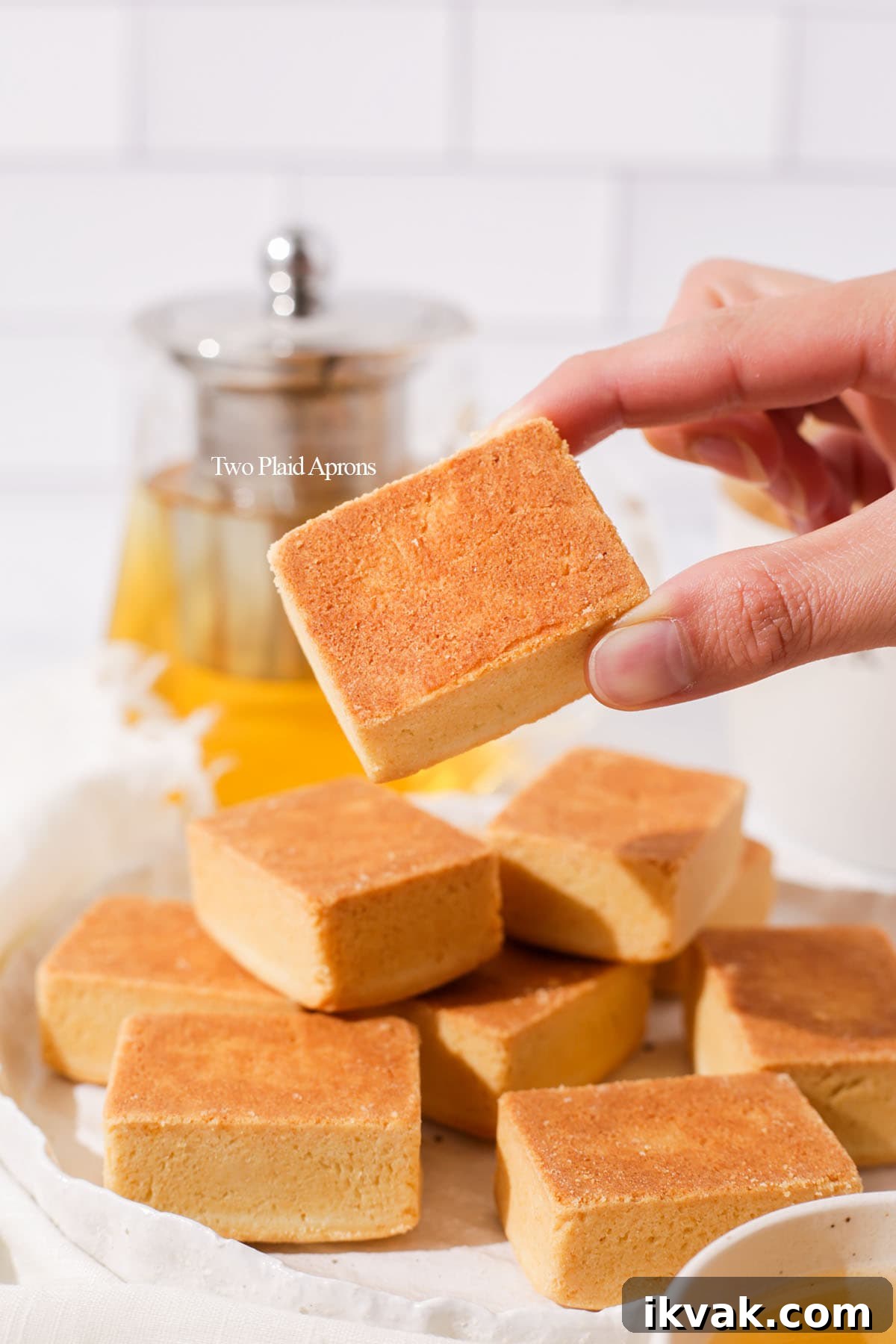
2. Bake the tarts for 14–15 minutes, until the edges just begin to turn golden. For more even browning, rotate the tray or flip the tarts gently during the last few minutes of baking.
3. Remove from the oven, let cool briefly, then remove molds. Allow the tarts to cool completely or until lukewarm before serving.
Alternative to using molds
If you don’t have tart molds, press the pastry into a cookie cutter of a similar size, then carefully release the shaped tart onto the pan. You can also shape the pastry into small rounds and flatten them gently by hand for rustic tarts.
Recipe tips
- No extra liquids: Avoid adding water or milk to keep gluten development minimal and the pastry tender. If the dough is too dry, add a touch more egg yolk or softened butter.
- Preheat the oven: Ensure your oven reaches the correct temperature for even baking.
- Keep dough covered: Prevent drying while you shape the tarts.
- Protect bottoms: If your oven browns bottoms too quickly, double-stack baking sheets for gentler heat.
Storage
The tarts taste great the day they’re baked, but they often improve after resting a day. Once cool to the touch, store tarts in an airtight container, layering with paper towels between layers to absorb excess moisture. Stored at room temperature, they will stay good for up to one week.
FAQ
You can use honey in a pinch, but the texture and flavor will differ. Maltose helps prevent crystallization and creates a firmer, glossy filling.
Can I make these without molds?
Yes. See the “Alternative to using molds” section for shaping options.
Is almond flour required?
You can omit almond flour and replace it with cake flour by weight, but the dough will be less tender and lack the subtle nuttiness almond flour provides.
If you try this recipe, please share your results and photos—we’d love to see your pineapple tarts!
📖 Recipe
Yield
About 21 pineapple tarts
Prep time
About 1 hour 10 minutes (plus cooling)
Cook time
About 14–15 minutes per batch
Ingredients
For the pineapple filling
- 3 pounds fresh pineapple, peeled (about 1 large pineapple)
- 3/4 cup granulated sugar
- 2 tablespoons dark brown sugar
- 1/4 cup maltose syrup
- 1/8 teaspoon baking soda (optional)
For the shortbread dough
- 9 tablespoons unsalted butter, softened
- 1/3 cup powdered sugar, packed
- 1 large egg yolk
- 1 3/4 cups cake flour
- 1/4 cup almond flour, packed
- 3 tablespoons dry milk powder
- 1 teaspoon baking powder
Instructions (summary)
- Make the pineapple filling: chop pineapple, cook with sugars and maltose until thick and no liquid remains. Cool and portion into small balls.
- Make the dough: cream butter and powdered sugar, add yolk, sift in dry ingredients and form a smooth dough. Divide into portions.
- Assemble: wrap filling with dough, shape, press into molds or cutters, and arrange on a parchment-lined sheet pan.
- Bake at 375°F for 14–15 minutes until edges turn golden. Cool before removing molds and storing.