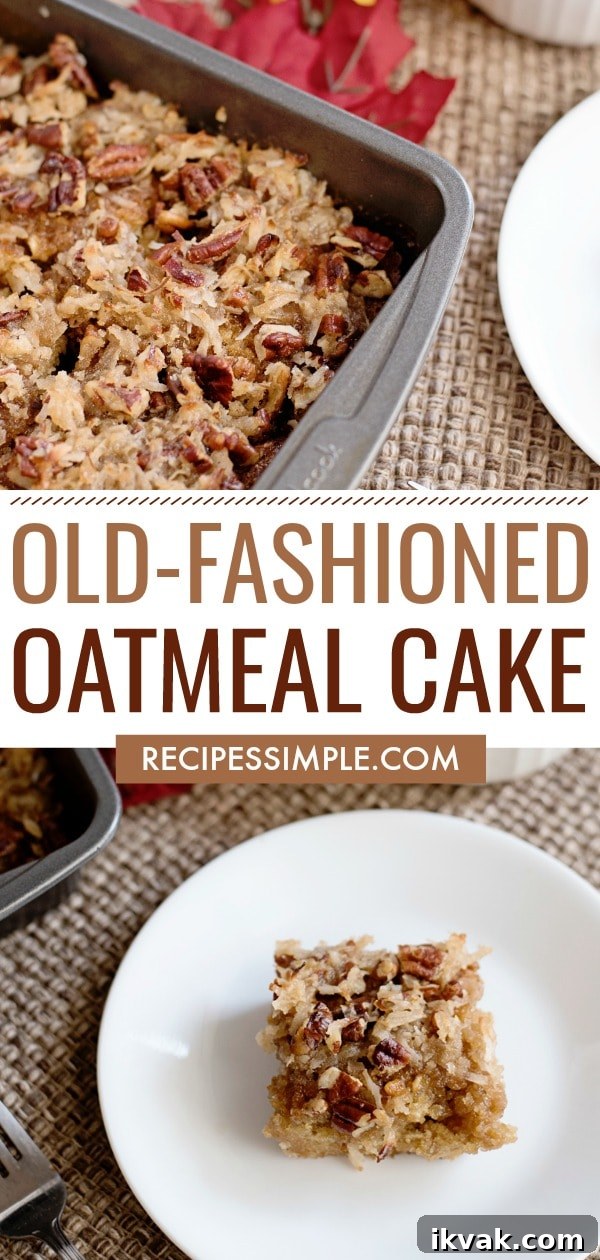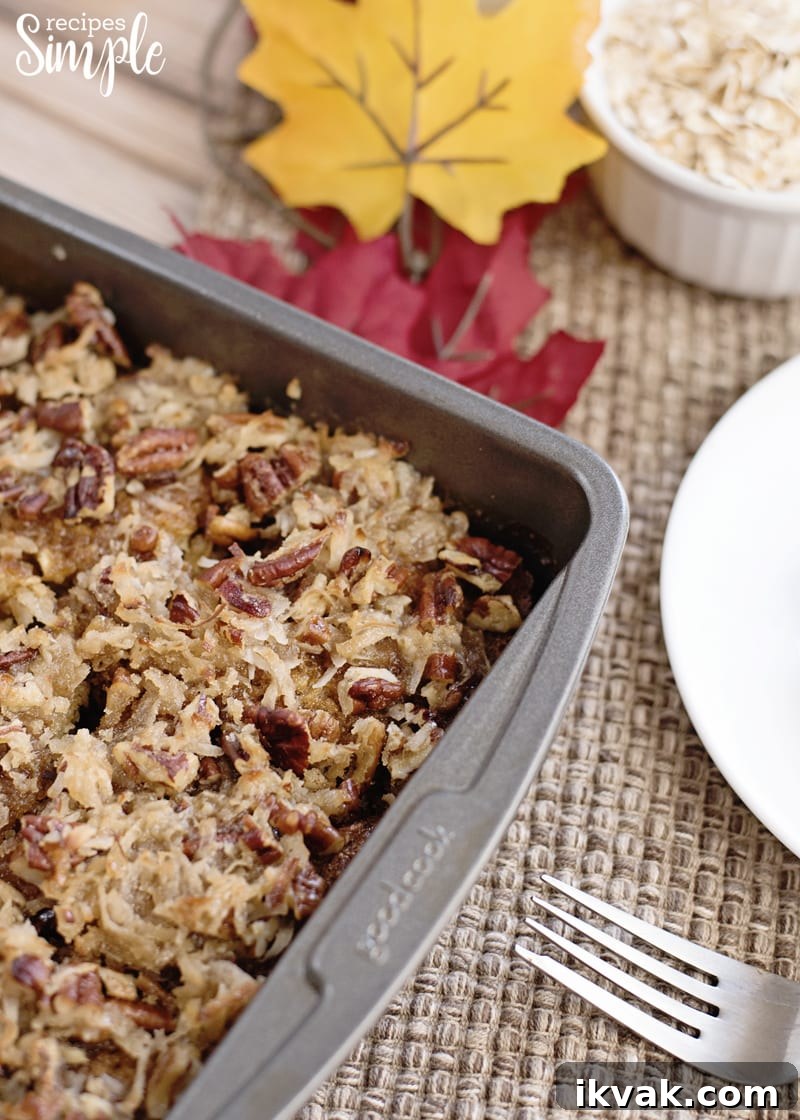
This old-fashioned Oatmeal Cake with Coconut Pecan Frosting is wonderfully moist and full of comforting, nutty flavor. Ideal for brunch or as a classic dessert, it brings a nostalgic taste that’s perfect for family gatherings and holiday tables.
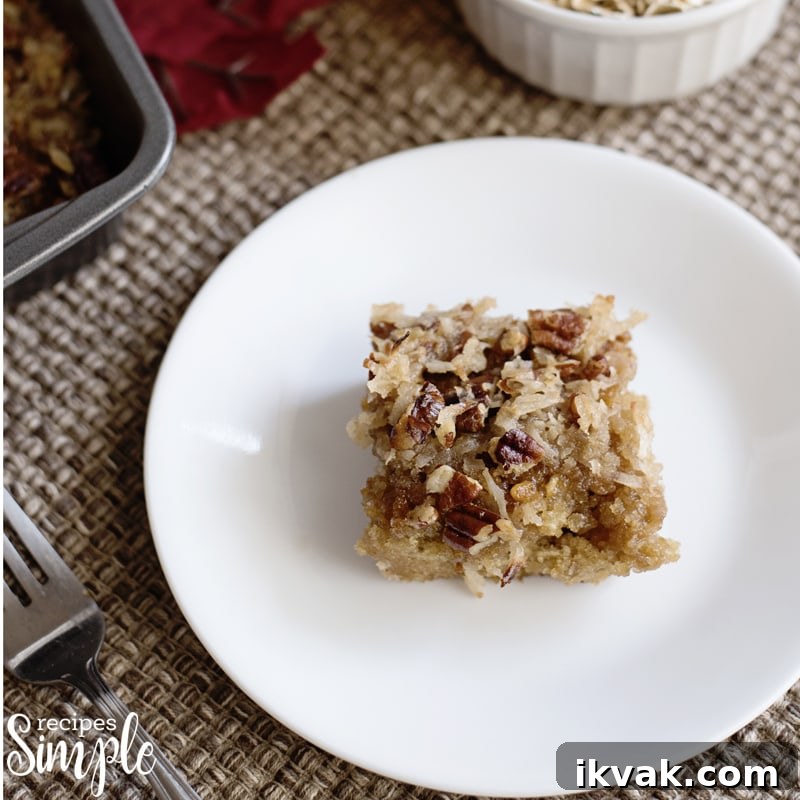
Oatmeal Cake with Coconut Pecan Frosting
This recipe is inspired by a traditional family favorite—my grandmother’s old-fashioned oatmeal cake with a broiled coconut-pecan topping. It’s a straightforward recipe that yields a tender, flavorful cake topped with a buttery, toasted frosting. The balance of oats, brown sugar, and pecans makes it a crowd-pleaser every time.
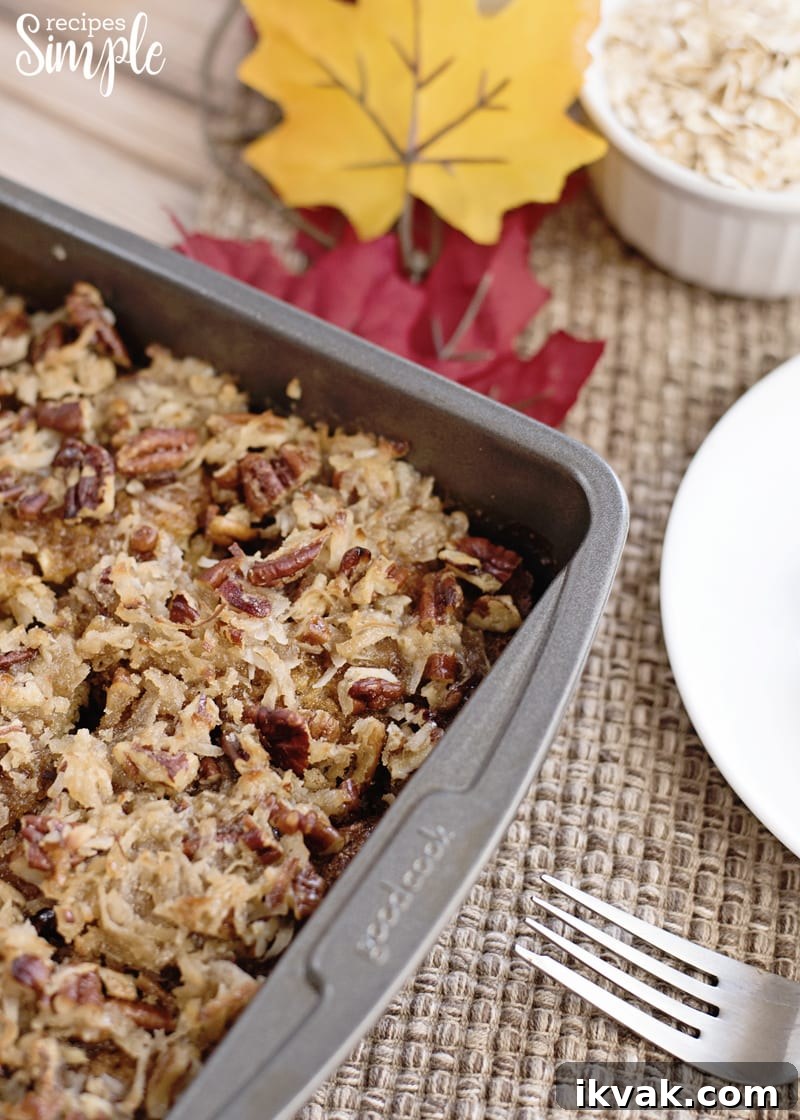
Scroll to the recipe card below for quantities and instructions you can print.
Oatmeal Cake Ingredients
For the cake you’ll need quick-cooking oats, boiling water, granulated sugar, light brown sugar, all-purpose flour, salt, baking soda, one large egg, and softened unsalted butter.
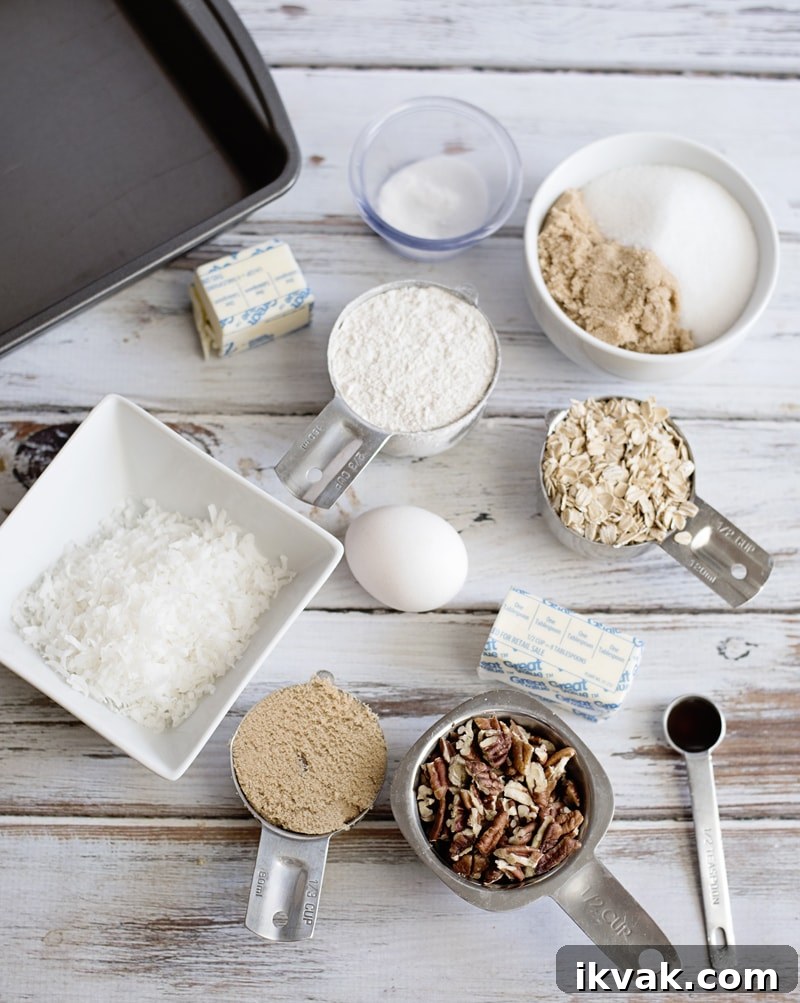
Coconut Pecan Frosting Ingredients
The frosting is made from melted unsalted butter, light brown sugar, sweetened shredded coconut, chopped pecans, a little milk to loosen the mixture, and vanilla extract for flavor.
How To Make Oatmeal Cake with Coconut Pecan Frosting
Preheat your oven to 350°F (175°C) and prepare an 8×8-inch pan with baking spray or a light greasing.
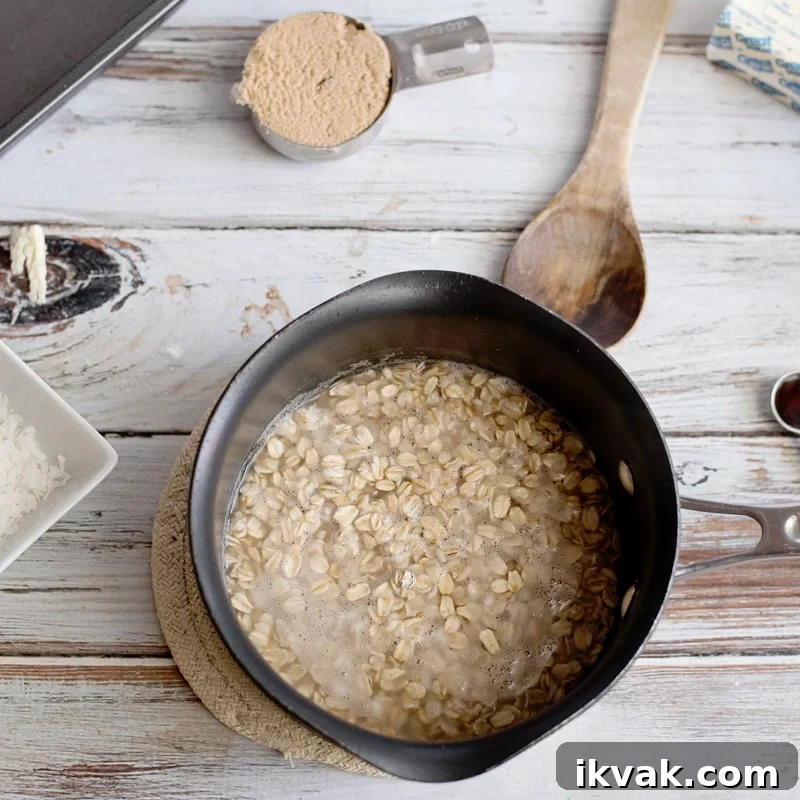
Bring the water to a boil. In a medium bowl, combine the quick-cooking oats with the boiling water, cover, and set aside to soften while you prepare the batter.
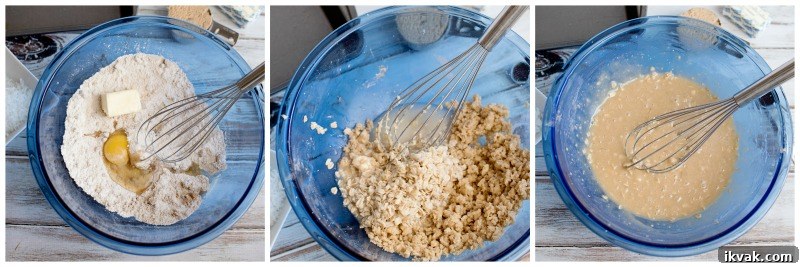
In a large bowl, mix together the granulated sugar, light brown sugar, flour, salt, baking soda, egg, and softened butter. Stir in the softened oats until evenly combined.
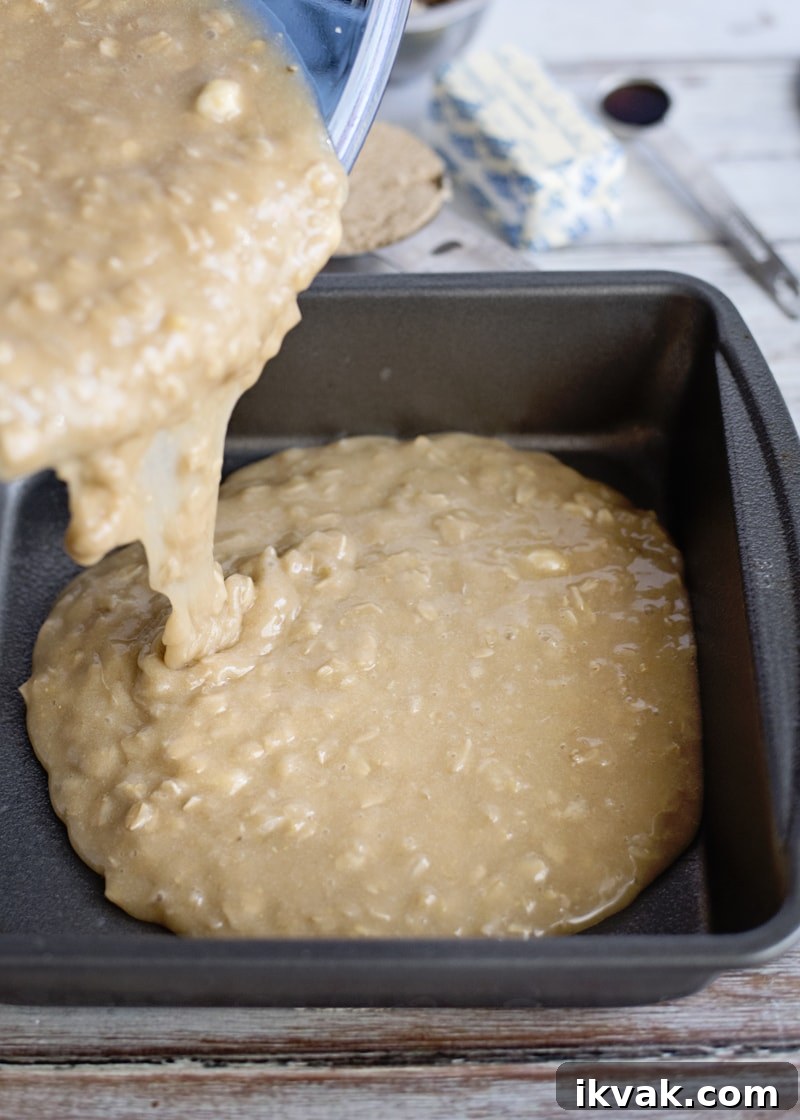
Spread the batter into the prepared pan and bake for 25–30 minutes, or until a toothpick inserted in the center comes out clean. Remove the cake from the oven and prepare the frosting while the cake rests for a moment.
Prepare the frosting: Whisk melted butter in a medium bowl, then stir in the light brown sugar, coconut, chopped pecans, milk, and vanilla until combined.
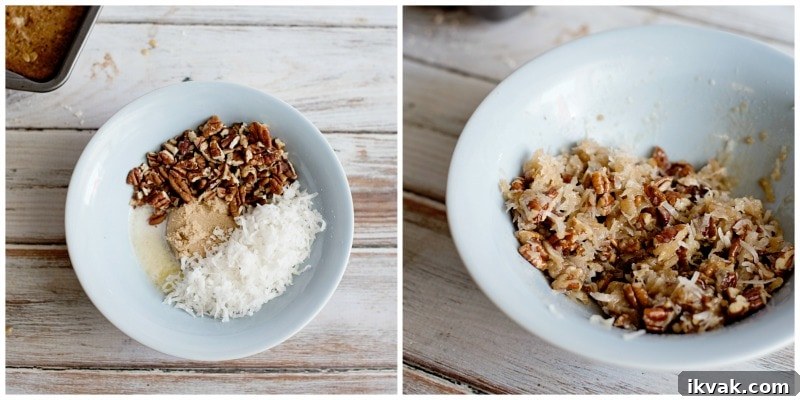
When the cake is finished baking, carefully spread the frosting over the top. Place the pan under a preheated broiler for 1–2 minutes until the coconut and pecans are lightly toasted—watch closely to prevent burning.
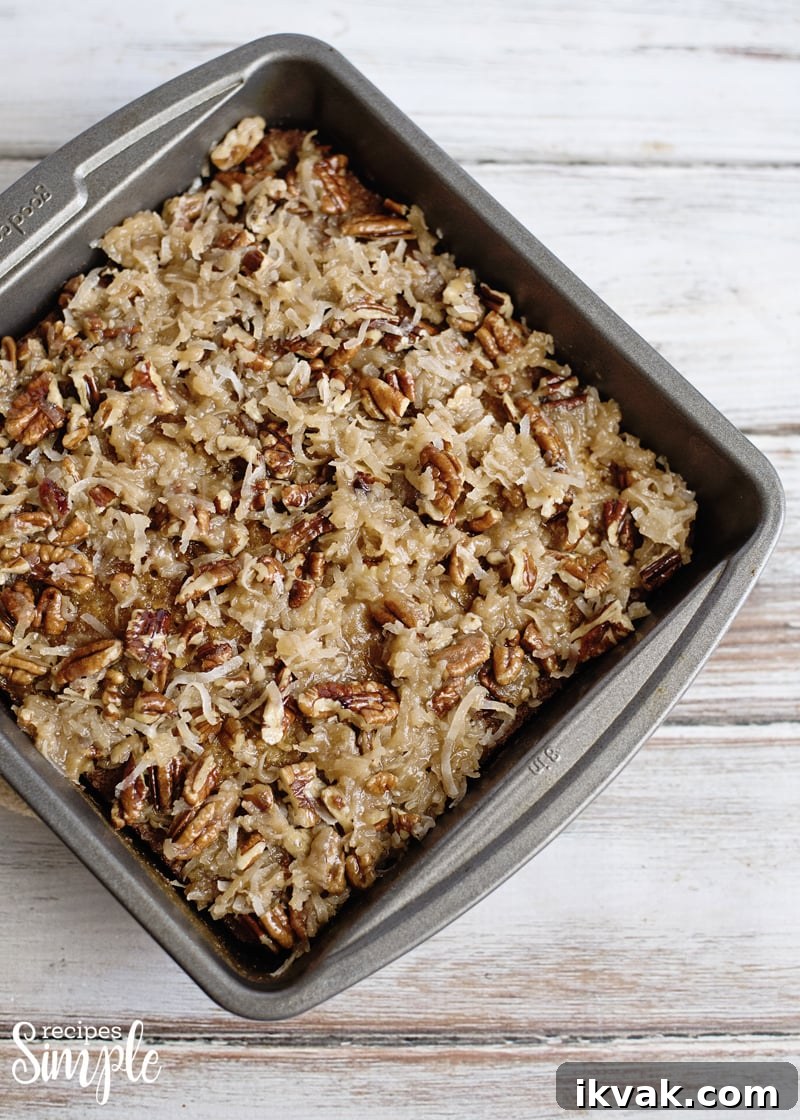
Allow the cake to cool completely if you prefer clean slices, though it’s delicious served warm. Either way, the texture is moist and the topping is irresistibly crunchy and sweet.
Variations and Substitutions
- Add raisins to the batter for a chewy sweetness.
- Omit the coconut if you don’t like it; the cake will still be delicious with pecans alone.
- Leave out the nuts for a nut-free version, or swap pecans for walnuts.
- Fold in dark chocolate chips for a chocolatey twist.
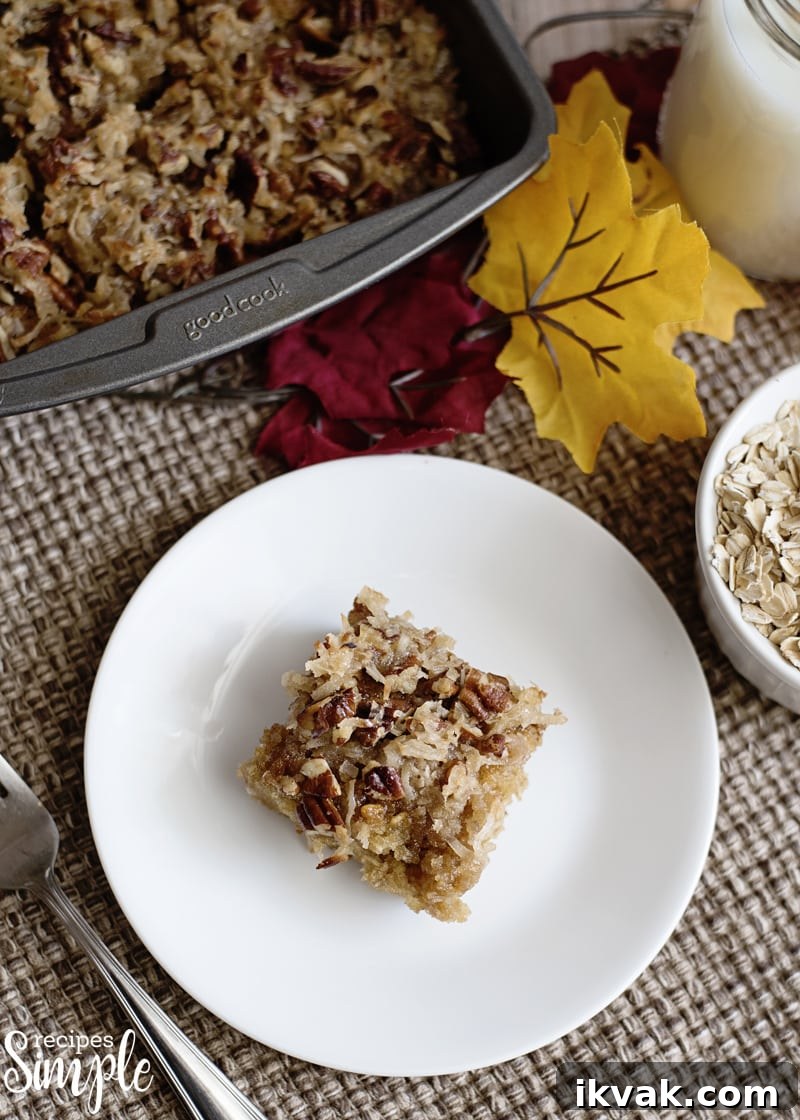
Oatmeal Cake with Coconut Pecan Frosting
Ingredients
- ½ cup quick cooking oats
- ¾ cup boiling water
- ½ cup granulated sugar
- ½ cup light brown sugar
- ⅔ cup all-purpose flour
- ½ teaspoon salt
- ½ teaspoon baking soda
- 1 large egg
- 4 tablespoon unsalted butter, softened
Frosting
- ⅓ cup light brown sugar
- 3 tablespoons unsalted butter, melted
- ½ cup sweetened shredded coconut
- ½ cup chopped pecans
- 2 tablespoons milk
- ½ teaspoon vanilla extract
Instructions
- Preheat oven to 350°F (175°C). Prepare an 8×8-inch pan with baking spray or grease.
- Boil the water. In a medium bowl combine the oats and boiling water, cover, and set aside to soften.
- In a large bowl, combine the granulated sugar, light brown sugar, flour, salt, baking soda, egg, and softened butter. Stir in the softened oats until evenly incorporated.
- Pour batter into the prepared pan and bake 25–30 minutes, or until a toothpick inserted in the center comes out clean.
- Prepare the frosting: whisk the melted butter in a medium bowl, then mix in the brown sugar, coconut, pecans, milk, and vanilla until combined.
- When the cake is done, carefully spread the frosting over the top. Place under a broiler for 1–2 minutes, watching closely, until the coconut and pecans are lightly toasted.
- Allow to cool before slicing for neat pieces, or serve warm if preferred.
The nutritional information provided is approximate and should only be used as a general guideline. Actual values will vary based on brands and preparation methods.