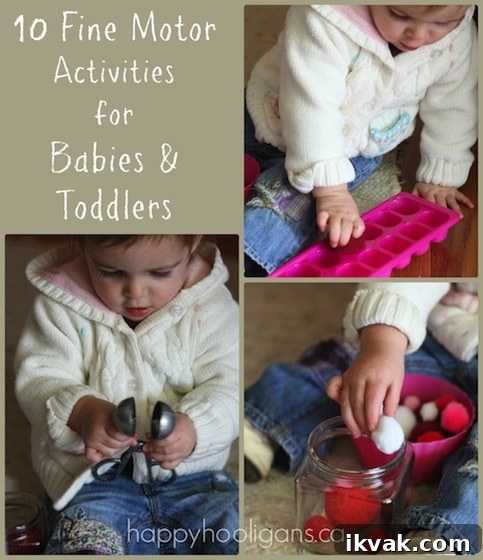
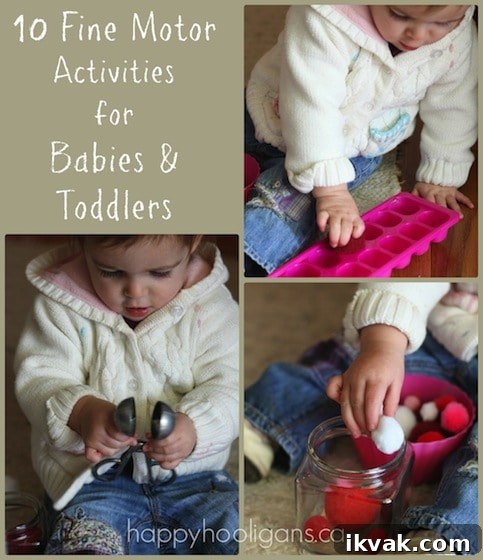
The following 10 fine motor activities for babies and toddlers encourage creative thinking and problem-solving. They’re enjoyable ways to develop a young child’s fine motor skills, hand dexterity and coordination through play.
I often set out simple activities to keep the babies and toddlers busy while the preschoolers craft here in my daycare. Each activity uses common household items and will keep little ones engaged, entertained and learning.
10 Fine Motor Activities for Babies and Toddlers
Pom Pom Drop
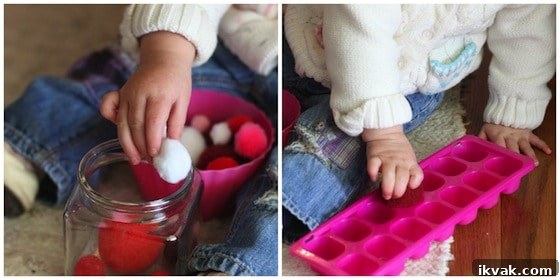
Give your child an ice cube tray or an empty jar and a pile of fluffy pompoms to transfer. This simple activity develops the pincer grip and hand dexterity while also encouraging exploration of shapes, sizes and sorting.
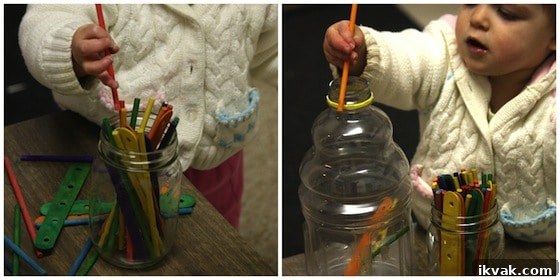
Transferring Craft Sticks into a Jar or Bottle
Set out a jar of colourful craft sticks and a juice jug with a narrow opening. Your child can transfer the sticks from jar to jug, building pincer grip and hand-eye coordination. The sound of the sticks plunking into the bottle is an added sensory reward.
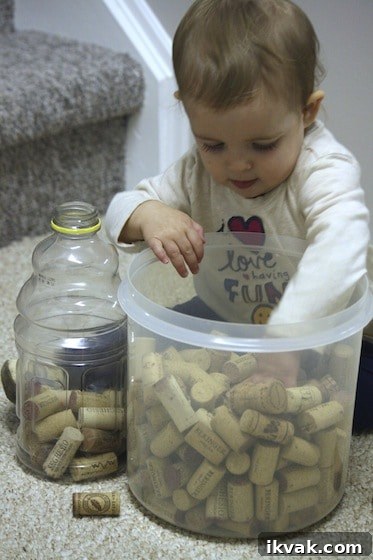
Cork Drop
Place a bowl of corks next to a small-mouthed jug. As your child drops corks into the jug, they examine texture, size and shape while strengthening fine motor skills and hand-eye coordination. This activity can be placed on the floor or on a low table; when set higher, baby reaches and stretches, adding a gross-motor element.
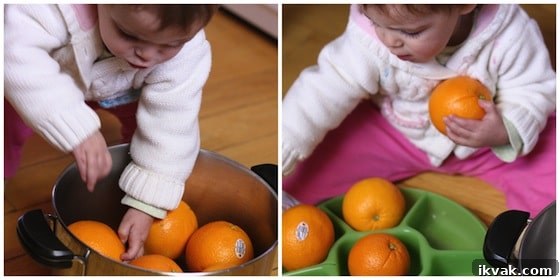
A Pot of Oranges and a Sectioned Tray
This activity is perfect for keeping a baby occupied while you attend to other tasks. A pot of small oranges to transfer into a divided tray gives hands and muscles a real workout — the size of the fruit challenges grip and coordination in a satisfying way.
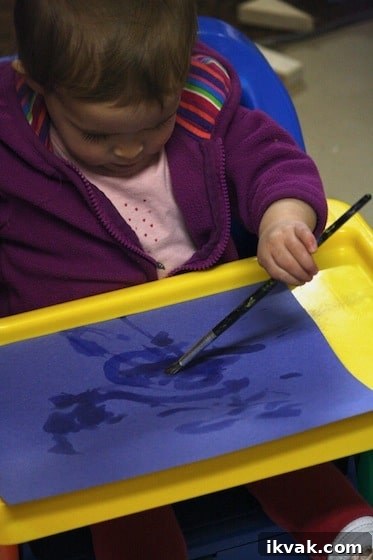
Painting with Water
A piece of construction paper, a small bowl of water and a paintbrush make a mess-free art activity. Painting with water keeps little ones happily occupied and introduces basic art tools and strokes without the cleanup.
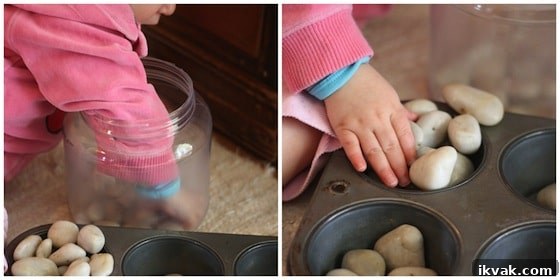
Polished Rocks and a Muffin Tin
Muffin tins are incredibly useful for sorting and play. Provide polished rocks or other small objects for your child to place into the cups. This activity supports sorting, counting and fine motor control. Older children can use the same tin for letters, beads or small toys.
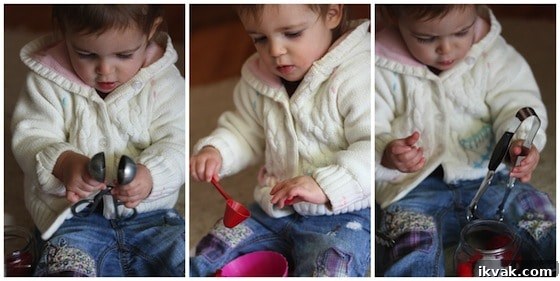
Tongs and Scoops
Introduce a variety of simple tools: meat-ball tongs, ice tongs and a coffee scoop. Even if a baby can’t yet pick up items with them, squeezing and exploring the tools helps build hand strength and coordination — early steps toward holding a pencil or scissors.
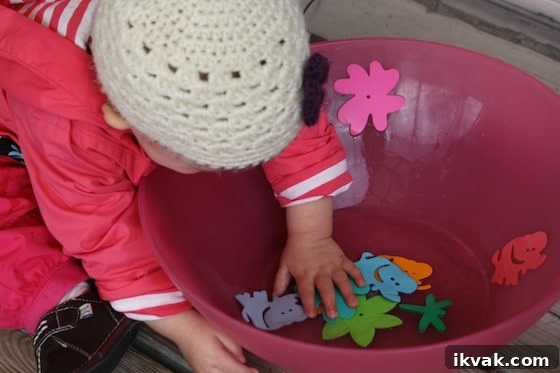
Craft Foam Shapes and Water
Wet craft foam sticks to smooth surfaces such as bathtub tiles, windows or a smooth bowl. Add a small amount of water to the bowl and let the child swish and stick the foam shapes to the sides. Toddlers can use paintbrushes to “decorate” windows or doors, making this a tactile and creative activity.
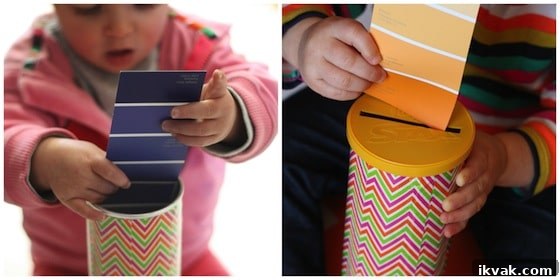
Paint Swatches and a Pringles Can
Colourful paint swatches are visually appealing and work well for dropping into a narrow can opening. For babies, leave the lid off; the opening itself provides a satisfying challenge. For older toddlers, cut a narrow slit in the lid to increase the difficulty and refine fine motor control.
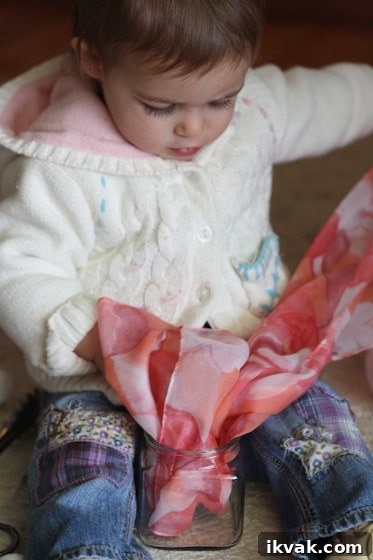
A Silk Scarf and a Jar
Stuffing a silk scarf into a jar and pulling it out hand-over-hand is a gentle, sensory-rich activity. It promotes bilateral coordination, hand strength and the delightful surprise of discovering the scarf as it reappears.
When to Introduce These Activities
You can begin many of these activities once your baby sits unassisted. For activities involving small objects like pompoms, rocks or paint swatches, wait until you are confident the child won’t put them in their mouth. Always supervise closely to ensure safety and adapt materials for your child’s age and ability.
More Fine Motor Activities for Babies and Toddlers
homemade drop box
button snake
cheerio and blueberry bird feeders
Get the Fine Motor ABC Book or E-Book!