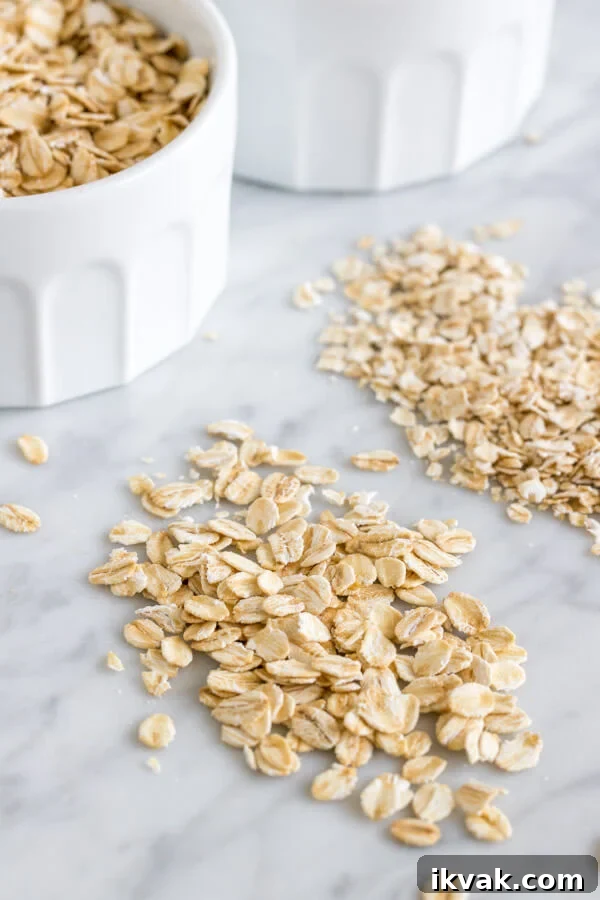
Quick oats vs rolled oats? If you’ve ever made oatmeal raisin cookies or homemade granola bars, you’ve likely wondered which oats to use, why it matters, or whether you can skip oats altogether. This guide explains baking with oats, covering substitutions, weights, and which types work best in different recipes. 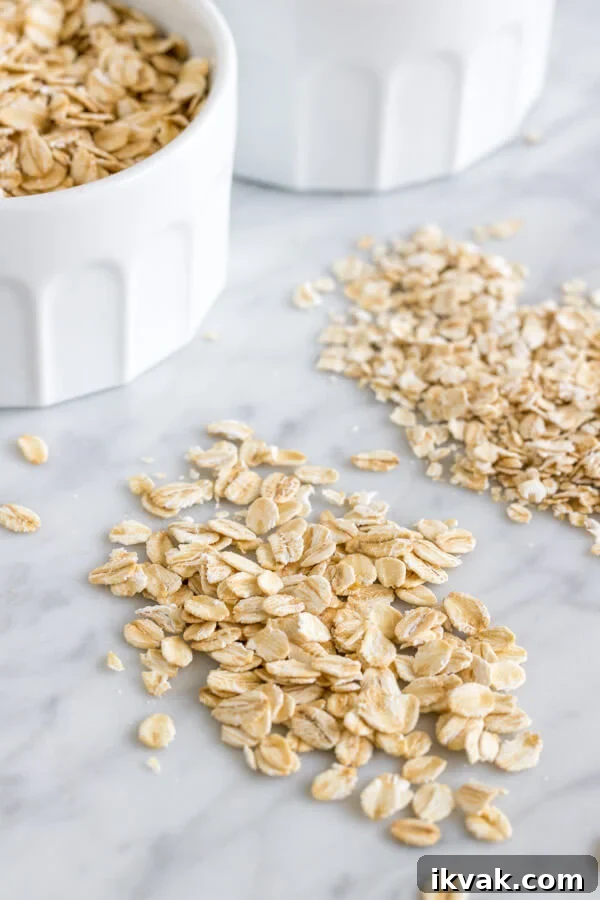
Whether you’re making apple crisp or chewy oatmeal cookies, choosing the right oat type affects texture, flavor, and overall bake. Readers often ask about swaps and adjustments, so here’s a clear, practical rundown of oats in baking: what they do, the common varieties, how to measure them, and answers to frequent questions.
Grab an oatmeal cookie and let’s dive in.
What Do Oats do in Baking?
Oats contribute texture, absorb moisture, and add a toasty, nutty flavor to baked goods. As a whole grain, they’re often used to add nutritional value. In many recipes they help bind ingredients and prevent overly dense or greasy results by soaking up liquid.
Types of Oats
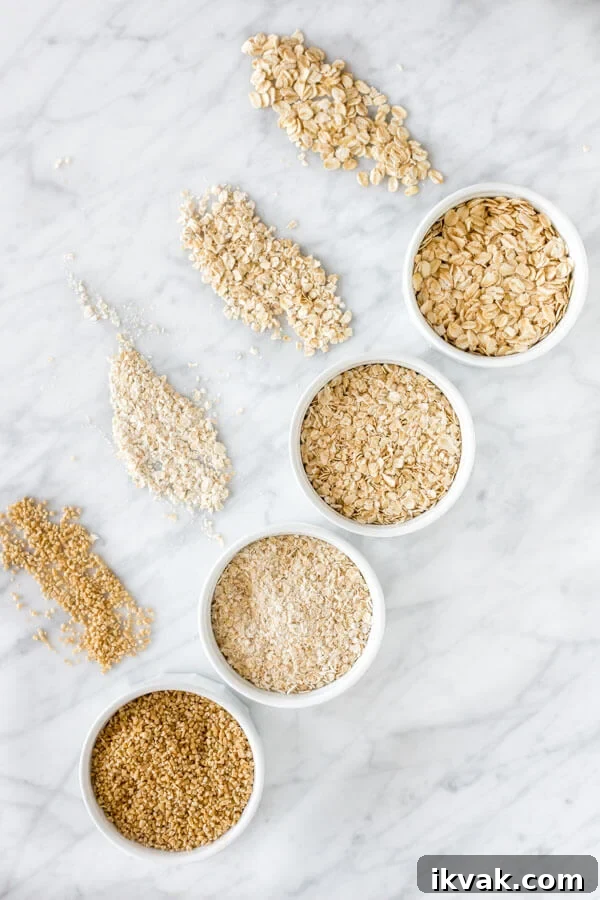
There are several oat varieties used in cooking and baking. Most baking recipes call for rolled oats—either old-fashioned (large flake) or quick oats. Understanding each type helps you choose the best option for texture and cooking time.
Old-Fashioned Oats
Also called large-flake or rolled oats, old-fashioned oats are steamed and flattened. They give a chewier texture and more pronounced oat flavor, making them ideal for crumbles, crisps, and cookies where distinct oat pieces are desired.
Quick Oats
Quick oats are steamed, rolled, and then cut into smaller pieces. They’re more uniform and cook faster than old-fashioned oats. In baking, they produce a finer texture and are often used when a smoother consistency is preferred.
Instant Oats
Instant oats are processed to the finest texture and often packaged for rapid preparation. Because they break down more and behave more like a coarse flour, instant oats are usually not a direct substitute for old-fashioned or quick oats in baking unless the recipe specifically allows it.
Steel-Cut Oats
Steel-cut oats are whole oat groats chopped into pieces rather than steamed and rolled. They remain firm and chewy after cooking and are not recommended in most baked goods unless a recipe specifies them, as their texture and cooking requirements differ significantly.
Weights and Measurements
- 1 cup uncooked old-fashioned oats = 90 grams (3.17 ounces)
- 1 cup uncooked quick oats = 90 grams (3.17 ounces)
- 1 cup uncooked instant oats = 120 grams (4.23 ounces)
- 1 cup uncooked steel-cut oats = 200 grams (7.05 ounces)
Common Questions
Can I omit oats? Generally no. Oats add structure, texture, and liquid absorption. Leaving them out often results in a too-soft or overly greasy final product.
Can I substitute flour for oats? Not recommended. Flour and oats play different roles—flour provides gluten structure and absorbs liquid differently, while oats add texture and chew. Replacing oats with flour usually makes the result drier and crumblier.
Are old-fashioned and quick oats interchangeable? Often yes, in many recipes a 1:1 swap works, but follow the recipe when specified. Texture and baking time can change slightly with substitutions.
Are oats gluten-free? Oats themselves are naturally gluten-free, but cross-contamination can occur during processing. Check packaging for certified gluten-free labeling if you need to avoid gluten.
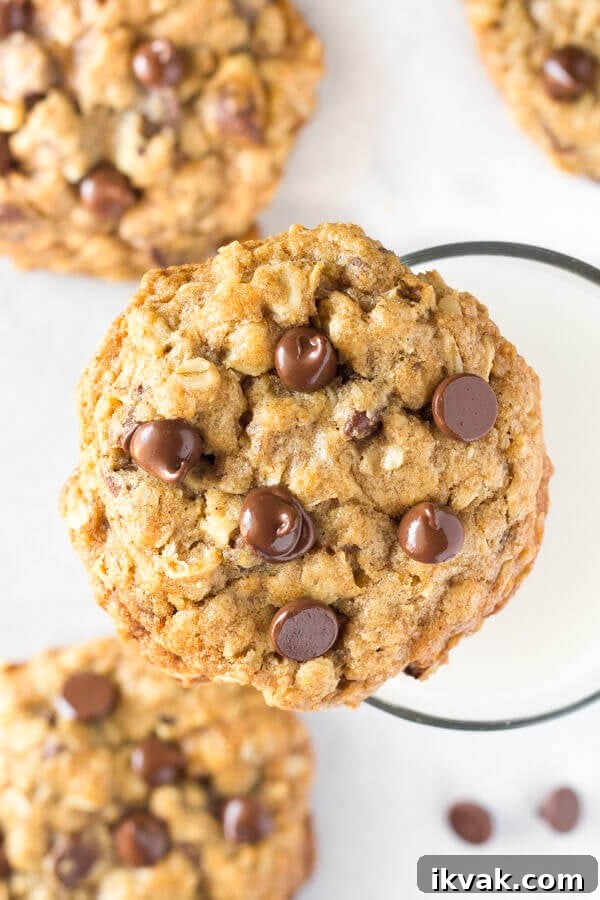
If You Want Recipes Using Oats
- Oatmeal Chocolate Chip Cookies
- Oatmeal Raisin Cookies
- Apple Crisp
- Berry Crumble Bars
- Strawberry Rhubarb Crisp
Using the right oat type will improve texture and flavor in baked goods. Old-fashioned oats work well when you want chew and visible oat pieces; quick oats are useful for a finer texture; instant oats should generally be avoided as a straight swap for rolled oats; and steel-cut oats are best reserved for stovetop breakfast preparations or recipes that specifically call for them.