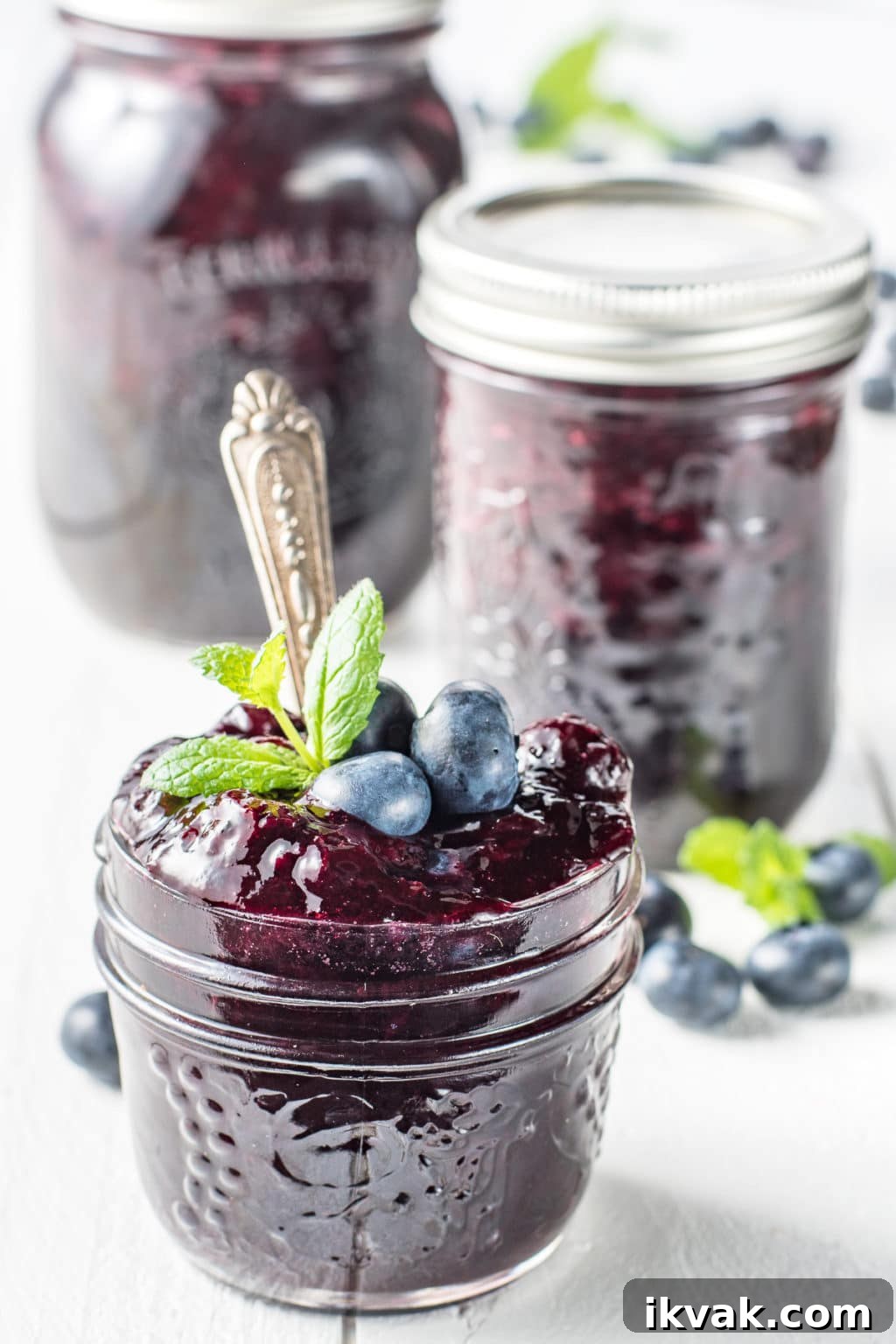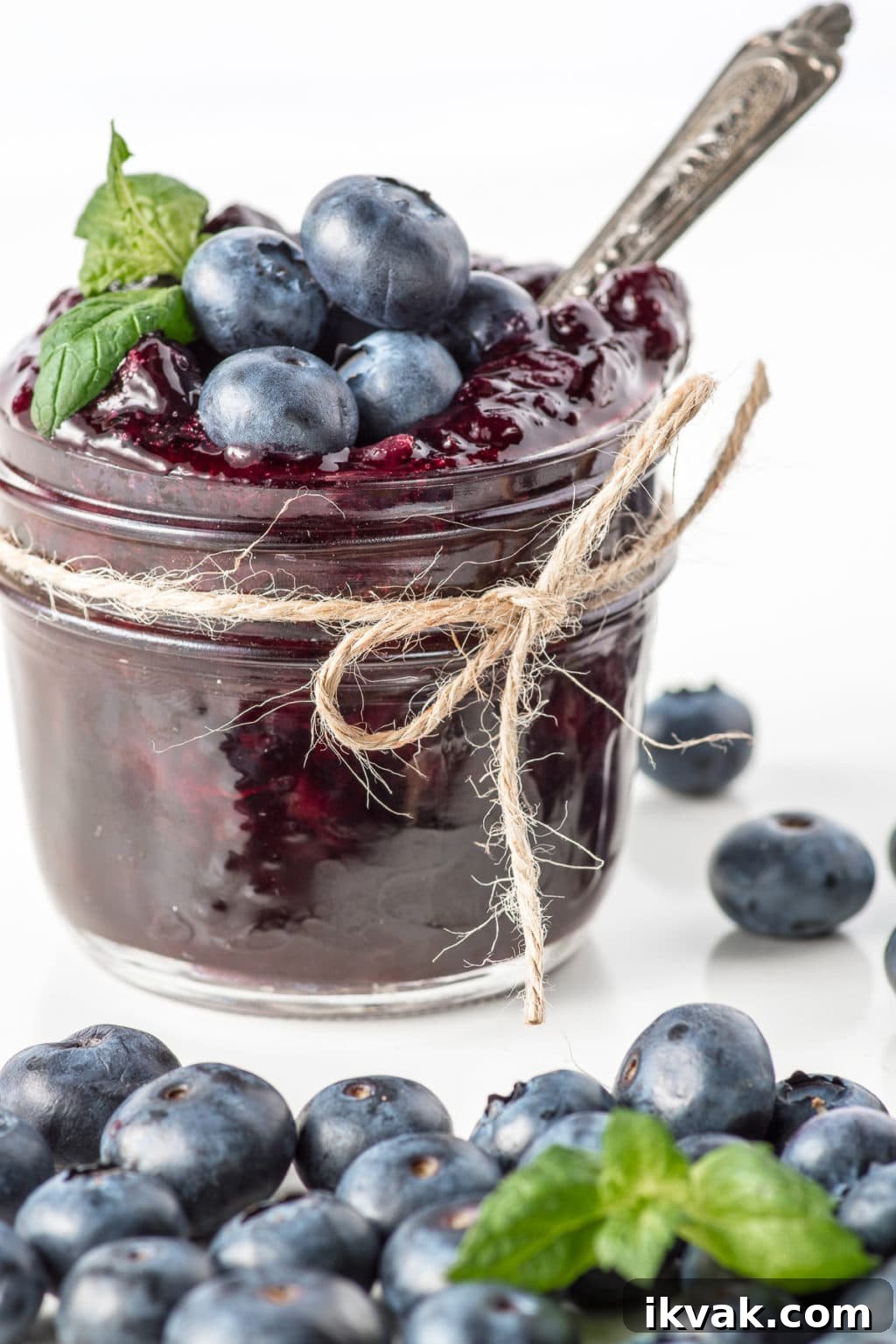
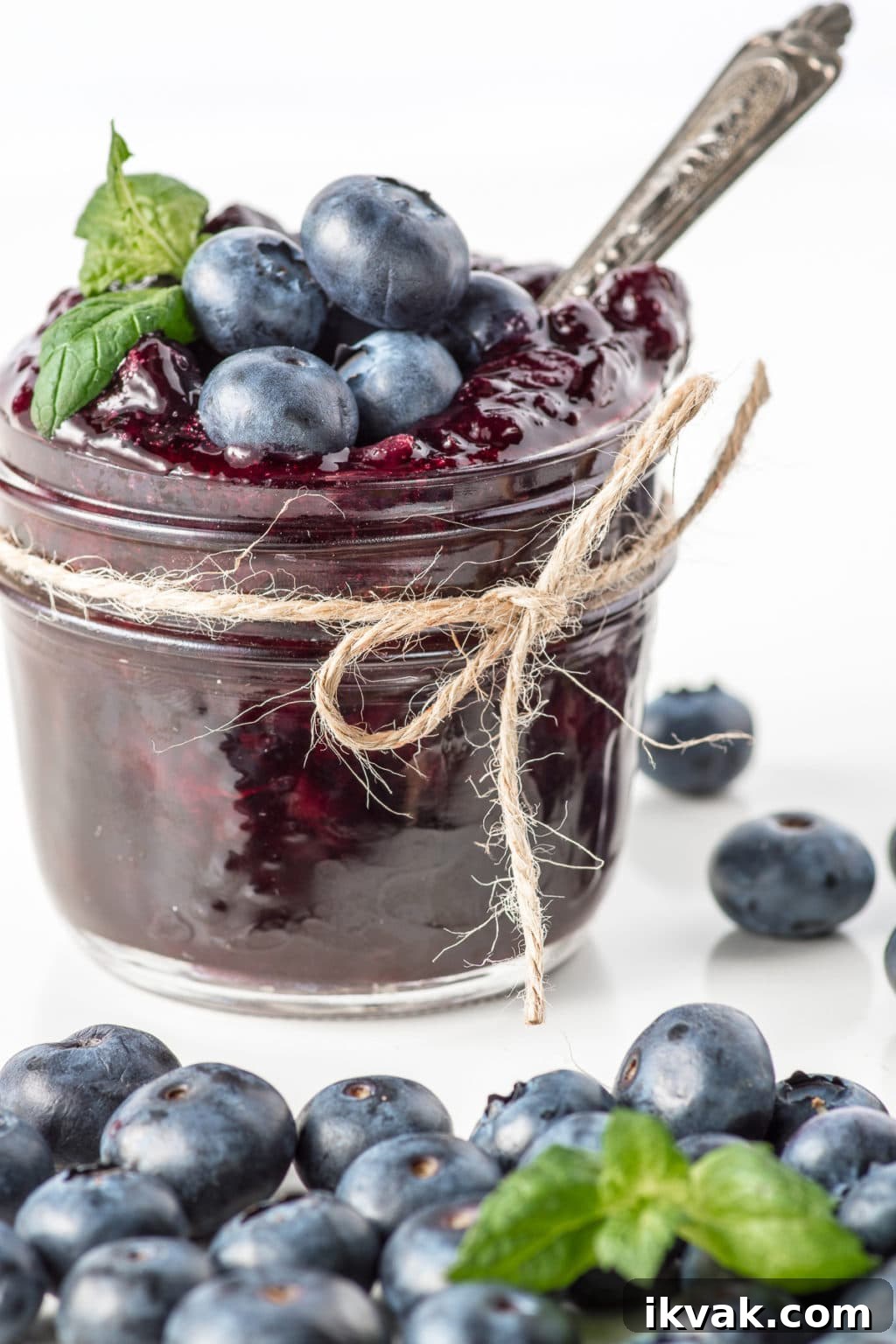
Blueberry season is almost here, and for me berry season is one of the best times of the year. I love when the garden begins to produce and it’s time to pick fresh berries. I also enjoy jam-making season, and although I no longer eat sugar and watch my carbs, I still make and enjoy my favorite sugar-free blueberry jam. Best of all, this jam uses no added sugar—only the natural sugar from the fruit—and it tastes just as good as any store-bought jam.
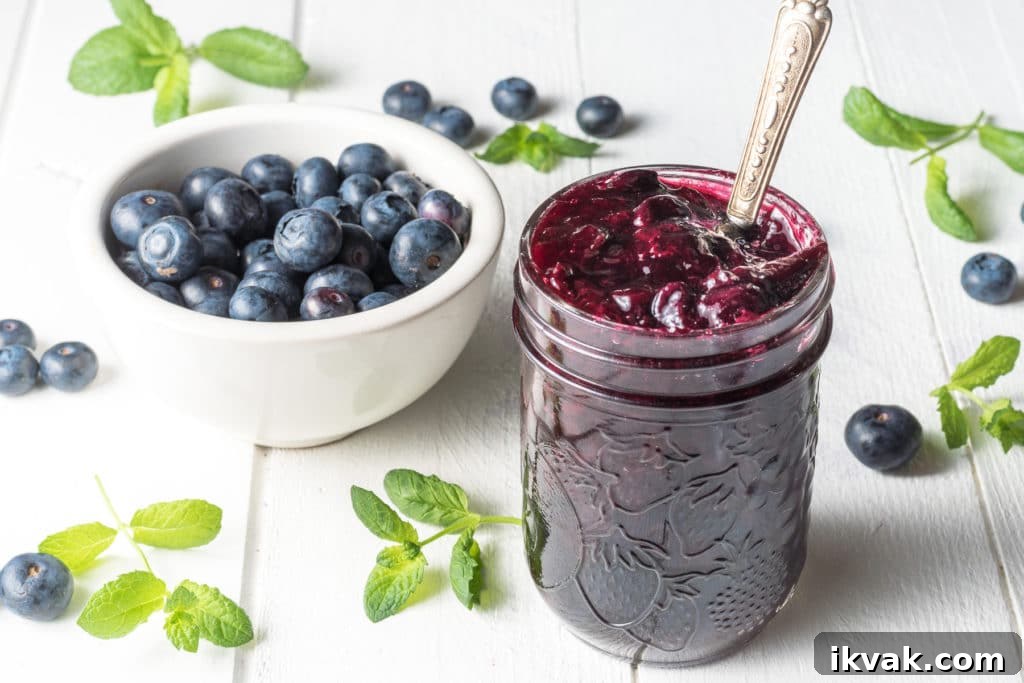
Why blueberry jam is always a good idea
Homemade blueberry jam is a pantry staple that brightens many dishes. It’s delicious on pancakes and waffles, stirred into low-carb granola, spread on a keto biscuit, or used as a topping for cheesecake squares. Tarts, bars, cookies, and ice cream benefit from a spoonful of jam—just a little adds big flavor. At roughly 1.7 net carbs per tablespoon, this jam is a tasty way to enjoy blueberry flavor without derailing your carb goals.
Not all pectins have added sugar
Pectin often has a poor reputation because some “low sugar” pectins list sugar or dextrose as the first ingredient. After reviewing a few brands, I found many included sweeteners. That’s not ideal for sugar-free jam.
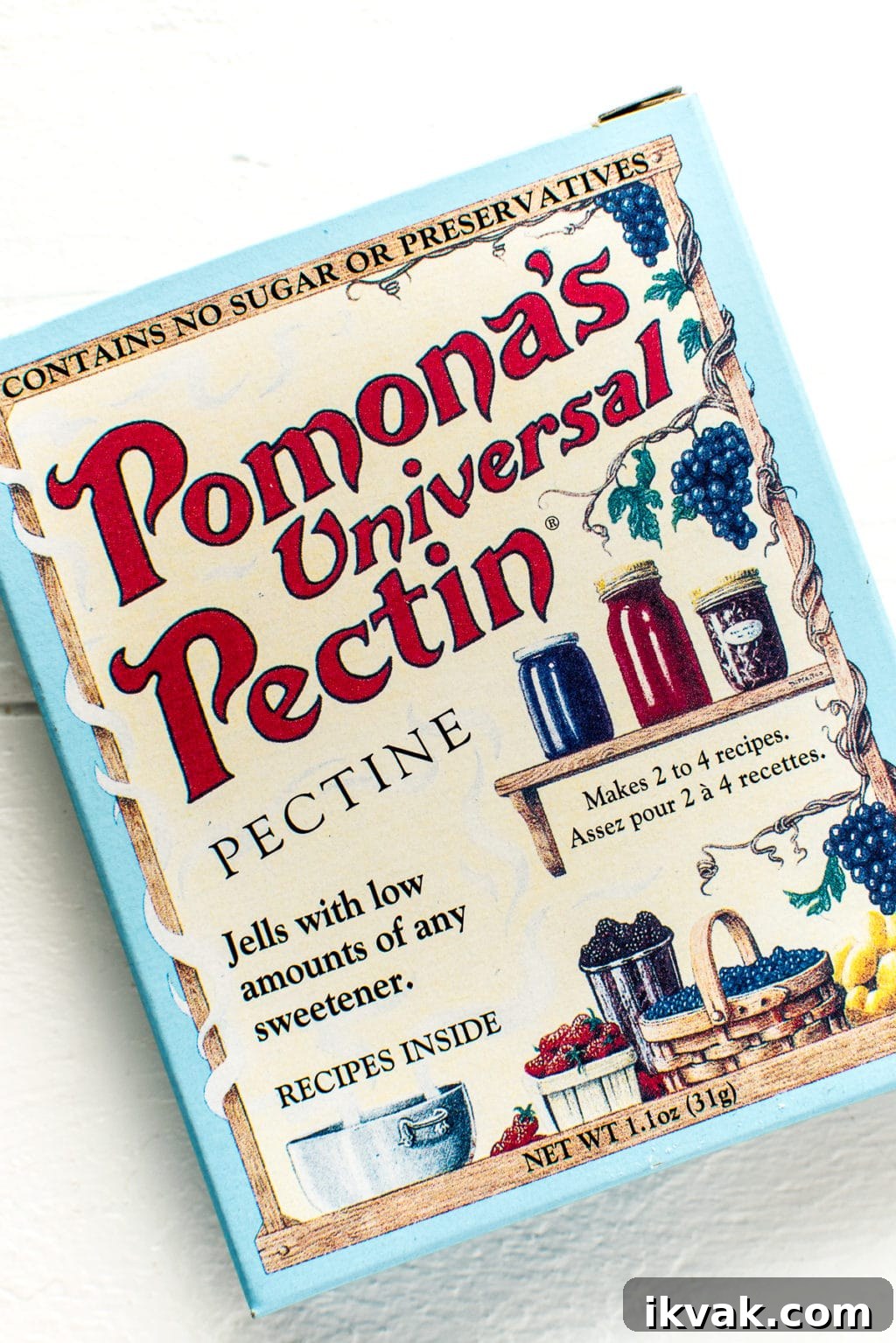
I found Pomona’s Universal Pectin, which is sugar-free and works very well for no-sugar recipes. It’s vegan, non-GMO, and allows you to gel fruit using calcium rather than relying on sugar. This product isn’t sponsored here—I purchased and tested it myself and was impressed. You still need to add a sugar-free sweetener to taste, but you don’t need granulated sugar.
Pomona’s pectin and how it works
Pomona’s Universal Pectin uses calcium to set jam instead of relying on sugar. The box includes a small packet of calcium powder that you mix with water to make “calcium water,” which is added to the jam a teaspoon or two at a time. One box can make many jars—up to about 20 half-pints—so it’s cost-effective compared to commercial low-sugar jams.
One teaspoon (3 grams) of Pomona’s pectin contains roughly 10 calories and about 2.5 grams of soluble fiber. Given that a typical batch uses only a few teaspoons for many servings, the pectin’s carb impact is negligible.
Working with Pomona’s Universal Pectin
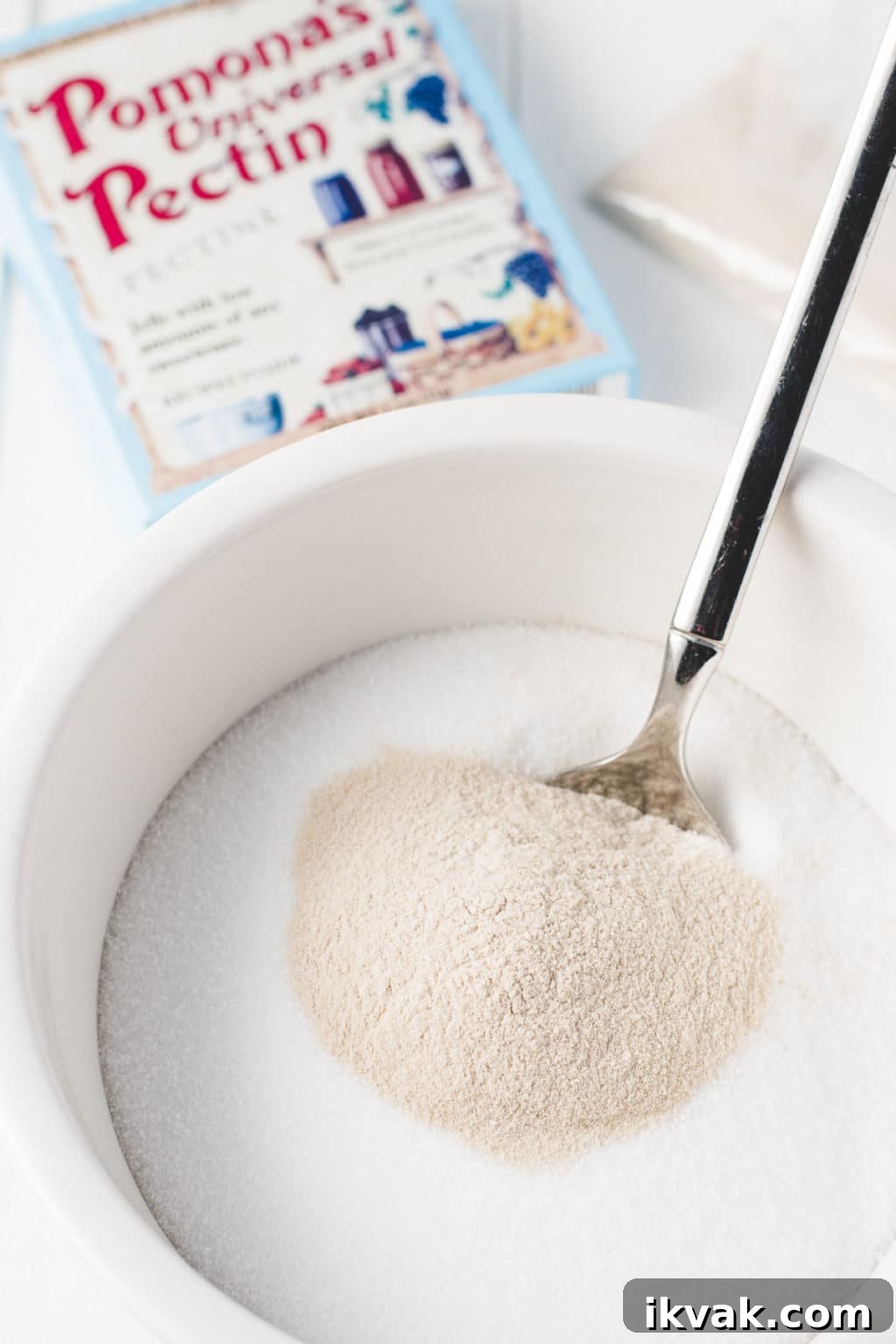
This pectin is forgiving and easy to work with. If the jam doesn’t set to your liking, you can add more calcium water to thicken it. You can also adjust sweetness after trying the jam and reprocess if needed without over-thickening. If a jar doesn’t set after cooling, you can reprocess it with added pectin or calcium water to achieve the desired gel.
Follow the instructions included with the pectin for best results. A quick note: use filtered water. If you have very hard tap water, natural calcium in the water can affect how the jam sets.
Best sweeteners for low-carb blueberry jam
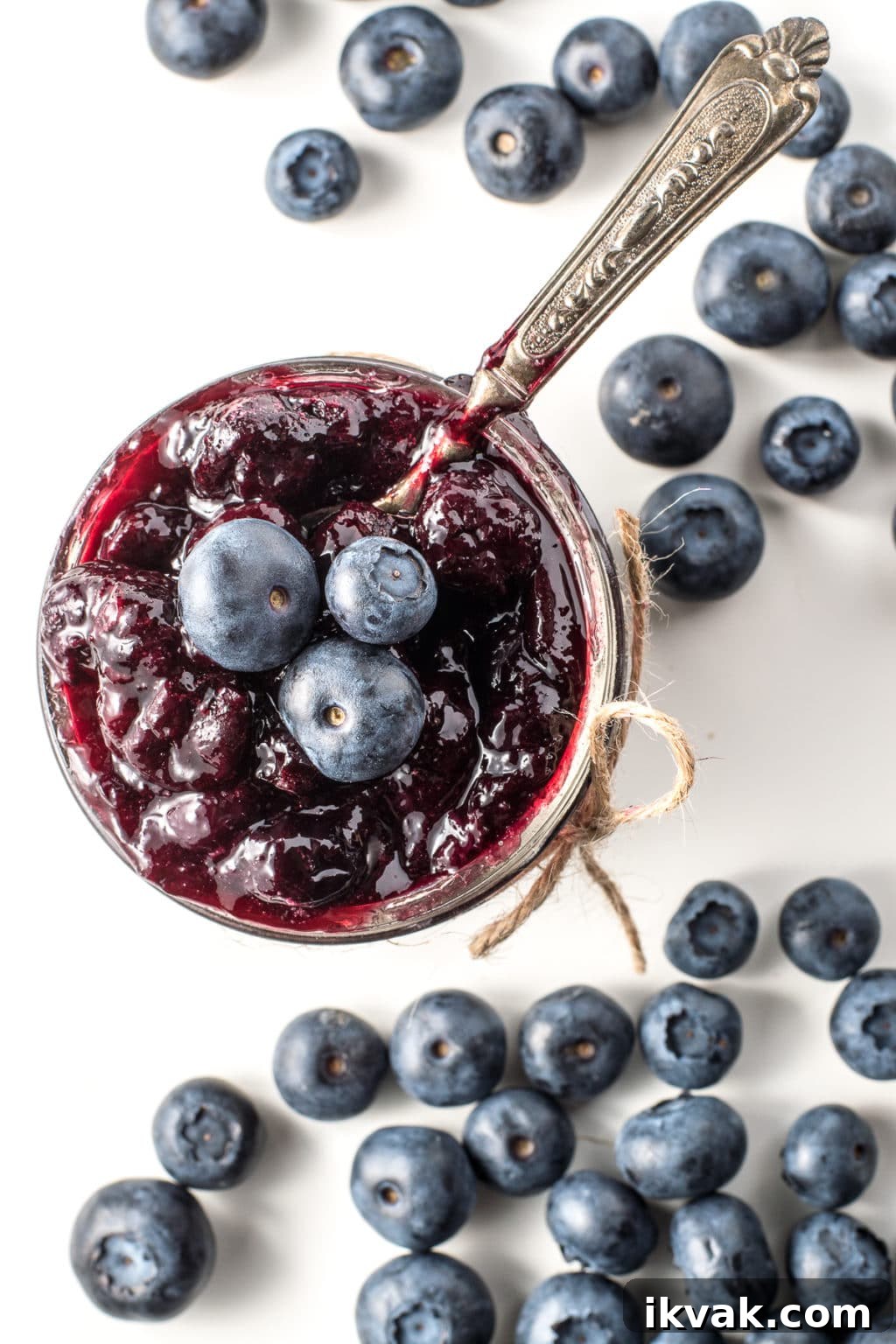
I tested multiple sweeteners. Allulose produced the best texture and flavor, delivering the sticky, classic jam mouthfeel with an authentic jam taste. Erythritol can turn slightly grainy when cold unless you warm the jam. Blends like monk fruit + erythritol can perform better than straight erythritol but may still have minor grittiness. Xylitol works well but adds more digestible carbs. Truvia, stevia, and Swerve set the jam fine but may leave an aftertaste for some people—taste is subjective, so use the sweetener you prefer.
Important safety note: xylitol is toxic to dogs and cats—do not use it if you have pets who might access your jars.
Essential canning tips
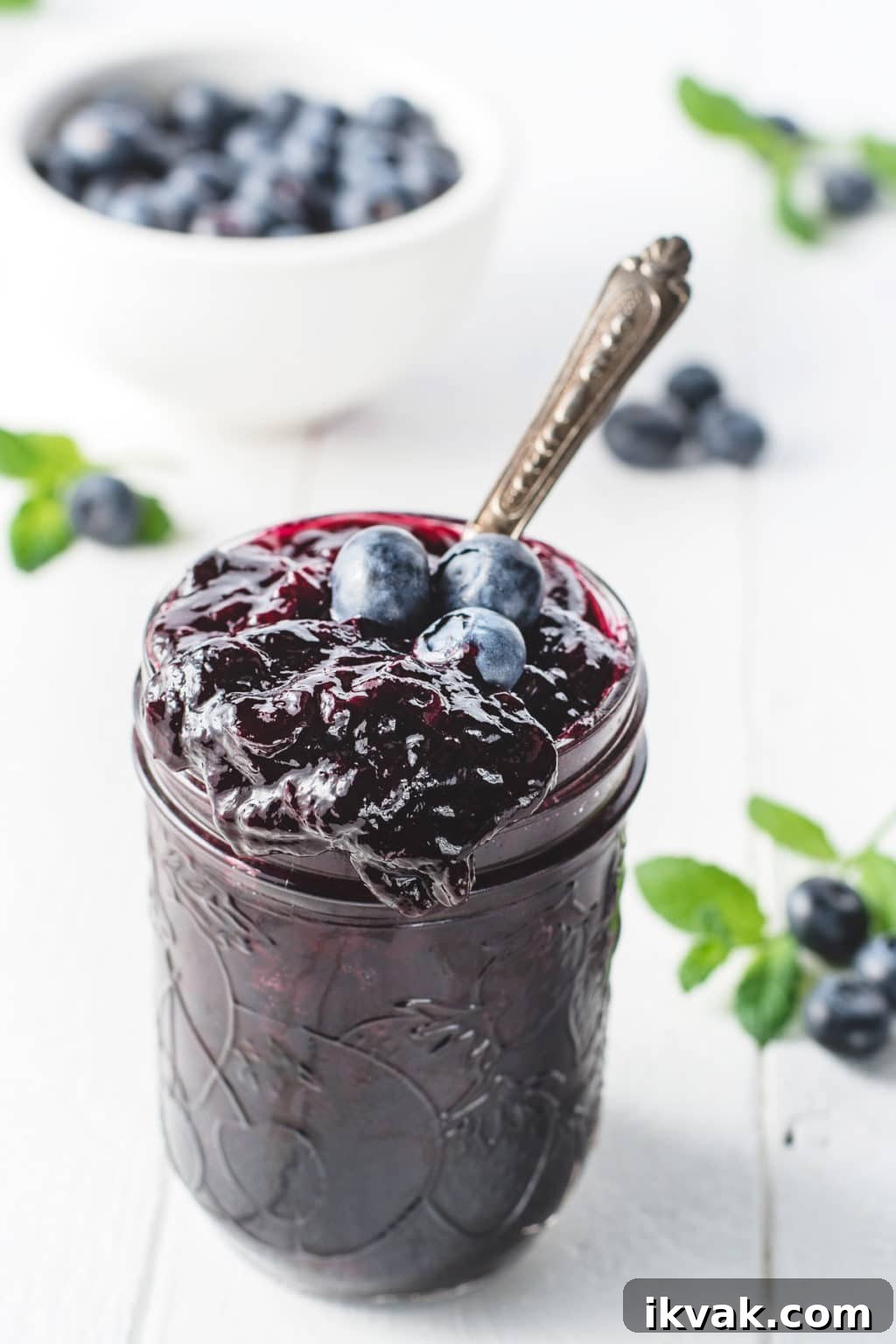
This recipe yields shelf-stable jam, so proper water-bath canning is required for safety. Follow these precautions carefully:
- Do not skip the lemon juice. Use bottled lemon juice to ensure consistent acidity levels for safe preservation.
- Do not rely on the “flip jars upside-down” method. This jam requires a full 10-minute rolling boil in a water bath canner (add 1 minute per 1,000 feet elevation) to be shelf-stable.
- Do not use jars larger than 500 ml (about 2 cups) for safe processing.
- After removing jars from the canner, leave them undisturbed and upright for 24 hours. Do not move or tilt them while they cool.
- If any jars fail to seal, reprocess them in the canner for another 10 minutes or refrigerate and use within three weeks.
Storage and uses
Properly processed jars of this sugar-free blueberry jam are shelf-stable for up to a year when stored in a cool, dark place. Once opened, refrigerate and use within about three weeks. The jam works beautifully on low-carb scones or biscuits, as a dessert topping, or as a filling for tarts, muffins, and cheesecakes. It’s especially nice spooned over cheesecake squares or stirred into granola for added blueberry flavor.
Making your own jam lets you control the ingredients and sweetness, and this recipe delivers a healthy, flavorful result that I’m proud to keep on my pantry shelf.
Ingredients
- 6 cups blueberries
- 1/4 cup lemon juice (bottled for canning)
- 2 cups allulose (or preferred sugar-free sweetener, adjust to taste)
- 3 tsp Pomona’s Universal Pectin
- 3 tsp calcium water (from the pectin box)
- 1/4 tsp cinnamon (optional)
- 1 tsp vanilla (optional)
Basic instructions
- Wash jars, lids, and bands. Place jars in a water bath canner half-filled with water; bring to a boil, then turn off the burner until ready to fill.
- Keep lids warm in simmering water until ready to use.
- If using fresh berries, rinse and remove stems. If using frozen, measure and add directly.
- Add lemon juice and calcium water to the fruit and mix.
- Mix the pectin with your chosen sweetener in a separate bowl until well blended.
- Heat the blueberries in a saucepan. As they soften, mash to your preferred texture and bring to a boil.
- Add the pectin-sweetener mixture and stir to dissolve. Once the jam returns to a boil, boil for 1 full minute.
- Fill jars, leaving 1/4″ headspace. Wipe rims, apply lids and bands.
- Process jars in a boiling water bath for 10 minutes (add time for altitude if needed).
- Remove jars and let them cool undisturbed for 24 hours. Test seals and reprocess any unsealed jars or refrigerate for immediate use.