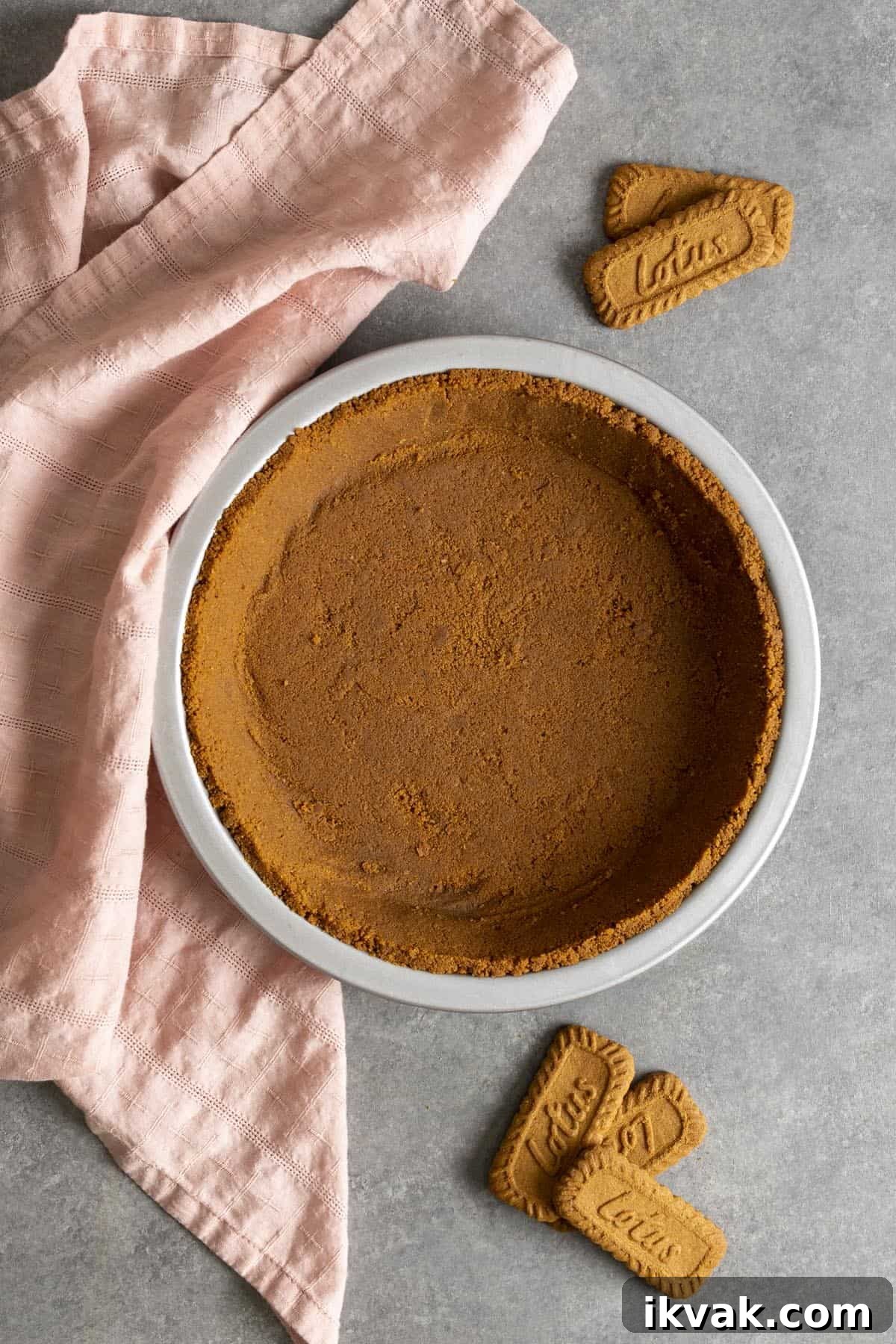
This simple Biscoff pie crust is perfect for no-bake pies and tarts on hot days, and it also makes a buttery, crisp crust when baked. Either way, it’s reliable and delicious.
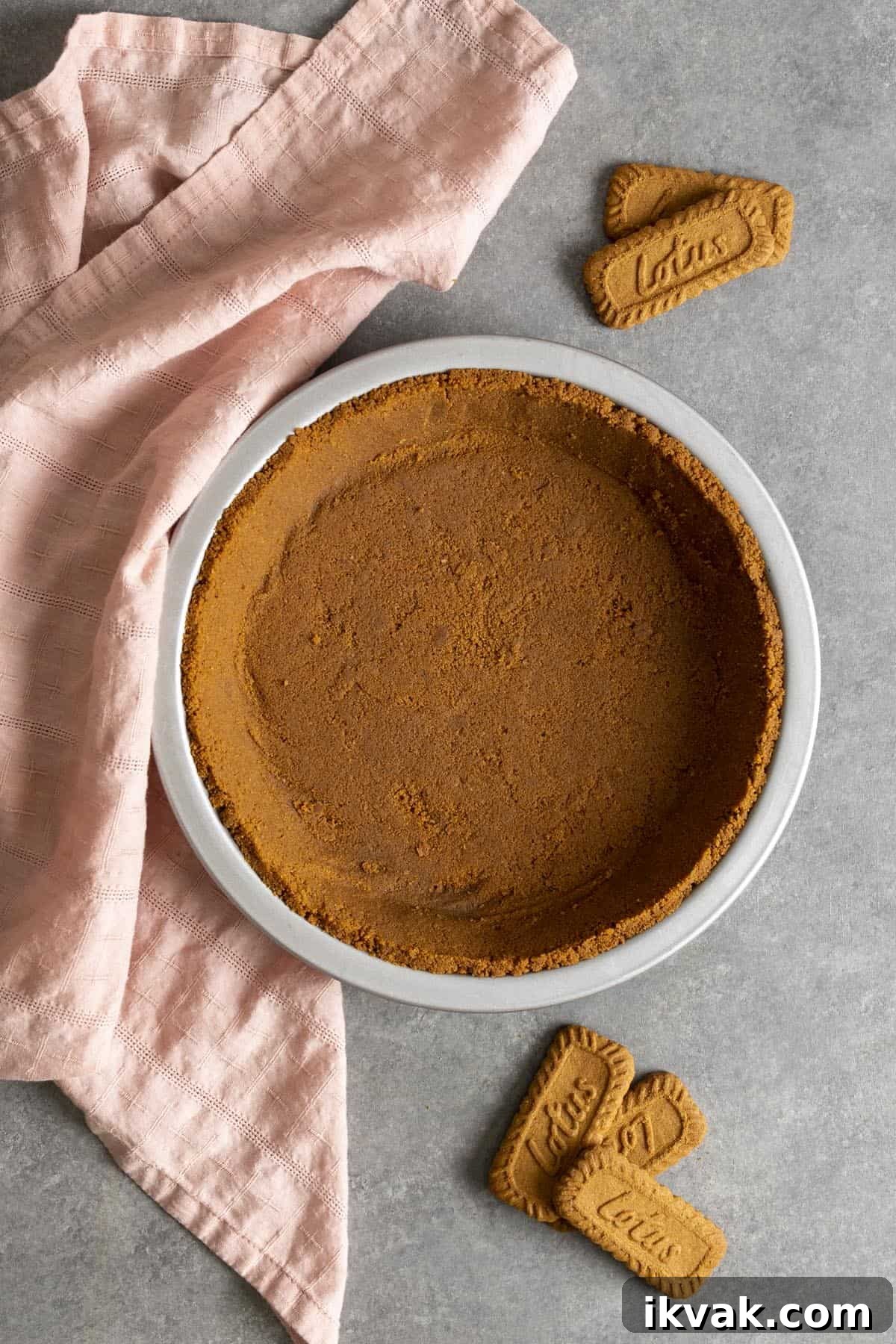
Whether you’re new to baking or experienced, this Biscoff cookie crust gives maximum flavor with minimal effort.
- Only three ingredients and about five minutes to prepare.
- Biscoff cookies contribute warm, spiced flavor to the crust.
- Versatile: use for no-bake Biscoff pies, ice cream pies, cheesecakes, bars, and more.
This guide explains how to make the crust in a food processor and provides an easy method for making it by hand if you don’t have one.
Table of Contents
- Ingredients and substitutions
- Tools you’ll need
- How to make Biscoff pie crust
- Make it by hand
- To bake or not to bake
- More baker’s tips
- FAQs
- More pie crust recipes
- Recipe card
Ingredients and substitutions
The full ingredient list and quantities are in the recipe card at the end. Notes and substitution suggestions:
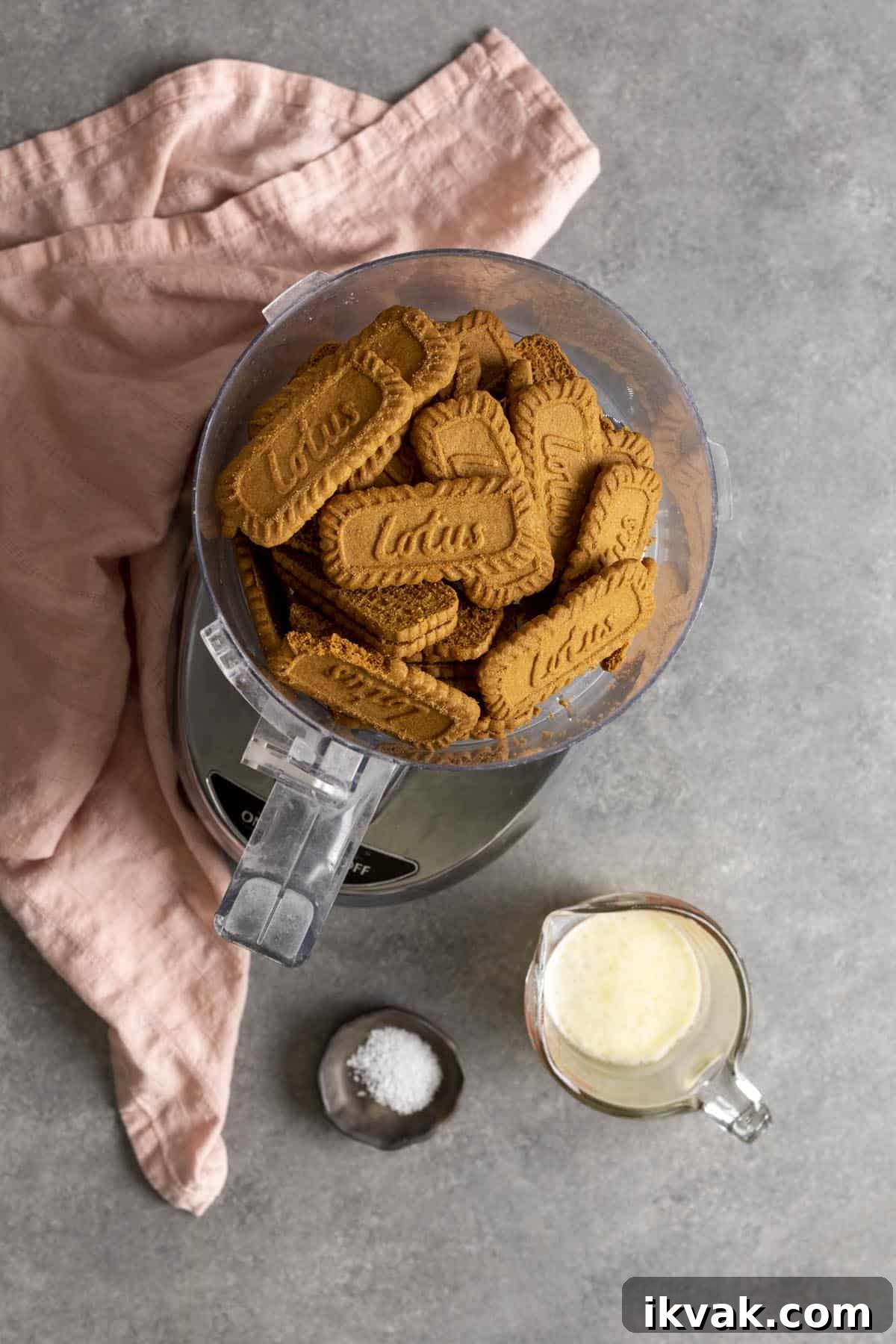
- Biscoff cookies – one standard package (about 250 g). If you can’t find Biscoff, cinnamon graham crackers or ginger snaps are good substitutes.
- A pinch of salt – balances sweetness; optional if you prefer.
- Unsalted butter – melted. I use unsalted to avoid an overly salty crust.
Optional: 1–2 tablespoons brown sugar for a slightly sweeter crust.
Tools you’ll need
A food processor is the quickest way to make very fine cookie crumbs. If you don’t have one, a blender or a rolling pin and a sealed bag will work.
You’ll also need a pie dish, tart pan, or springform pan depending on the dessert you’re making.
How to make Biscoff pie crust
The steps below include tips and photos to help you visualize the process. The printable recipe card is at the end.
Place the Biscoff cookies and a pinch of salt into the food processor and pulse until they become fine crumbs.
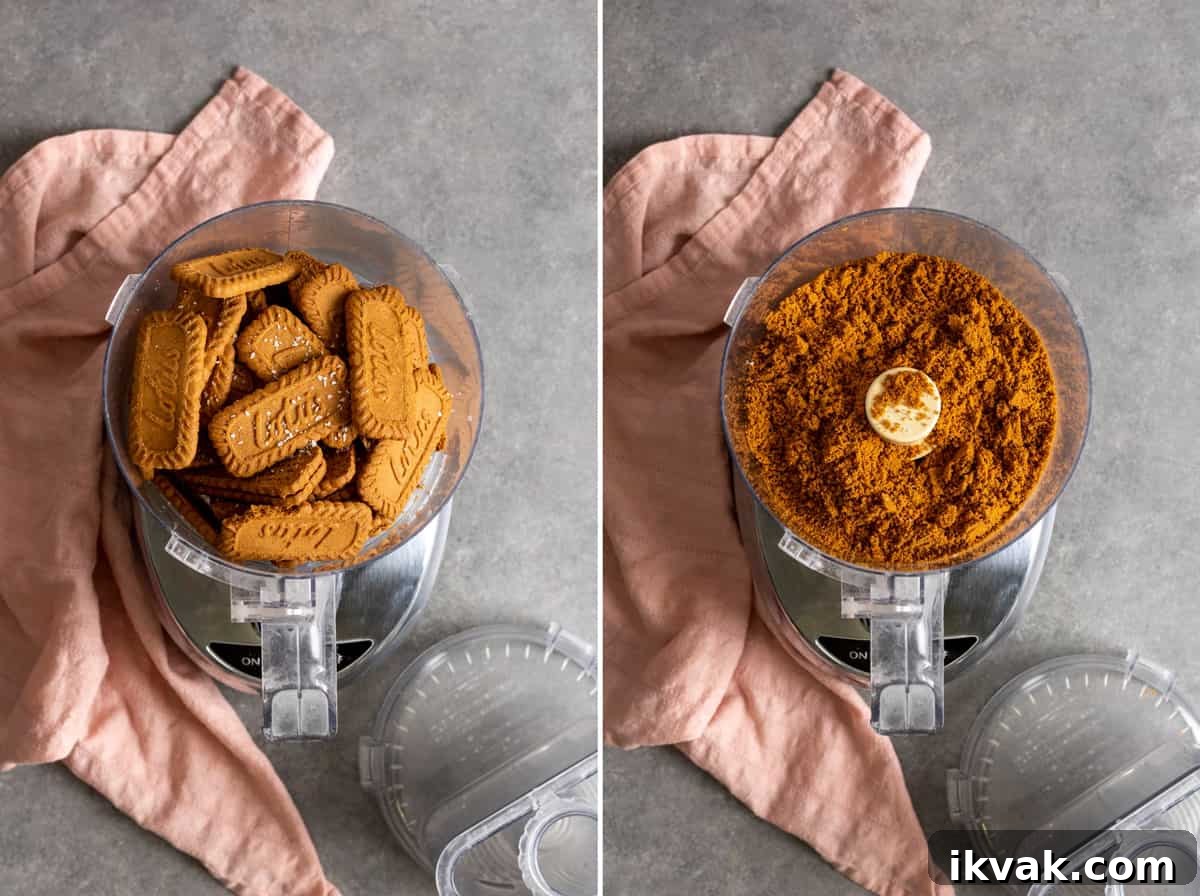
With the processor running, drizzle in the melted butter and continue processing until the crumbs hold together and the texture resembles wet sand.
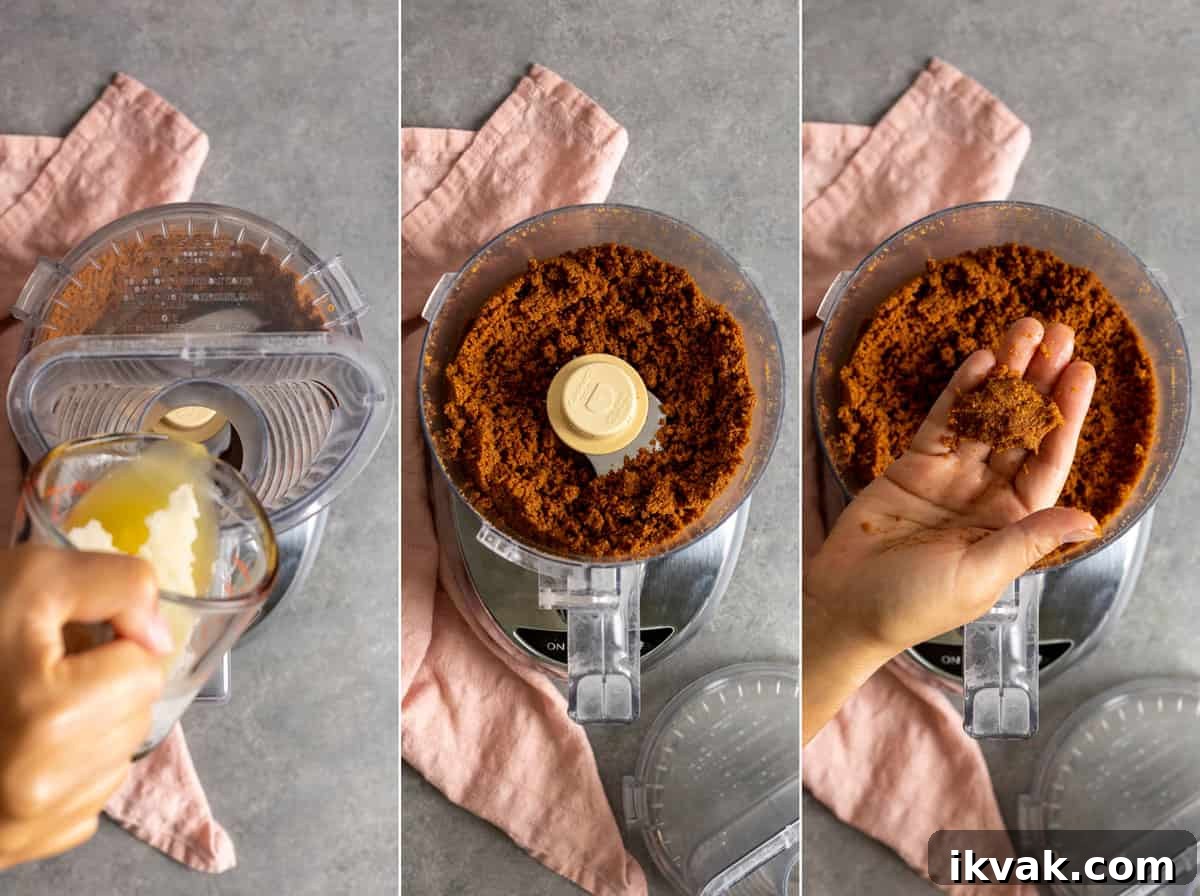
Tip: Stop to scrape the sides and bottom of the bowl if needed for more even mixing.
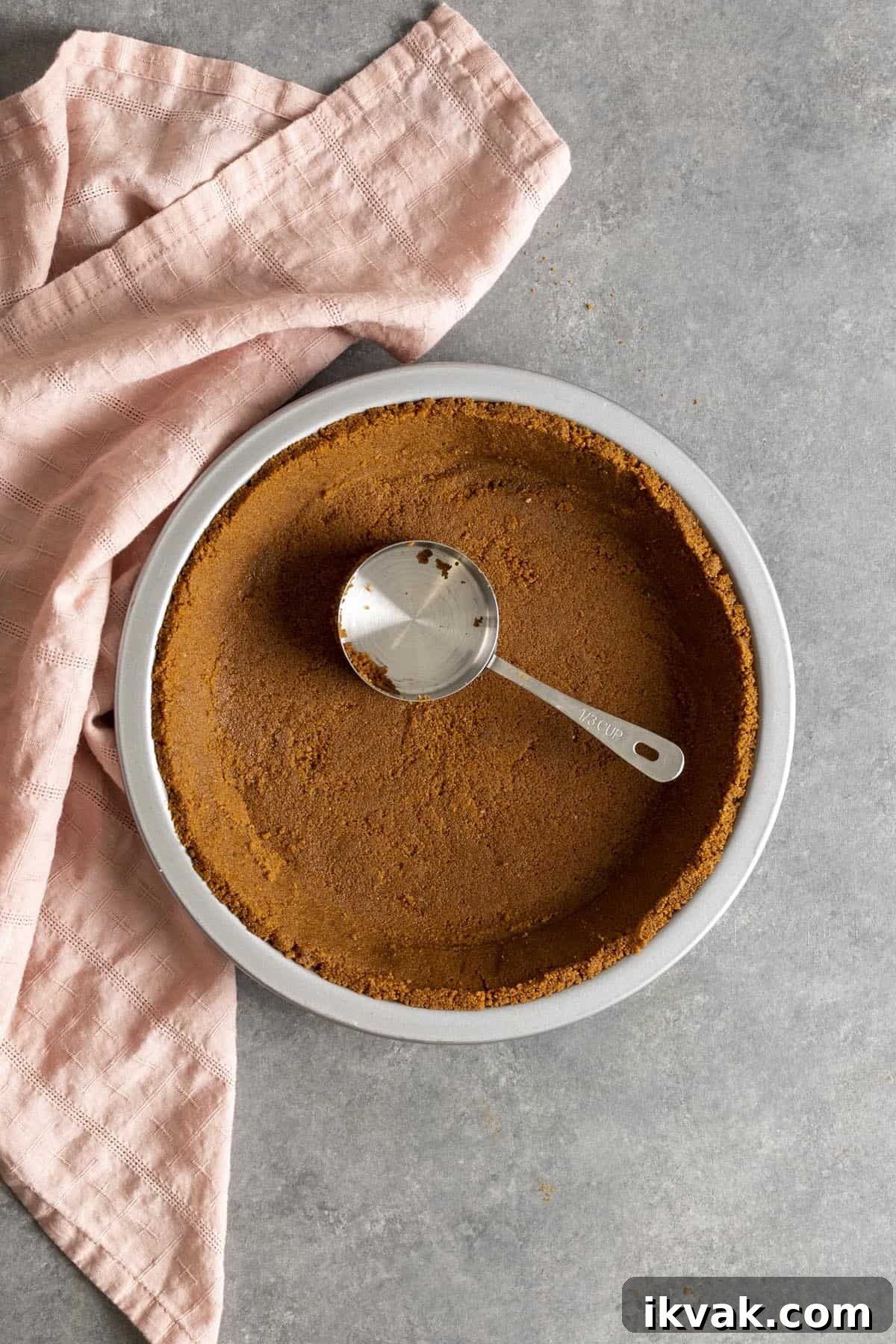
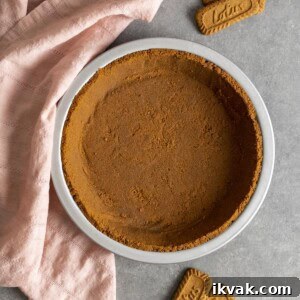
Turn the crumb mixture into your pan and press it into an even layer across the bottom and up the sides to form the crust.
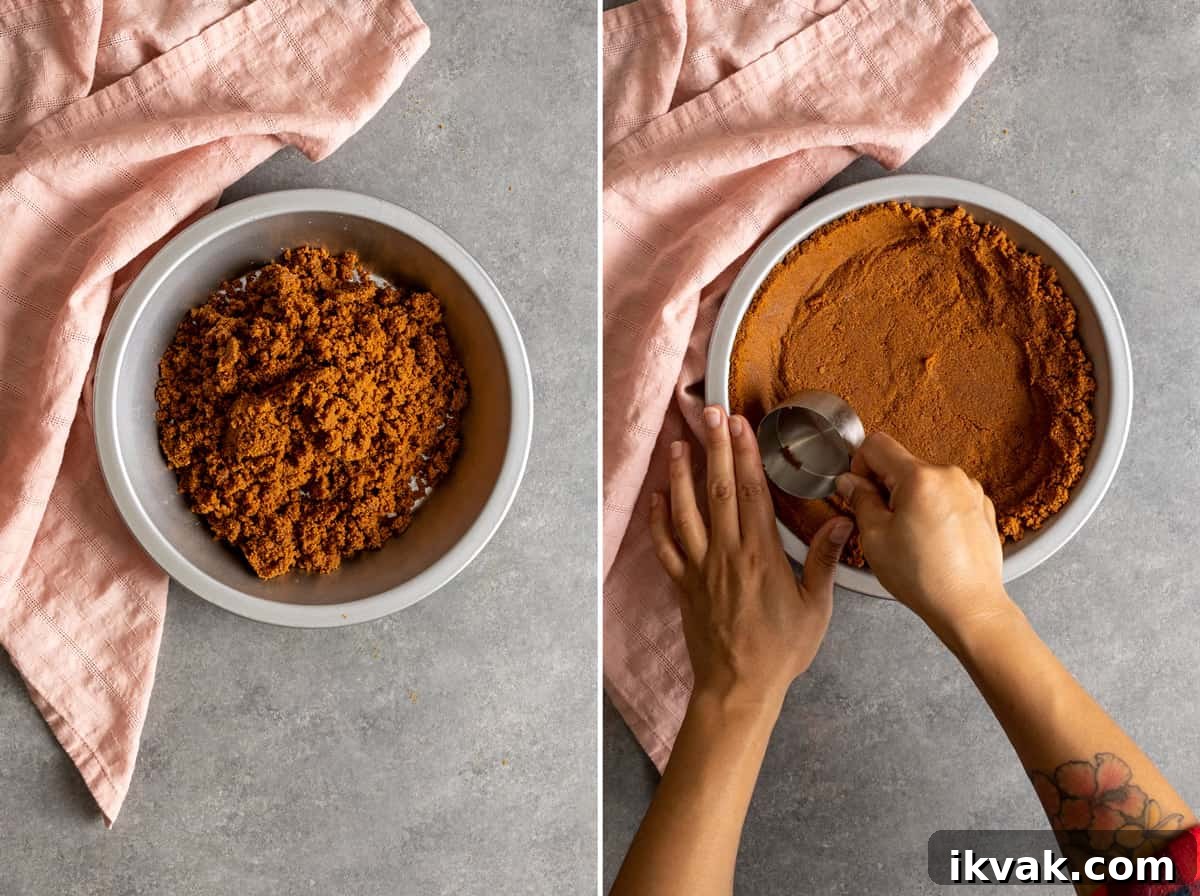
At this point you can chill the crust for no-bake desserts or bake it for a crunchier result.
Make it by hand
If you don’t have a food processor: place cookies in a zip-top bag, crush them with a rolling pin until they are very fine. Transfer crumbs to a bowl, stir in salt, drizzle in melted butter, and mix with a fork until the mixture resembles wet sand. Press into your pan as directed above.
To bake or not to bake
Two common options:
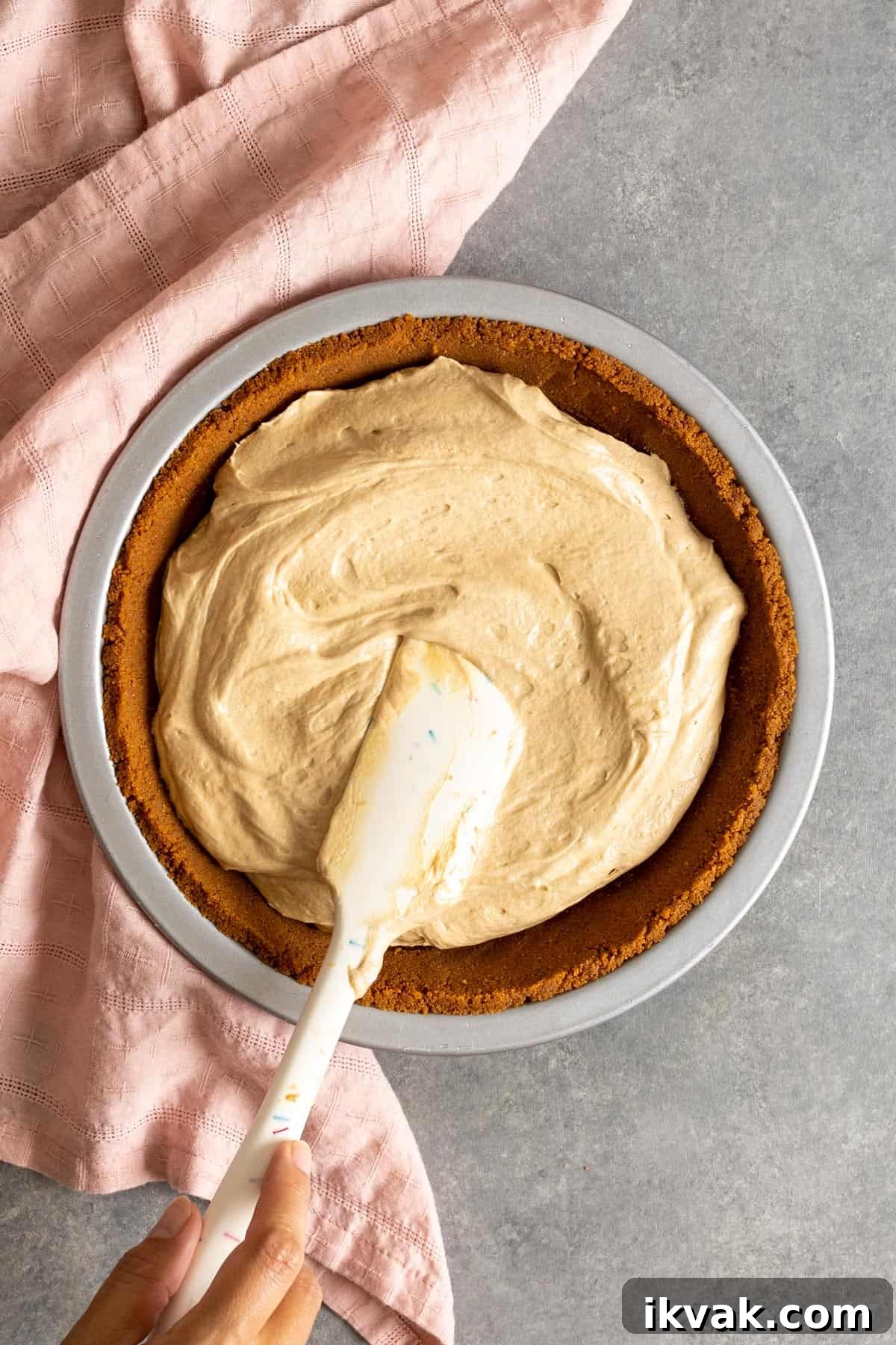
- Chill: For no-bake fillings, refrigerate the crust for about an hour or freeze for 15 minutes to firm it up. The butter solidifies and holds the crust together—serve chilled or frozen.
- Bake: For a crunchier, toastier crust, blind bake or par-bake the crust before adding a filling used in baked recipes.
Chilling
Chill the crust thoroughly if you plan to keep it unbaked. This is best for fillings that are served cold so the crust remains stable.
Baking
To blind bake: line the crust with parchment and fill with pie weights or dry beans, then bake at 375°F (190°C) for about 10 minutes. For cheesecakes and custard pies, par-bake the crust first to give it more structure before adding the filling and finishing in the oven as directed by your recipe.
More baker’s tips
- If you have a blender, you can grind the cookies with it; then mix with butter in a bowl.
- Use a flat-bottomed object (a measuring cup or glass) to press the crumbs firmly and evenly.
- This recipe fills a standard 9” pie plate, an 8”–9” springform pan for cheesecake, an 8” square pan, or an 8” tart pan for a thicker crust.
FAQs
Yes. See the “Make it by hand” section for an easy rolling-pin method.
Yes. Prepare the crust a few days ahead and store the baked or unbaked crust in the refrigerator until you’re ready to use it.
Yes. Freeze baked or unbaked crust for up to three months. Use frozen for blind baking or add filling directly for no-bake recipes and chill before serving.
More pie crust recipes
- Traditional all-butter pie crust
- Pecan pie crust
- Oreo cookie crust
- Chocolate pie crust
- Pie crust cookies
Hungry for more?
Subscribe to newsletters for weekly recipe ideas, tips, and occasional giveaways.
Biscoff Pie Crust
Trang Doan
1 Pie crust
Equipment
- Food processor (or blender/rolling pin if making by hand)
Ingredients
- 1 package Biscoff cookies (250 g)
- A pinch of salt
- 3 oz (85 g) unsalted butter, melted
Instructions
Using a food processor
- Break cookies into pieces and pulse in the food processor until fine crumbs form.
- Melt the butter, drizzle it over the crumbs while processing, and blend until the mixture has the texture of wet sand.
Make it by hand
- Place cookies in a sealed bag and crush with a rolling pin until very fine.
- Combine crumbs and salt in a bowl, drizzle in melted butter, and mix with a fork until the mixture resembles wet sand.
Form the pie crust
- Turn the mixture into your pan and press firmly across the bottom and up the sides to form a crust.
- For no-bake recipes, wrap and chill or freeze until ready to fill.
- For a baked crust, blind bake or par-bake at 375°F (190°C) for 10 minutes.
Notes
- Process or crush cookies into very fine crumbs—larger pieces won’t hold together as well.
- Press the crust firmly with a flat-bottomed cup or measuring cup for an even layer.
- This recipe fills a 9″ pie plate, an 8″–9″ springform pan, an 8″ square pan, or an 8″ tart pan.
Nutrition
Nutrition information is approximate.
 Like this recipe? Rate & comment below!
This post may contain affiliate links. Thank you for your support, which helps us share recipes at no extra cost to you.