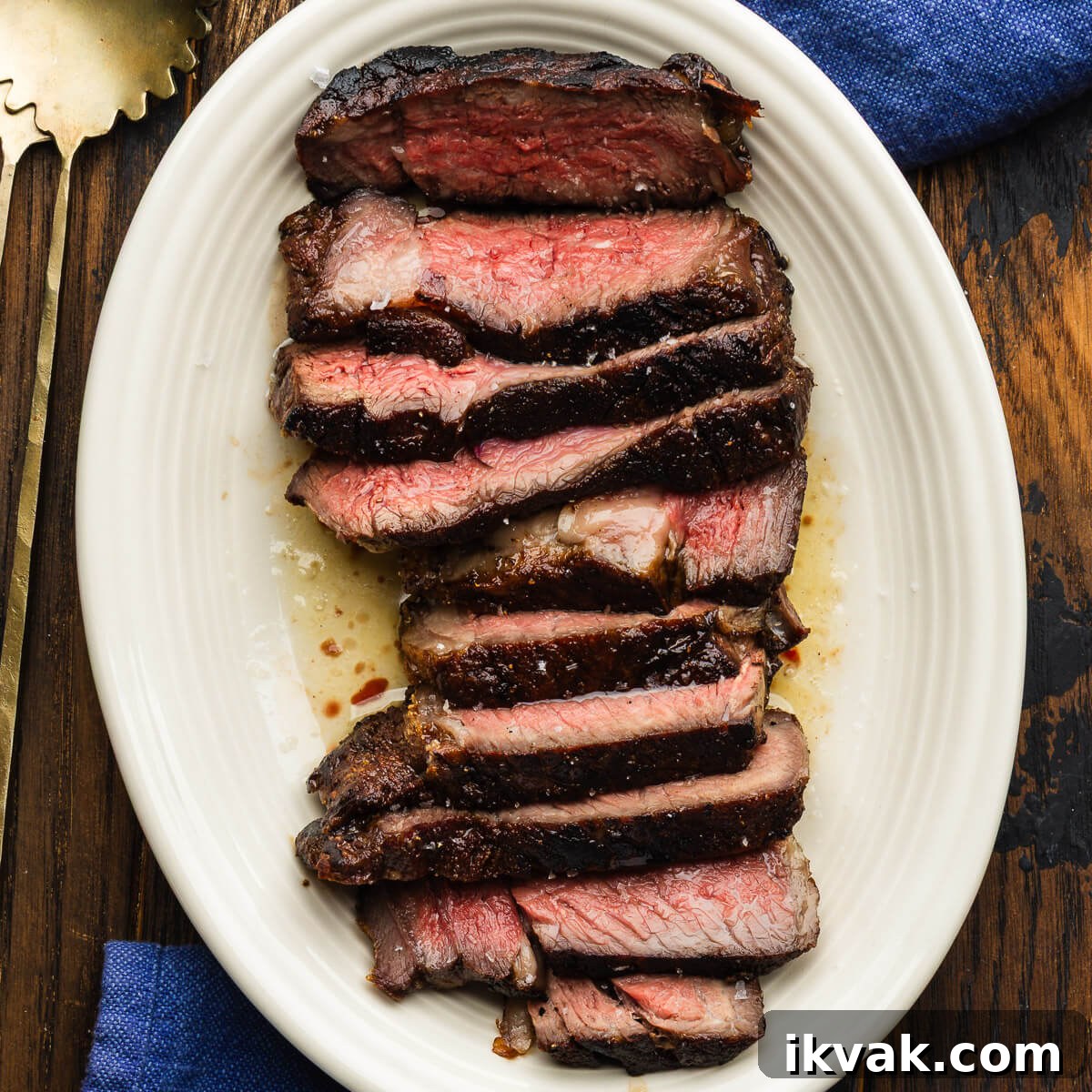
Steak can feel intimidating, but this Reverse Sear Ribeye Steak recipe gives a reliable way to get steakhouse-quality results at home.
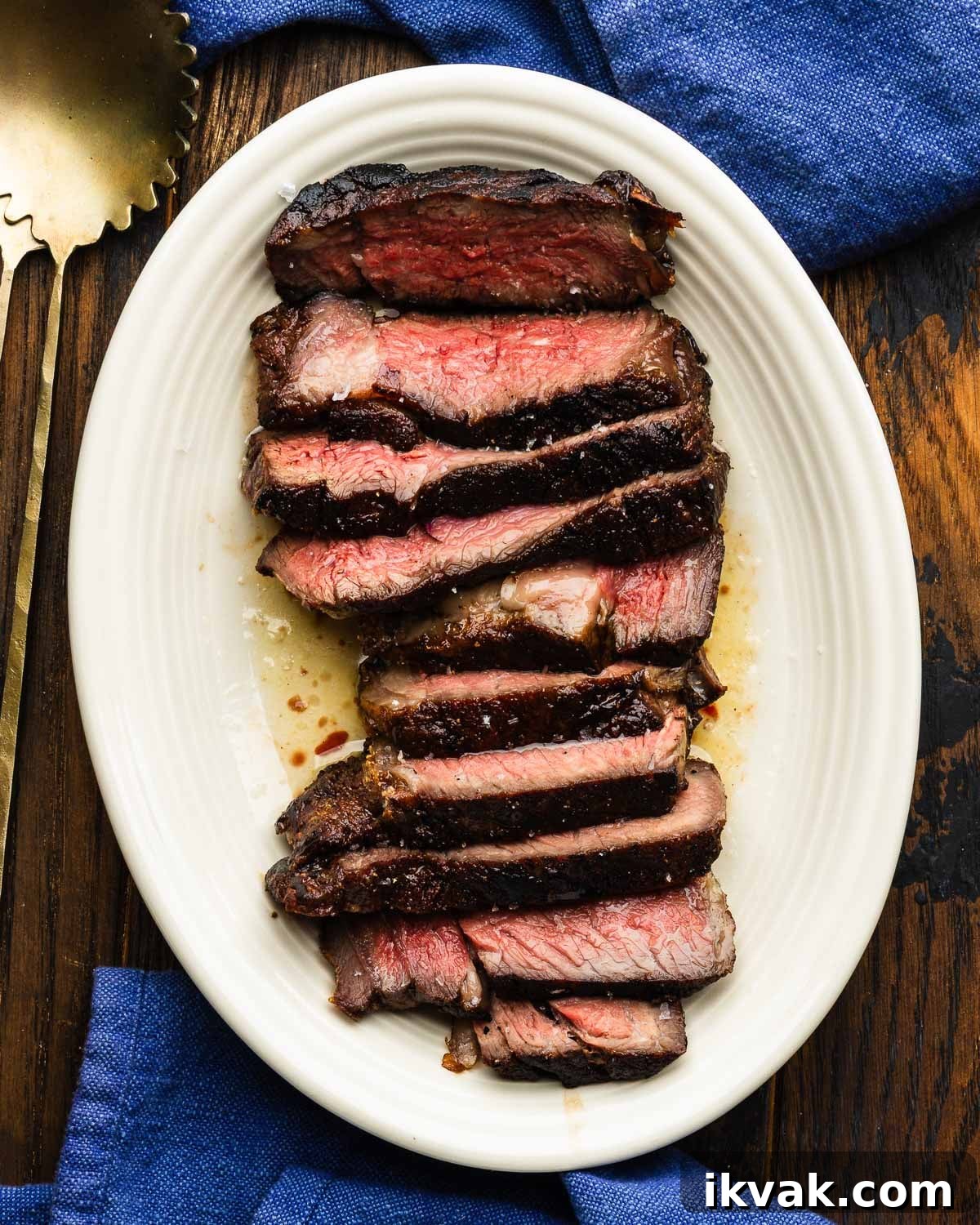

Steak Making 101
Ribeye and other premium steaks can be costly, which makes cooking them feel high-stakes. The reverse sear technique takes the guesswork out of the process: finish the steak by searing after gently bringing it up to an internal temperature in the oven.
“Reverse sear” means you slow-cook the steak in the oven until it is roughly 20°F below your desired final doneness, then sear it quickly in a very hot pan. For medium-rare, remove the steak from the oven at about 110°F and sear until the final temperature reaches around 125–130°F on an instant-read thermometer.
This approach produces consistent, restaurant-quality results and works especially well with thick-cut steaks. I often serve this ribeye with creamed spinach and steakhouse homefries or roasted garlic mashed potatoes.
Recipe Ingredients
Ingredients are shown in the photo below. Notes are provided to help you choose and measure the right items.
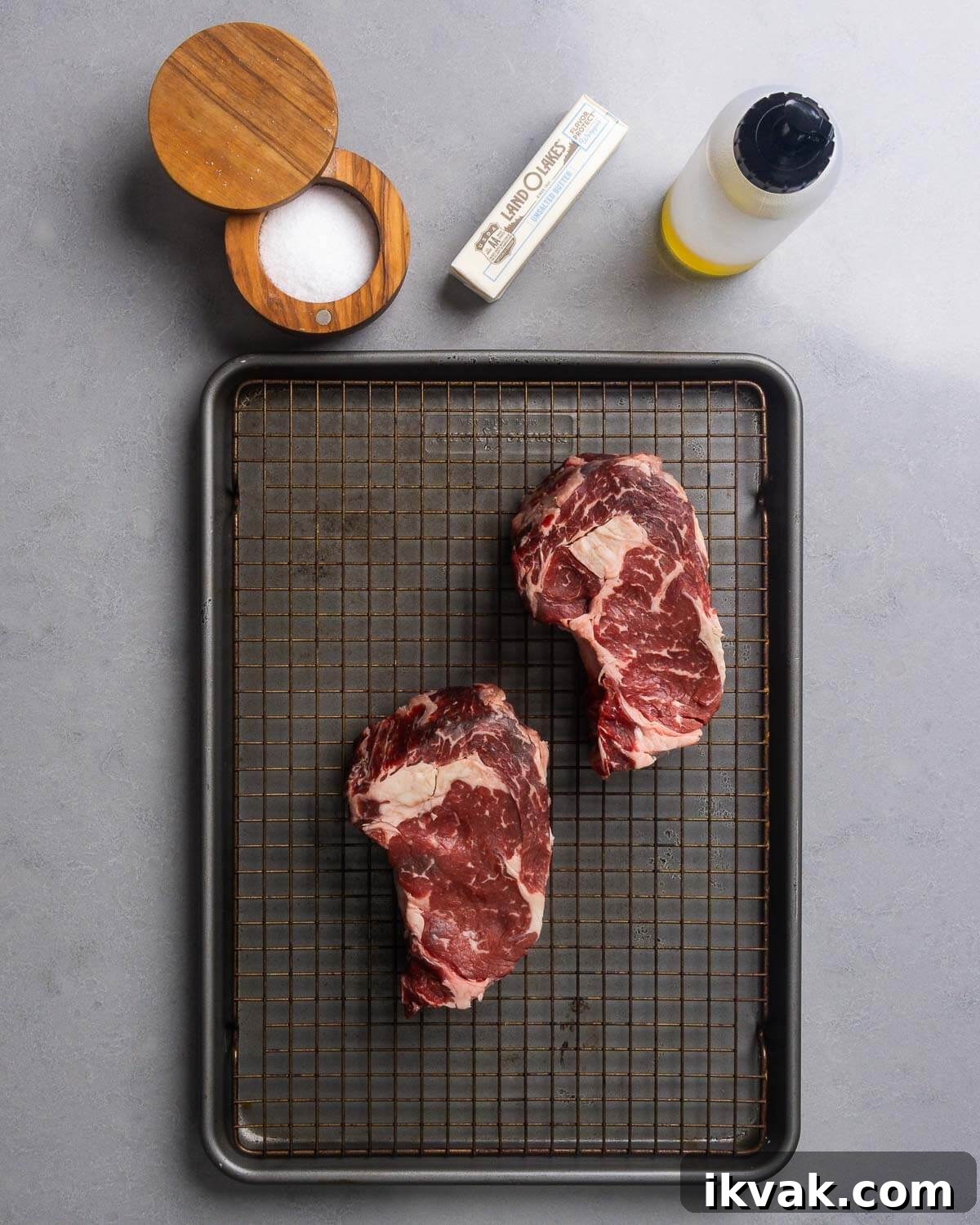
- Steak. Thick ribeye steaks are used here, but any thick-cut steak (porterhouse, NY strip) will work. The reverse sear is best for steaks at least 1–1.5 inches thick.
- Salt. Diamond Crystal kosher salt is recommended. Use about 1–1.25% of the steak weight in salt (roughly 1 to 1-1/4 tablespoons for two large steaks totaling ~1000 g). If using table salt, use a smaller volume—about 1 1/2–1 3/4 teaspoons for the same weight.
- Butter and oil. Sear in a neutral oil with a high smoke point (avocado or vegetable oil), and finish by basting with butter for flavor and gloss.
See the recipe card below for exact ingredient amounts and serving size adjustments.
How to reverse sear a ribeye steak
Follow these numbered steps for best results.
- Pat steaks dry and season generously with salt and a little black pepper on both sides. Place on a wire rack set over a sheet pan and refrigerate uncovered overnight if possible. Remove from the fridge about 1 hour before cooking. If you didn’t salt overnight, let the steak sit at room temperature for 1 hour after seasoning.
- Preheat the oven to 250°F and insert an oven-safe probe thermometer into the thickest part of the steak.
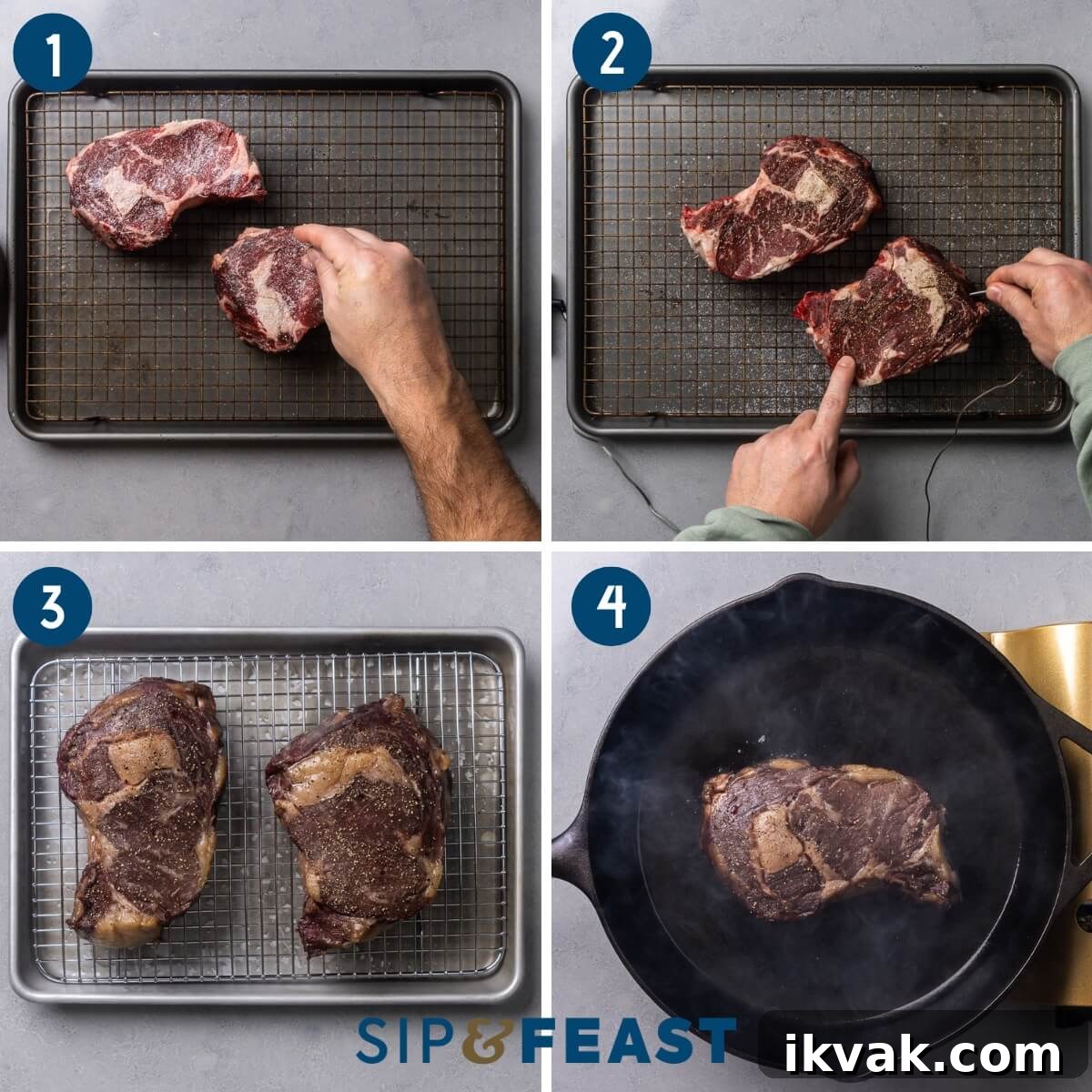
- Roast the steaks in the oven until they reach about 110°F for medium-rare. For other doneness levels, remove the steaks when they are roughly 20°F below your target (see chart below). Let the steaks rest for 15 minutes before searing.
- Preheat a heavy skillet (cast iron or stainless steel) over medium-high heat for 4–5 minutes until very hot. Use good ventilation—the sear will create smoke.
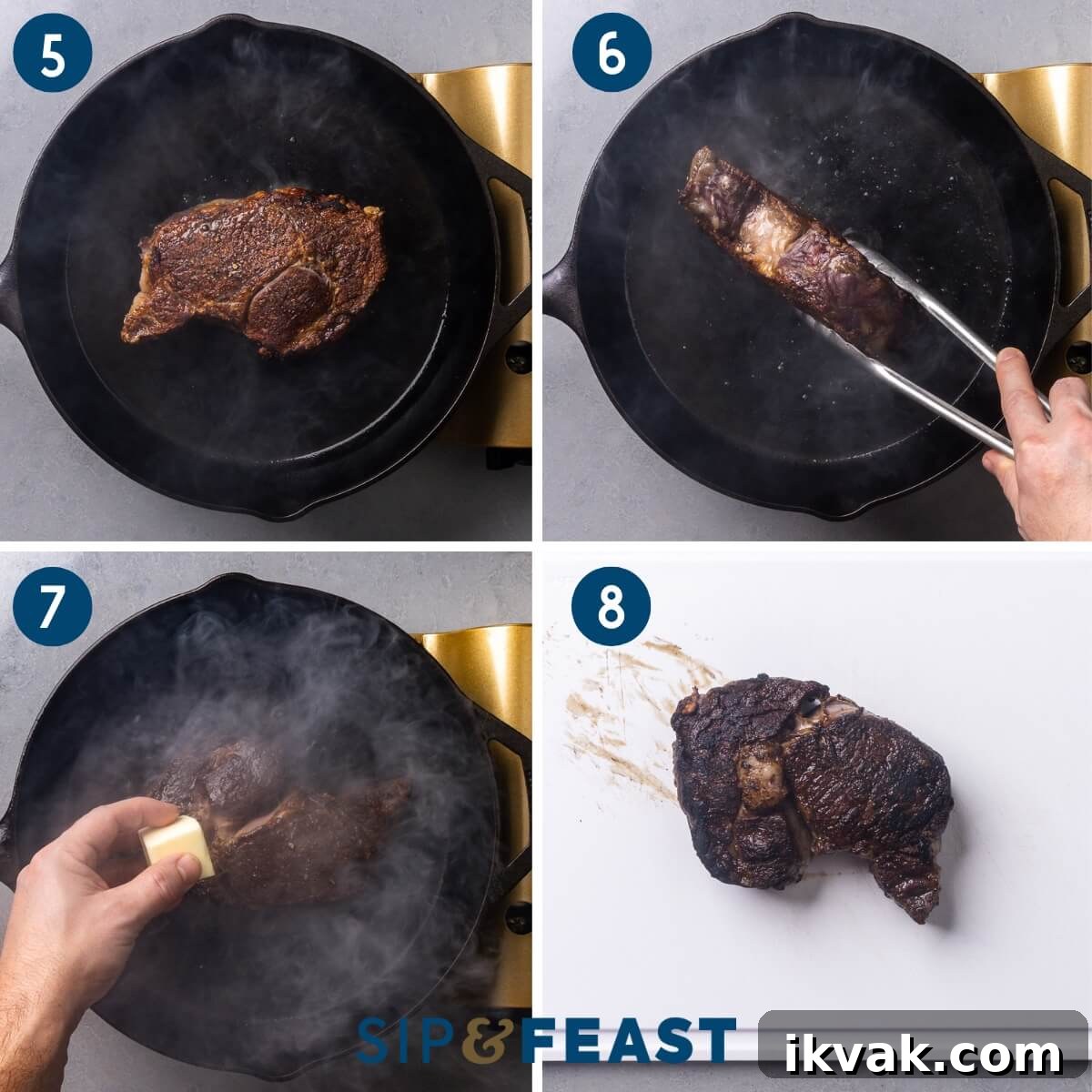
- Add neutral oil and, once it’s shimmering, add the steaks. Sear about 1 minute per side.
- Use tongs to hold the steaks and sear the fat cap and edges for 30–45 seconds per side.
- During the last 30 seconds, add butter to the pan and baste the steaks.
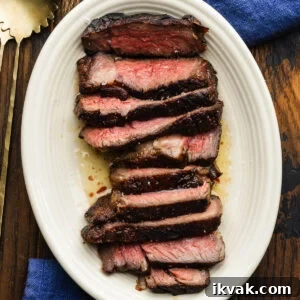
- Remove from the heat, transfer steaks to a cutting board, and rest 5 minutes. Slice, arrange on a platter, pour any butter and pan juices over the steak, and serve immediately.
| Doneness | Temp to remove from oven | Final temp after searing and resting |
| medium-rare | 110°F | 125°F–130°F |
| medium | 125°F | 140°F–145°F |
| medium-well | 135°F | 150°F–155°F |
Top tips
- Salting the steak. Measure salt by steak weight for consistent seasoning (see notes above). Salting overnight improves flavor and crust.
- Use the right tools. An oven-safe probe thermometer helps you monitor internal temperature without opening the oven. A heavy pan—cast iron or stainless steel—gives the best sear.
- Let it rest. Rest steaks for a few minutes after searing so juices redistribute before slicing.
More steak recipes
Try these other steak favorites.
- Ribeye steak with red wine reduction
- Grilled tomahawk steak with compound butter
- NY strip steak with gorgonzola sauce
- Steak tagliata
If you enjoyed this Reverse Sear Ribeye Steak recipe, please consider leaving a rating.
Reverse Sear Ribeye Steak
Ingredients
- 2 large thick ribeye steaks
- 1 tablespoon Diamond Crystal kosher salt
- Black pepper, to taste
- 3 tablespoons neutral oil
- 4 tablespoons salted butter
Instructions
- Pat steaks dry and season with salt and pepper. Refrigerate on a wire rack, uncovered, overnight if possible. Remove 1 hour before cooking. If not salting overnight, let sit at room temperature for 1 hour after seasoning.
- Preheat oven to 250°F.
- Insert an oven-safe probe thermometer into the center of the steak. Roast until the steak reaches about 110°F for medium-rare (or ~20°F below your preferred final temp). Time varies by thickness—start checking at 20–30 minutes.
- Remove steaks and rest 15 minutes before searing.
- Preheat a cast iron or heavy stainless steel skillet over medium-high heat for 4–5 minutes. Ensure good ventilation.
- Add neutral oil; when it shimmers, add the steaks. Sear 1 minute per side, then hold with tongs to sear the edges 30 seconds per side.
- Add butter during the last 30 seconds and baste the steaks.
- Transfer steaks to a cutting board, rest 5 minutes, slice, pour pan juices and butter over top, and serve immediately.
Notes
- Size and type of steaks. Works well with any thick steak—porterhouse or NY strip are good alternatives.
- Salt levels. Salt at about 1–1.25% of the steak weight. For ~1000 g total, use ~10–12.5 g Diamond Crystal kosher salt (about 1 1/4 tbsp). If using table salt, use less—about 1 1/2–1 3/4 tsp for the same weight.
- Internal temp. Remove from oven when the steak is ~20°F below your target final temp: medium-rare final 125–130°F, medium final 140–145°F, medium-well final 150–155°F.
- Pan. Use cast iron or stainless steel and adequate ventilation; do not use nonstick for high-heat searing.
- Leftovers. Steak is best fresh. To reheat, pan-fry slices in butter until warmed through to avoid overcooking.
Nutrition
Protein: 50.7 g |
Fat: 79.8 g
Nutrition information is an approximation.
This recipe was originally published on July 24, 2018 and updated on February 9, 2026.