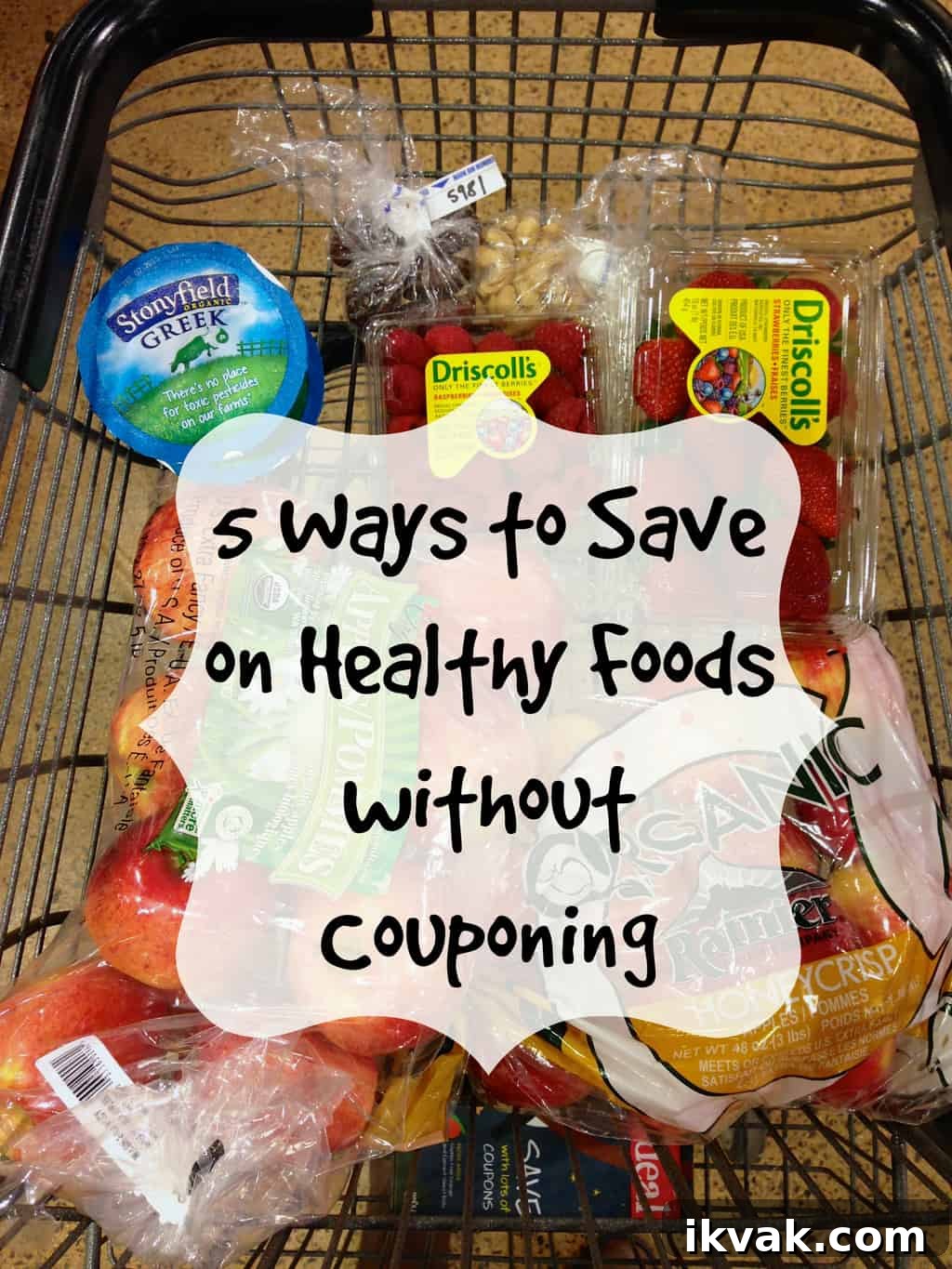
When I shop for groceries, I rarely pay full price. After sharing a peek into my cart, several people asked how I manage to save, especially on healthier items. I use three main strategies: shopping sales, couponing, and using rebates.
I’ll cover couponing and rebates in a separate post because they each deserve their own space. The quickest, simplest way to save—especially on fresh produce—is to shop the sales, and that’s what I’ll explain here.
1. Decide what to buy based on the sale flyer before you go. When I have a rough list—bread, fruit, vegetables, almond milk, etc.—I quickly scan my store’s weekly online flyer to see which of those items are discounted. Most grocery stores publish their flyers online now.
A key tip is to stay flexible. For example, I usually want a couple of different fruits each week but I’m open about which ones. If pears are full price but apples are on sale, I’ll buy apples and wait for pears to be discounted another week. Bananas are almost always inexpensive and reliable.
Similarly, if mushrooms are on a great sale and I want to use them in dinner, I’ll plan a meal that incorporates them. In short, plan meals and snacks around sale items whenever possible.
2. Get rain checks for sale items that are out of stock. This is one of the best tricks. If an item you want is on sale but the store has run out, stop by customer service and request a rain check so you can buy it later at the sale price. Whether it’s the last box of a favorite granola bar or a specific flavor that’s gone, a rain check lets you take advantage of the discount later.
3. Don’t be too brand loyal. Many items I buy—Greek yogurt, granola bars, shelf-stable cereals—rotate through sales for different brands. I used to stick with one brand until I tried others that were cheaper during sales and found new favorites. Also, don’t shy away from store brands. The generic options are often high quality and much cheaper; I recently picked up several for $0.59 each.
A variety of Greek yogurts in my mini-fridge. My roommate and I don’t drink soda, so our soda dispenser has become a Greek yogurt dispenser.
4. Look for “not perfect” discounted items. Stores often set out slightly imperfect produce at reduced prices. I buy spotted bananas for smoothies or banana bread when they’re half-price, and small or undersized peppers that are cheap but still perfectly usable. Produce approaching its expiration may be marked as a “Manager’s Special” but still fine to eat—just check the date and make sure you’ll use it in time.
5. Stock up on staples when they’re on sale. When items like granola bars, oats, cereal, or canned soup are discounted, I buy extras because they have long shelf lives. I also buy bread, English muffins, and tortillas on sale and freeze them to extend their usability.
Those are the five primary ways I save money without getting into couponing and rebates. These are basic but effective strategies for lowering grocery bills while still buying healthy foods. I’ll share more tips about couponing and rebate apps in a future post.
What are your favorite ways to save money on groceries?