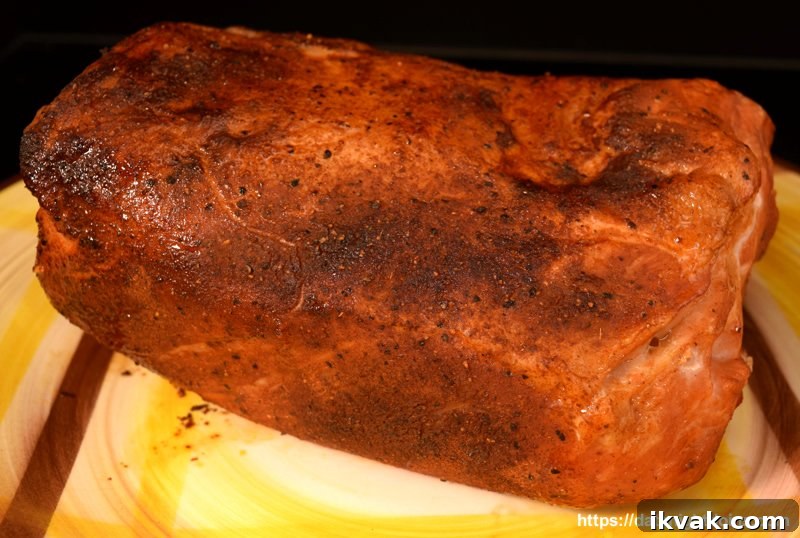
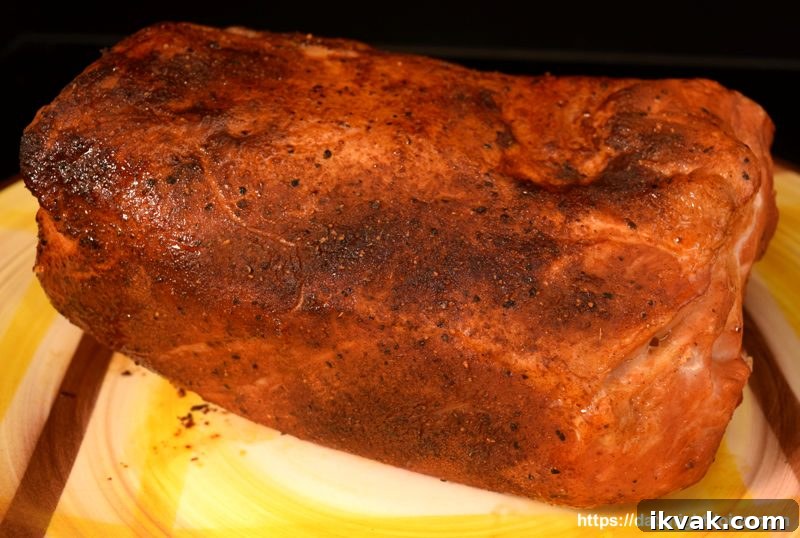
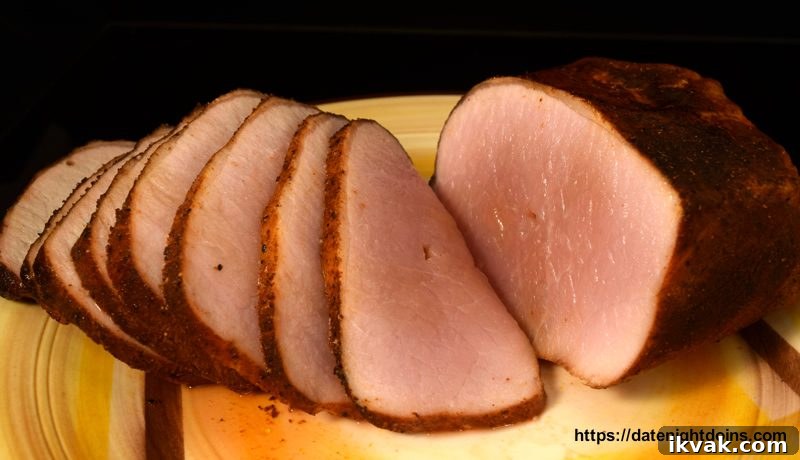
Santa Maria pork loin cooked on a rotisserie is juicy, tender and seasoned perfectly with a Santa Maria rub and a subtle “kiss of smoke.” It cooks quickly—our roast was ready in a little over an hour—and is forgiving for cooks of any skill level.
Pork loin is an easy cut to grill or barbecue. It can be prepared as a rolled roast, stuffed, or sliced into generous 2-inch chops. For a relaxed evening, we enjoy serving this on our patio with lights, candles and music—perfect for date night.
Santa Maria Pork Loin — A Gas Grill Recipe
Prep Time: 5 minutes
Cook Time: 1 ½ hours
Grill: Gas
Suggested Pellets: Apple blend for a light sweetness when using a smoking additive
Ingredients: Santa Maria Pork Loin
- 3½ lbs boneless pork loin
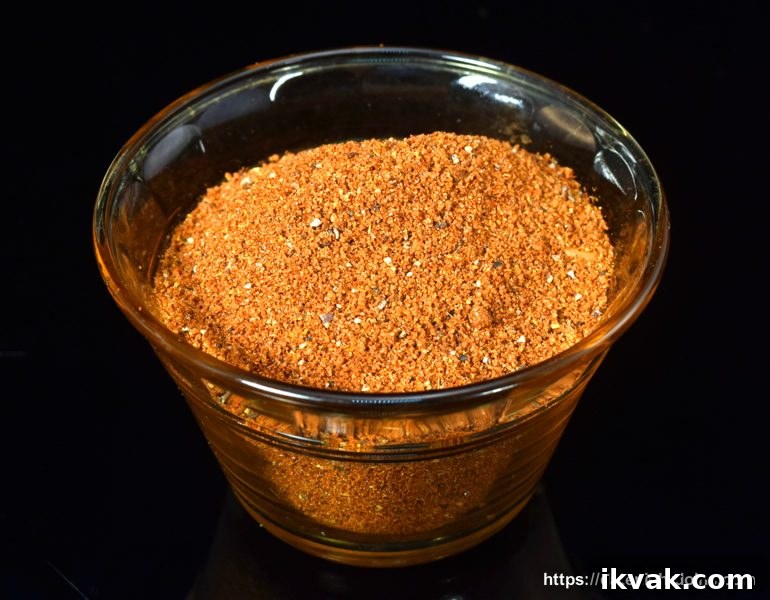
- Santa Maria rub (see ingredients below)
Ingredients: Santa Maria Rub
- 2 tablespoons paprika
- 2 teaspoons chipotle chili powder
- ½ teaspoon cayenne powder
- 1 tablespoon cumin
- 2 tablespoons brown sugar
- 2 teaspoons garlic powder
- 1 teaspoon onion powder
- 1 tablespoon coarse pepper blend (adjust to taste)
Cooking Directions: Santa Maria Pork Loin
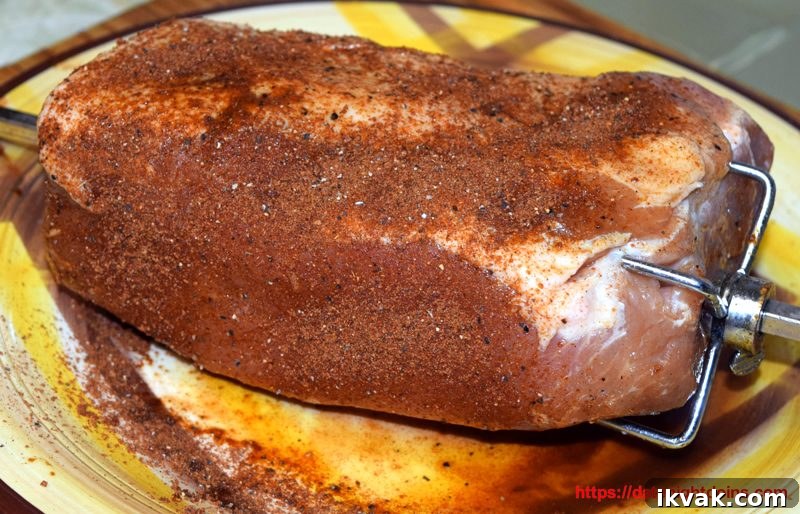
Generously season all sides of the pork loin with the rub. If time allows, let the seasoned loin rest in the refrigerator for a few hours or overnight to let the flavors penetrate.
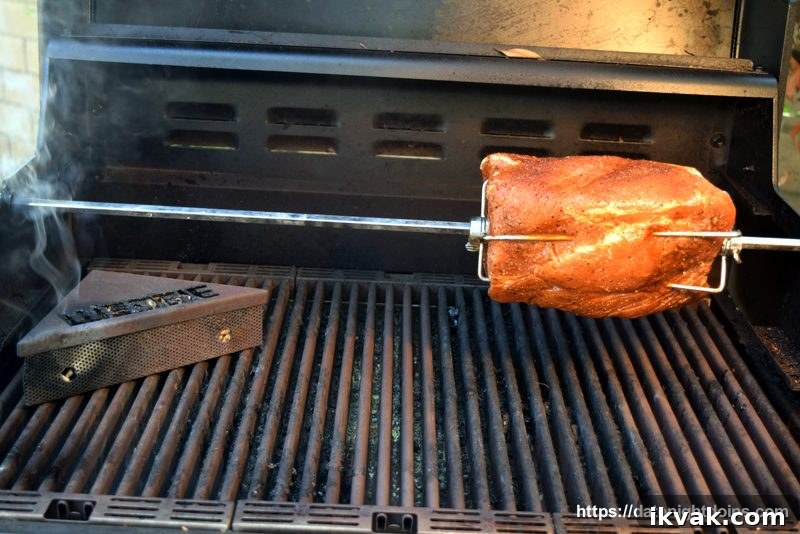
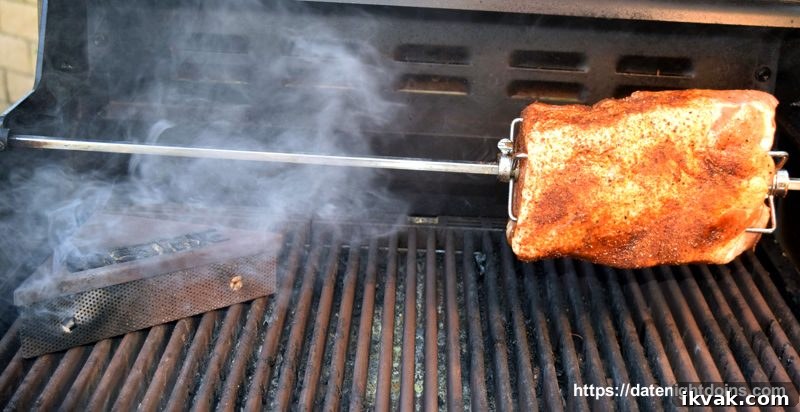
If you want a light smoky flavor, add a small smoking pouch or pellet device for a brief “kiss of smoke” before starting. Preheat your gas grill and set up for indirect heat: turn on the burners away from where the rotisserie will sit and adjust the active burners to maintain roughly 400°F (205°C) as a guideline for this grill setup.
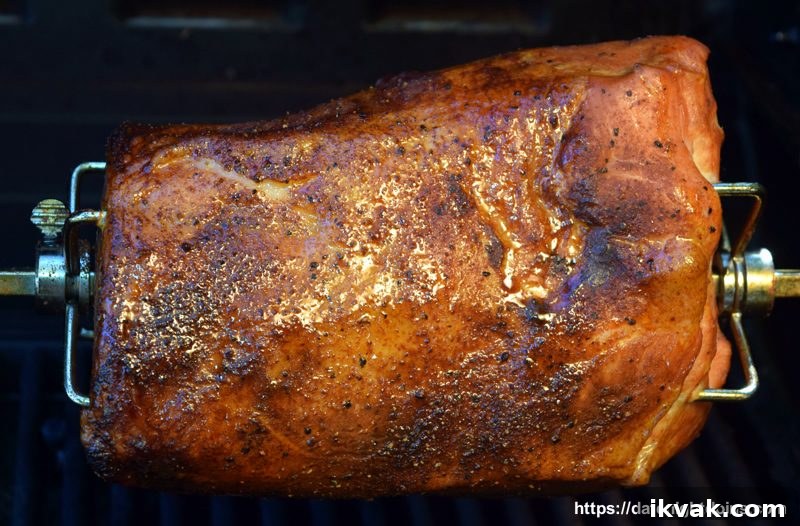
Mount the pork loin on the rotisserie rod and position it over the unlit burner to cook with indirect heat. Cooking times vary by grill, weather and loin size, so use internal temperature rather than time as the primary guide. Our loin took about an hour and a half.
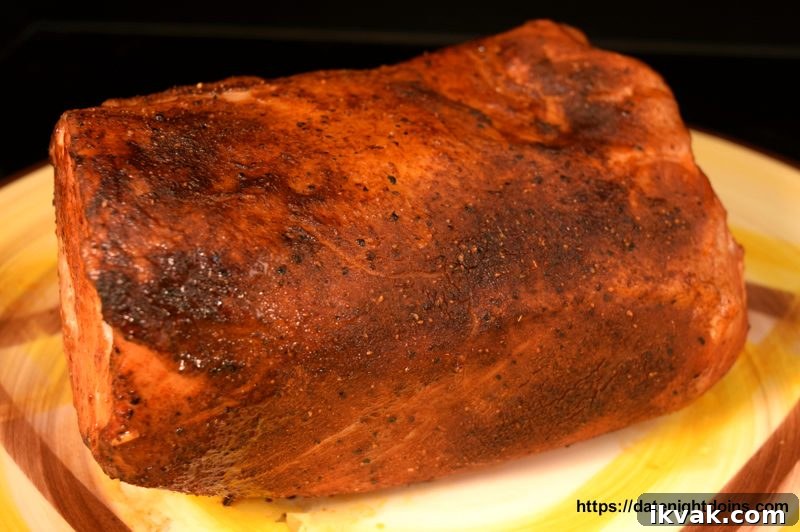
Remove the pork when the internal temperature reaches 145°F (63°C). Cover and let it rest for 5–10 minutes before slicing. The USDA recommends 145°F for pork; carryover cooking will raise the temperature a few degrees while resting. Use an instant-read thermometer to check doneness.
Note on pellets and smoke: A recipe provides a framework, but you can adjust wood pellet blends to suit your preference. At smoking temperatures below 250°F (122°C) you’ll get noticeable smoke flavor; above that, the cook is more about heat than smoke, so pellet choice becomes less influential on smoke intensity.
About Our Recipes
We test recipes on our patio with a variety of grills—pellet, gas, charcoal and wood—so the techniques are adaptable. The key factors are time and temperature. While some recipes are exact, most are flexible; adjust seasonings, wood blends and cooking method to suit your taste.
Cooking outdoors adds unique flavors you won’t get in the oven or slow cooker, but the most important part is enjoying the process. Make the recipe your own and have fun with it.
Live your passion and do what you love,
Ken & Patti